


 Menu
MenuMenu


Get Sales Advice from Mon - Fri 9am - 5:00pm:
020 3337 8950LAST UPDATED: May 08, 2026
Are Intel Core i9 Laptops Worth It in 2026? i9 vs i7 Explained
Choosing the right laptop processor is one of the most important decisions when buying a new device. With so many options available, many users find themselves asking: are Intel Core i9 laptops worth it in 2026, or is an i7 enough?
The comparison between an Intel Core i9 vs i7 laptop is not just about performance, it’s about value, usage and whether you need that extra power. While i9 laptops offer top-tier performance, they are not always the most practical choice for every user.
In this guide, we’ll break down the real differences between i9 vs i7 laptops, explain how they perform in gaming, work and content creation, and help you decide which processor is the right fit for your needs.
What Is the Difference Between Intel Core i9 and i7 Laptops?
When comparing an Intel Core i9 vs i7 laptop, it’s easy to assume the difference is simply about “more power.” While that’s partly true, the real difference lies in how that power is used and whether it actually benefits your day-to-day tasks.
Both Intel Core i7 and i9 processors sit at the higher end of Intel’s lineup, meaning they are designed to handle demanding applications. However, they are built with different types of users in mind.
Understanding Performance in Real-World Use
An Intel Core i7 laptop delivers strong, reliable performance for everyday tasks like multitasking, office work, browsing and video calls. It feels fast and responsive for most users, handling multiple applications smoothly without slowdowns.
An Intel Core i9 laptop goes a step further, designed for demanding workloads. With higher clock speeds and more processing power, it excels in tasks such as 4K video editing, 3D rendering, large data processing and heavy multitasking.
In simple terms, an i7 is more than enough for daily use, while an i9 makes a noticeable difference when handling intensive, performance-heavy tasks.
Power vs Practicality
While an i9 processor offers more raw performance, it’s important to understand that this level of power is not always necessary. For many users, the difference between i7 and i9 may not be noticeable during everyday tasks.
This is because most common activities such as browsing, streaming, or working on documents do not fully utilise the capabilities of an i9 processor. In these cases, an i7 laptop delivers a similar experience while being more efficient.
On the other hand, if your work involves demanding software or heavy multitasking, an i9 processor provides the extra headroom needed to keep everything running smoothly.
Efficiency and Everyday Use
Another key difference in the intel core i7 vs i9 laptop comparison is efficiency. i7 processors are generally more power-efficient, which often results in better battery life and less heat generation.
i9 processors, due to their higher performance output, tend to consume more power and generate more heat. This means they are often found in larger, performance-focused laptops with stronger cooling systems.
For you, this means choosing between efficiency and maximum performance, depending on how you plan to use your laptop.
Intel Core i9 vs i7 Laptop: Key Differences
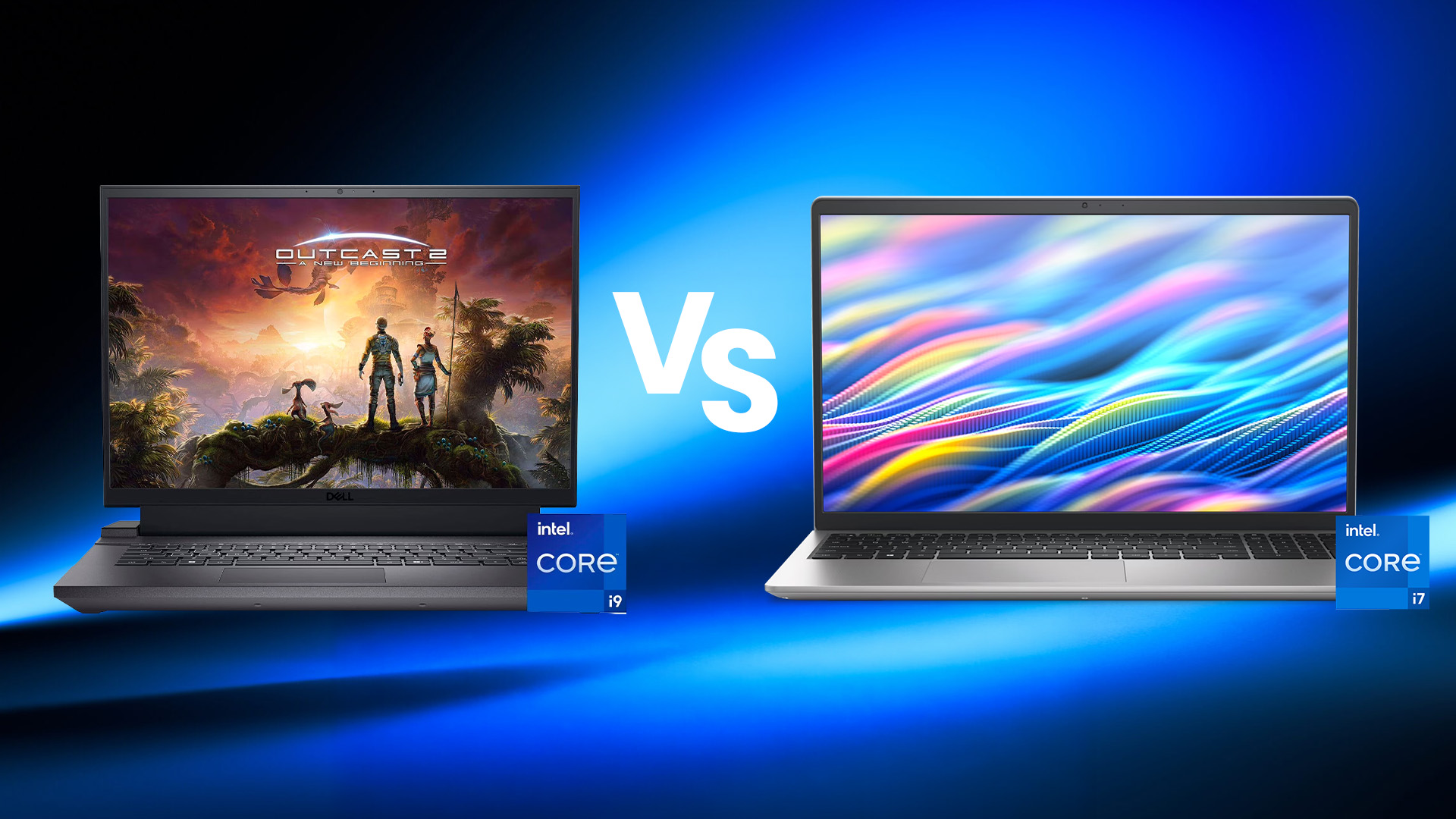
When comparing an Intel Core i9 vs i7 laptop, the real differences are not just in technical specifications; they become much clearer in how each processor performs in everyday use. Both options are powerful, but they are designed for different types of users and workloads.
Understanding these differences helps you choose a laptop that not only performs well but also matches your actual needs, rather than paying for power you may not use.
Performance and Speed
One of the most noticeable differences between Intel Core i9 vs i7 laptops is how they handle performance under pressure, especially when dealing with demanding applications.
An Intel Core i9 laptop is built for maximum performance. It is designed to maintain high speeds even when running multiple heavy tasks at the same time. From a technical perspective, processors like the Intel Core i9-14900K feature up to 24 cores (8 Performance cores + 16 Efficiency cores) and can reach turbo frequencies of up to 6.0–6.2 GHz.
This combination of higher core count and faster clock speeds allows i9 laptops to deliver superior multi-threaded performance, making them ideal for tasks such as 3D rendering, 4K/8K video editing and complex simulations.
An Intel Core i7 laptop, such as those using the i7-14700K, still offers excellent performance for most users. These processors typically feature 20 cores (8 Performance + 12 Efficiency cores) with turbo speeds reaching around 5.6 GHz.
In everyday use browsing, working on documents, attending video calls or even doing light creative work an i7 processor feels fast, smooth and responsive. For many users, this level of performance is more than enough.
For most day-to-day tasks, the difference in speed between i7 and i9 may not be noticeable. However, when you move into high-performance workloads, the i9 clearly pulls ahead by handling tasks faster and more efficiently.
Multitasking and Workloads
When it comes to multitasking, both processors perform well, but the key difference lies in how much workload they can handle comfortably and consistently.
Thanks to its higher core and thread capacity, an i9 processor is better equipped for handling multiple demanding applications at once. Whether you’re working with editing software, development environments or large datasets, the additional cores and threads allow the system to distribute workloads more efficiently.
This means tasks such as rendering, compiling code or processing large files can run simultaneously without slowing down your system. For users working in professional or creative environments, this translates into faster workflows and improved productivity.
An i7 processor, while slightly lower in core count, still performs extremely well for general multitasking. Activities like switching between browser tabs, running office applications and attending video calls are handled smoothly without any issues.
For you, this means the choice should depend on how intensive your workload is. If your tasks are moderate, an i7 is more than capable. If you regularly push your system with demanding applications, an i9 provides the extra performance headroom needed.
Power Consumption and Heat
Another important difference in the core i9 vs core i7 laptop comparison is how each processor handles power consumption and heat.
Because i9 processors are designed for higher performance, they naturally consume more power and generate more heat. This is why i9 laptops are often equipped with advanced cooling systems, including larger fans and improved thermal designs to maintain stable performance.
In contrast, i7 processors are generally more power-efficient. They consume less power during everyday use, which helps improve battery life and keeps the system cooler and quieter.
For users who are frequently on the move or rely on battery life, this efficiency can make a noticeable difference. It allows for longer usage without needing to recharge and provides a more comfortable experience during everyday tasks.
Read our complete Intel Core i9 laptop buying guide to understand performance, features and how to choose the right high-end laptop for your needs.
Intel Core i7 vs i9 for Gaming
When looking at i9 vs i7 for gaming laptops, it’s important to understand that gaming performance depends heavily on the GPU, not just the CPU.
In most modern games:
- An Intel Core i7 laptop paired with a strong GPU can deliver excellent performance
- An Intel Core i9 laptop may provide slightly higher frame rates, particularly in CPU-intensive games
For the majority of gamers, an i7 offers more than enough performance, especially when combined with a capable graphics card. This makes it a better value option in many cases.
However, if you’re aiming for high-end gaming, competitive performance or streaming while gaming, an i9 processor can provide additional performance headroom and smoother multitasking.
Intel Core i7 vs i9 for Work
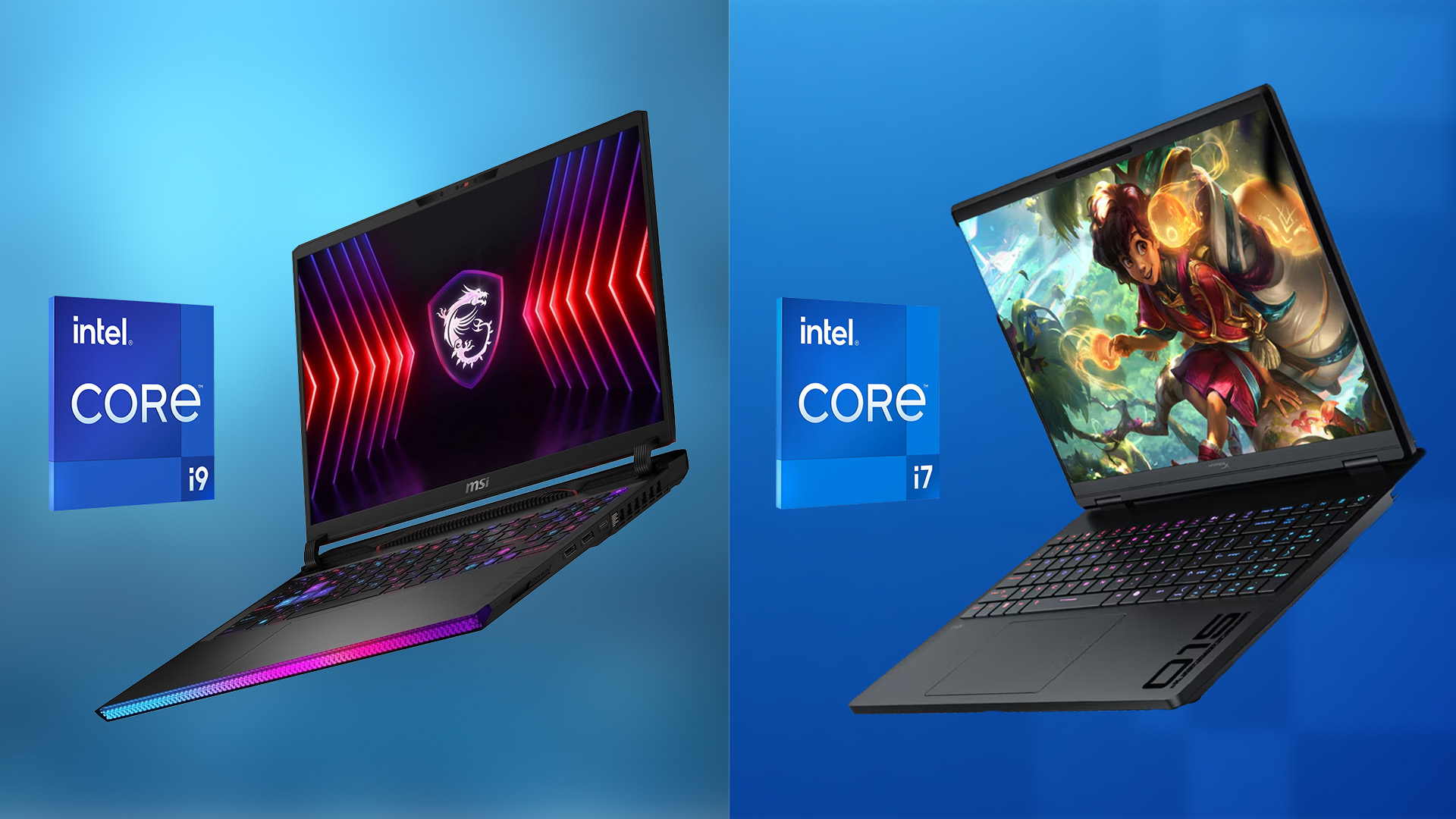
For professional use, the choice between i7 and i9 depends largely on the type of work you do.
An Intel Core i7 laptop is ideal for most business and productivity tasks, including:
- Working with documents, spreadsheets and presentations
- Managing emails and communication tools
- Running multiple everyday applications
It provides reliable and efficient experience for typical office and remote work environments.
An Intel Core i9 laptop, however, is better suited for more demanding professional workloads, such as:
- Data analysis and large datasets
- Software development environments
- Complex multitasking across heavy applications
In these scenarios, the extra performance helps reduce waiting times and improves overall efficiency.
Intel Core i7 vs i9 for Content Creation
Content creation is one area where the difference between i9 vs i7 for content creation becomes much more noticeable.
An Intel Core i9 laptop is particularly beneficial for:
- Video editing, especially in 4K or higher resolutions
- 3D rendering and animation
- Working with large creative files and projects
The extra processing power helps speed up rendering times and ensures smoother performance when working on complex tasks.
An Intel Core i7 laptop can still handle content creation, especially for lighter workloads. However, for more demanding projects, it may take longer to process tasks compared to an i9.
Are Intel Core i9 Laptops Worth It in 2026?
If you’re asking “should I buy an i9 laptop?”, the answer depends on how much you will benefit from its performance.
An Intel Core i9 laptop becomes a worthwhile investment when your usage goes beyond standard computing tasks and starts to demand consistent, high-level performance.
If you regularly work with demanding software, such as video editing tools, 3D design applications, or development environments, the extra power of an i9 processor can significantly improve your workflow. Tasks that would normally take longer like rendering or processing large files, can be completed faster and more efficiently.
Similarly, if you rely on heavy multitasking, such as running multiple complex applications at the same time, an i9 laptop provides the performance headroom needed to keep everything running smoothly without slowdowns.
Another key benefit is long-term performance. If you plan to use your laptop for several years and want it to keep up with increasingly demanding software, an i9 processor offers a level of future-proofing that can be valuable over time.
In these scenarios, the investment in an i9 laptop makes sense because you are actively using the extra performance it provides.
When an i7 Laptop Is the Better Choice
For many users, however, an Intel Core i7 laptop is the more practical and cost-effective option.
If your daily tasks include browsing, working on documents, attending video calls or general multitasking, an i7 processor delivers more than enough performance. In most everyday situations, the difference between i7 and i9 will not be noticeable.
In addition, i7 laptops are typically more power-efficient, which often results in better battery life and less heat generation. This makes them a better choice for users who value portability and longer usage on the go.
Another important factor is cost. Since i9 laptops are positioned as premium devices, they come at a higher price. If you don’t need the extra performance, choosing an i7 laptop allows you to save money while still getting excellent performance for your needs.
i9 vs i7 Laptop: Which Offers Better Value?
When comparing intel core i9 vs i7 laptop options from a value perspective, the answer is not about which processor is better overall, but which one is better for you.
An i7 laptop offers the best value for most users. It provides strong performance, better efficiency and a more affordable price, making it ideal for everyday use, work and study.
An i9 laptop, on the other hand, offers the best value for power users, professionals and creators who need that extra performance. In these cases, the higher cost is justified by the time saved and improved workflow efficiency.
Still unsure? Explore who should buy an i9 laptop to see if this level of performance is the right fit for your workload and usage.
How to Choose Between i7 and i9 Laptops
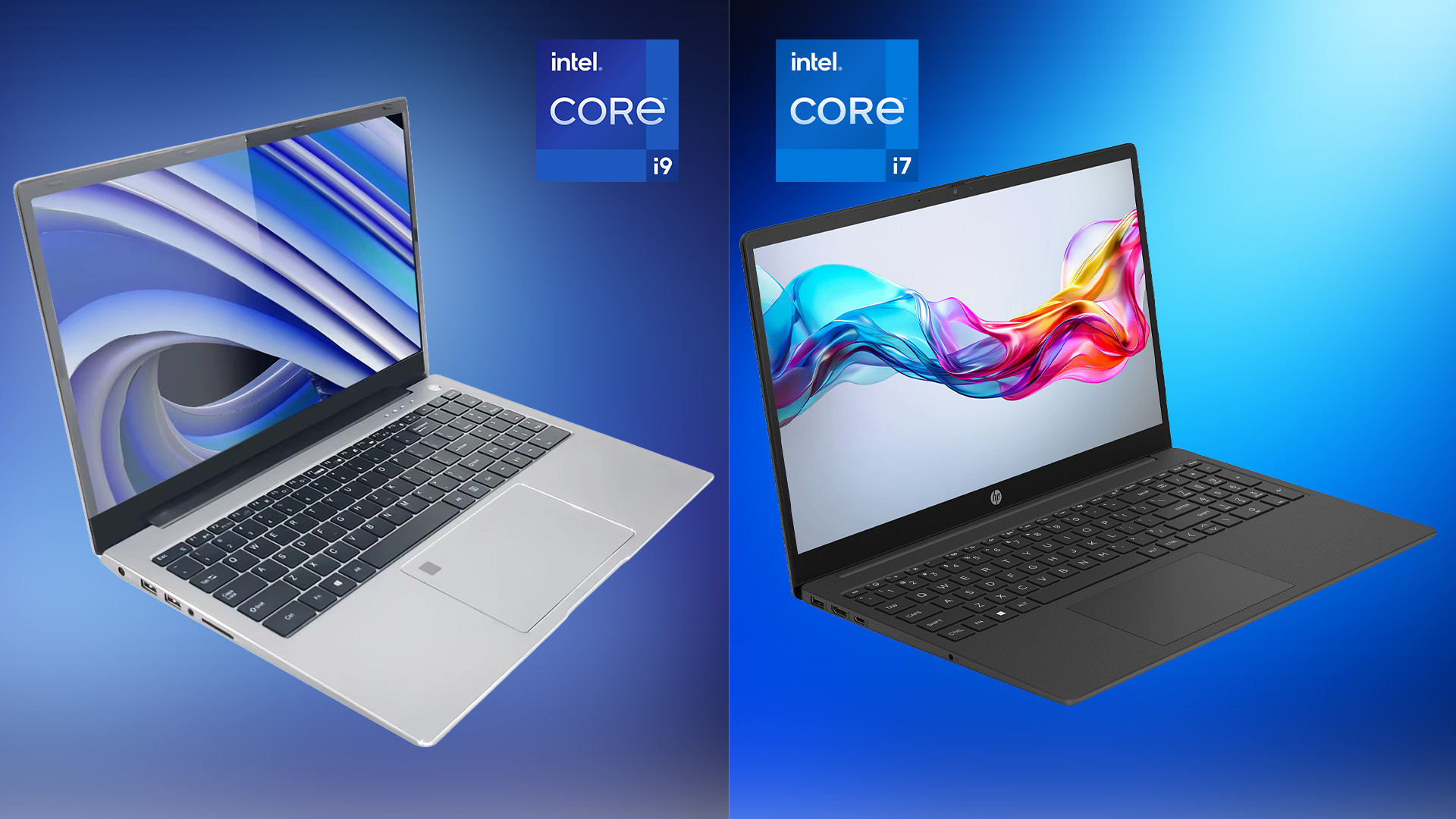
When deciding between an intel core i9 vs i7 laptop, the key is to focus on how you actually use your device rather than simply choosing the most powerful option. Both processors are designed for high performance, but they serve different types of users and workloads.
Making the right choice comes down to understanding your usage, budget and how future-proof you want your laptop to be.
Your Usage
The most important factor in choosing between i7 and i9 is how demanding your daily tasks are.
If your usage is focused on basic tasks, such as browsing, emails, documents and streaming, an Intel Core i7 laptop will deliver more than enough performance. It provides a smooth and responsive experience without unnecessary power.
For gaming, the difference between i9 vs i7 for gaming laptops is often smaller than expected. Most modern games rely more on the GPU, meaning an i7 paired with a strong graphics card can deliver excellent results. However, if you’re playing CPU-intensive games or streaming while gaming, an i9 can provide additional performance headroom.
When it comes to content creation, the gap becomes more noticeable. In comparisons like i9 vs i7 for content creation, an i9 processor performs better in tasks such as video editing, rendering and working with large files. It reduces processing times and helps maintain smooth performance during demanding workflows.
For heavy workloads, such as software development, data analysis, or running multiple complex applications, an i9 laptop is the better choice. It is designed to handle sustained performance under pressure, making it ideal for professional use.
Your Budget
Budget plays a major role in this decision. i9 laptops are positioned as premium devices, meaning they come at a higher price point.
If you don’t need the extra performance, an i7 laptop offers better value. It provides strong performance for everyday use, making it a practical choice for most users.
However, if your work requires high performance, investing in an i9 laptop can be worthwhile, as it improves efficiency and reduces time spent on demanding tasks.
Future-Proofing
Another important factor is how long you plan to use your laptop. Technology evolves quickly, and software requirements continue to increase over time.
If you want a device that can handle future workloads and remain relevant for longer, an i9 processor provides more headroom. This makes it a strong choice for users who want a long-term investment.
On the other hand, if your needs are unlikely to change significantly, an i7 laptop will continue to perform well for years without requiring the extra cost.
Final Verdict: i9 vs i7 Laptop in 2026
When comparing an intel core i9 vs i7 laptop, there is no one-size-fits-all answer. The right choice depends entirely on your needs and how you plan to use your laptop.
For most users in 2026, an i7 laptop will be more than enough. However, for professionals, creators and power users, an i9 remains a powerful and worthwhile investment.
To explore your options further, you can browse Intel Core i9 laptops, discover the full Intel laptop range, or check out the latest Intel 14th Gen laptops available at Box.co.uk. Whether you’re looking for gaming laptops with Intel CPUs or creator laptops with Intel CPUs, choosing the right processor ensures you get the best performance for your needs.
FAQs
Are Intel Core i9 laptops worth it in 2026?
Yes, but mainly for users who need high performance for demanding tasks.
Is i9 better than i7 for gaming?
Slightly, but GPU matters more than CPU for gaming.
Is i7 enough for work?
Yes, i7 laptops are more than capable for most professional tasks.
Is i9 better for content creation?
Yes, i9 processors handle rendering and heavy workloads more efficiently.
Should I buy an i9 or i7 laptop?
Choose i9 for performance, i7 for value and efficiency.
You can pay with:
*PayPal Credit Representative Example: Assumed credit limit £1,200, Representative 23.9% APR (variable). Purchase rate 23.9% p.a (variable).Terms & Conditions apply.


PayPal Credit and PayPal Pay in 3 are trading names of PayPal UK Ltd, 5 Fleet Place, London, United Kingdom, EC4M 7RD. Terms and conditions apply. Credit subject to status, UK residents only, Five Tech LTD acts as a broker and offers finance from a restricted range of finance providers. PayPal Pay in 3 is not regulated by the Financial Conduct Authority. Pay in 3 eligibility is subject to status and approval. 18+. UK residents only. Pay in 3 is a form of credit. Check if affordable and how you will repay. May make other borrowing more difficult or expensive. See product terms for more details.
Copyright © 1996-2026 Fivetech LTD | Terms and Conditions
box.co.uk & Box are trading names of Five Tech Limited. Registered office: Box LTD, Unit 10 Woodford Trading Estate, Woodford Green IG8 8HF