


 Menu
MenuMenu


Get Sales Advice from Mon - Fri 9am - 5:00pm:
020 3337 8950LAST UPDATED: February 23, 2026
Build the Ultimate Ryzen 7 9850X3D Gaming PC for 2026: Complete Guide
The Ryzen 7 9850X3D gaming PC build is aimed squarely at players who care about smooth frame delivery, high refresh rates, and consistent performance in real games, not just benchmark charts. In 2026, modern titles are far more demanding on system balance, and pairing the right components matters just as much as raw power. The Ryzen 7 9850X3D, with its excellent features, sits in a sweet spot for gamers who want elite CPU performance without overspending on cores they’ll never use.
Built around AMD's X3D cache technology, this setup is ideal for competitive shooters, open-world RPGs, and CPU-heavy games where frame pacing makes a real difference. Whether you're pushing high refresh gaming at 1440p or building a future-ready high-end gaming PC for upcoming releases, this guide focuses on smart component choices, long-term stability, and avoiding common build mistakes that can hold back an otherwise powerful system.
Ideal Use Cases for the Ryzen 7 9850X3D Gaming PC Build
If you're upgrading your current setup or building a gaming PC around the Ryzen 7 9850X3D, it's important to know what this system is realistically capable of. Here are the use cases where this build excels.
Target Gaming Resolutions and Refresh Rates
The Ryzen 7 9850X3D gaming PC build is designed primarily for high refresh rate gaming, where frame consistency matters more than headline FPS. With 8 Zen 5 cores and 16 threads running up to a 5.6 GHz boost clock, paired with a massive 96 MB L3 cache, the CPU excels at keeping frame times tight at 1080p and 1440p.
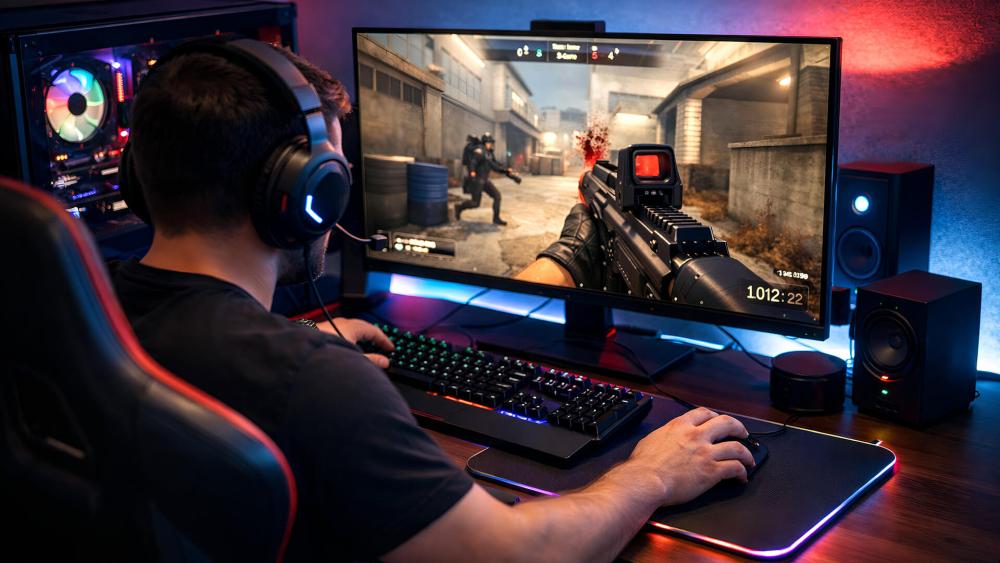
Competitive titles like CS2, Valorant, and Warzone benefit heavily from the cache-heavy X3D design, especially when targeting 165Hz, 240Hz, or higher refresh rates. The large L3 cache reduces memory access latency, which helps maintain smooth performance during fast-paced firefights and CPU-limited scenarios.
At 4K, the workload shifts more heavily towards the GPU, but the CPU still plays an important role in scene management, physics calculations, and background tasks. Even at higher resolutions, a gaming PC with Ryzen 7 9850X3D helps maintain stable frame pacing in busy environments and large open maps.
Types of Games This Build Excels At
The Ryzen 7 9850X3D is particularly strong in CPU-heavy and latency-sensitive games. Strategy titles, simulation games, MMOs, and large open-world RPGs benefit from the combination of high clock speeds and expanded cache, especially where AI routines, world streaming, and physics calculations are involved.
Thanks to Zen 5 architecture improvements and support for modern instruction sets like AVX-512, this CPU handles complex workloads efficiently while keeping power draw manageable within its 120W TDP. This helps minimise CPU–GPU bottlenecks in games that scale poorly across multiple cores but respond well to cache and frequency.
For players who alternate between esports and modern AAA releases, this Ryzen X3D gaming build delivers consistent performance without relying on aggressive tuning or manual optimisation.
What "High-End" Gaming Means in 2026
In 2026, a high-end gaming PC is defined less by raw FPS and more by system stability, predictable performance, and upgrade flexibility. The Ryzen 7 9850X3D gaming PC build focuses on delivering smooth gameplay across long sessions, even as game engines become more complex and background workloads increase.
Support for PCIe 5.0, DDR5 memory, and modern connectivity ensures the platform can scale alongside newer GPUs and faster storage. Combined with AMD's Precision Boost 2 and Precision Boost Overdrive support, the CPU dynamically manages performance without sacrificing reliability, making it well-suited for demanding modern games and future releases.
Core Components for a Ryzen 7 9850X3D Gaming Build
Choosing the right parts is what makes or breaks a Ryzen 7 9850X3D gaming PC build. This section focuses on components that directly impact gaming performance, compatibility, system stability, and long-term upgrade potential, without overspending on hardware that doesn't translate into real-world gains.
Processor — Ryzen 7 9850X3D
The Ryzen 7 9850X3D sits at the top end of AMD's gaming-focused lineup and is widely considered one of the best Ryzen CPUs for gamers who prioritise smooth frame delivery over raw core counts. Built on Zen 5 architecture and manufactured using TSMC's 4 nm process, this Ryzen CPU combines efficiency with high-frequency performance.
With 8 cores, 16 threads, and a boost clock of up to 5.6 GHz, the CPU is well-suited for modern game engines that favour fast cores and low latency. The standout feature remains its 96 MB of L3 cache, which significantly reduces memory access delays in CPU-bound scenarios.
For a high-end gaming PC in 2026, the Ryzen 7 9850X3D offers an excellent balance of clocks, cache, and power efficiency, making it a strong choice among current Ryzen desktop CPUs and one of the most compelling AM5 processors for gaming-first systems.
Graphics Card Pairing and CPU–GPU Balance
A Ryzen 7 9850X3D build benefits most from a carefully matched GPU rather than simply the highest-tier option available. At 1080p and 1440p, pairing the CPU with a mid-to-high-end graphics card helps avoid a CPU-GPU bottleneck, ensuring consistent frame pacing in competitive and fast-action titles.
At 4K, performance becomes more GPU-dependent, but the X3D gaming CPU still plays a key role in handling draw calls, physics, and background tasks. This balance is especially important in modern engines that scale unevenly across hardware.
As part of a modern Ryzen PC build, the processor pairs particularly well with Radeon GPUs for gaming, which are designed to scale efficiently across resolutions while maintaining low driver overhead.
Motherboard Platform and AM5 Considerations
A Ryzen 7 9850X3D gaming PC build is based on the AM5 platform, offering PCIe 5.0 support, native DDR5 compatibility, and access to up to 24 usable PCIe lanes. This allows high-speed GPUs and NVMe storage to run without contention, which is critical for maintaining system stability during long gaming sessions.
The wide range of supported chipsets, including B650, X670, and newer 800-series boards, gives builders flexibility based on features and budget. Choosing quality AM5-compatible motherboards also improves AM5 upgrade longevity, making it easier to adopt future CPUs without replacing the entire platform.
Memory Selection and DDR5 Stability
DDR5 is mandatory on AM5, but speed and stability matter far more than extreme frequencies. The Ryzen 7 9850X3D officially supports DDR5-5600 in dual-channel configurations, which provides a reliable balance of bandwidth and latency for gaming workloads.
Using DDR5 RAM kits in an R7 9850X3D build helps avoid BIOS issues and memory instability, especially when running long gaming sessions. A well-configured dual-channel setup ensures consistent performance in titles sensitive to memory latency, without relying on aggressive overclocking.
Storage, Cooling and Power — Building for Stability
Storage speed, cooling capacity, and power delivery all play a direct role in system stability when it comes to a Ryzen 7 9850X3D gaming PC build.
Storage Choices for Modern Gaming PCs
Modern games are larger, stream more assets in real time, and rely heavily on fast storage to avoid stutter during gameplay. For a modern gaming PC, NVMe storage is no longer optional. The Ryzen 7 9850X3D supports PCIe 5.0 and provides ample PCIe lanes to run high-speed drives without compromising GPU bandwidth.
Using NVMe SSDs for gaming improves load times, reduces in-game texture pop-in, and helps maintain smooth performance in open-world titles that stream assets dynamically.
Cooling Requirements for X3D Processors
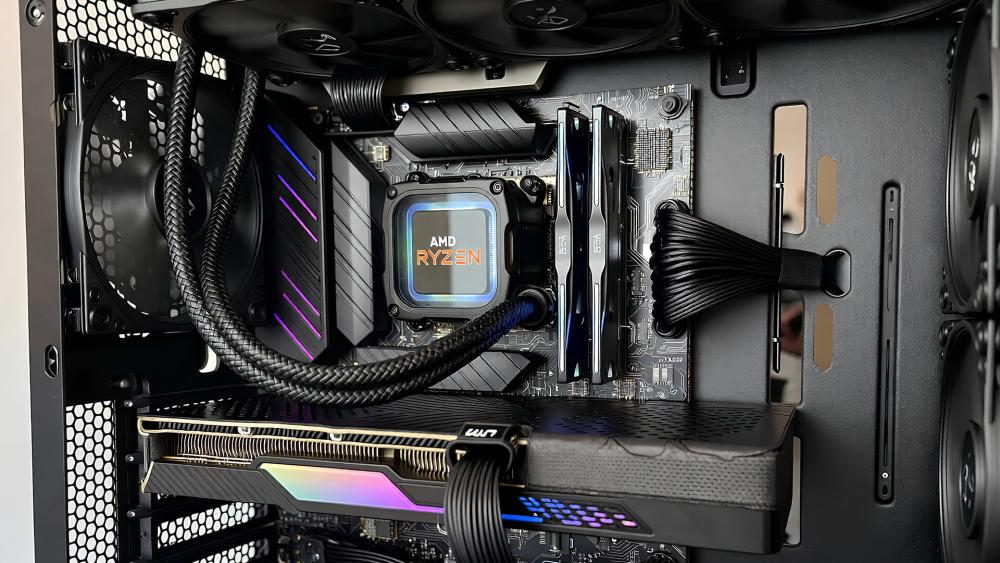
Although the Ryzen 7 9850X3D is rated at a 120W TDP, X3D processors behave differently under load due to their stacked cache design. AMD recommends a liquid cooler for optimal performance, as maintaining lower temperatures allows Precision Boost 2 to sustain higher clock speeds more consistently.
Proper cooling isn't about chasing lower temperatures for their own sake, but about preserving thermal headroom during extended gaming sessions. A quality cooling solution ensures the CPU avoids unnecessary thermal throttling, which helps maintain stable frame pacing in CPU-heavy titles. For this reason, high-performance CPU coolers are a key part of any serious Ryzen X3D build.
Power Supply Sizing and Headroom
Power delivery is often underestimated in high-end builds, but it plays a major role in long-term reliability. Choosing one of the right PSUs for gaming builds ensures clean power delivery, reduces the risk of system crashes under load, and provides PSU wattage headroom for future GPU upgrades. A high-quality unit with sufficient overhead also improves overall system stability, especially during intense gaming sessions where both CPU and GPU are heavily loaded.
Case Airflow and Thermal Balance
Even the best components will underperform if the airflow is poor. A well-designed case ensures fresh air reaches the CPU cooler and GPU while hot air is efficiently exhausted. This is especially important for X3D systems, where consistent temperatures help maintain boost behaviour.
Good airflow optimisation also reduces noise, prevents heat build-up around VRMs and memory, and improves component longevity. Choosing the right gaming PC cases with proper fan support and internal layout helps maintain a balanced thermal environment, which is critical for keeping a high-end gaming PC running smoothly over time.
Sample Configuration Frameworks for a 9850X3D Gaming PC
Rather than listing exact parts, these configurations show how to build a gaming PC with Ryzen 7 9850X3D around different gaming priorities while keeping performance balanced and upgrade-friendly.
High-Refresh Gaming-Focused Configuration
This setup prioritises high FPS and low latency at 1080p and 1440p. The Ryzen X3D gaming build plays to its strengths here, delivering consistent frame times in competitive titles where CPU performance matters most. GPU selection should be strong but balanced, avoiding overspend where it won't improve gameplay.
4K Gaming and Future-Ready Configuration
For 4K gaming, the GPU takes on most of the performance workload, but the Ryzen 7 9850X3D still plays an important supporting role by handling game logic, draw calls, and background processes efficiently. This balance helps prevent frame pacing issues and ensures the system stays responsive as newer GPUs and higher-resolution displays become more demanding.
Components You Can Scale Without Affecting Gaming Performance
Storage capacity, cooling solutions, case design, and RAM capacity can be upgraded without impacting FPS. Focusing on these areas allows a high-end gaming PC to scale over time without disrupting the core performance of the Ryzen 7 9850X3D gaming CPU.
Common Mistakes to Avoid with a 9850X3D Build
Even a well-designed Ryzen 7 9850X3D gaming PC build can fall short if a few key areas are overlooked. Avoiding these common mistakes helps maintain performance, stability, and long-term reliability.
Overspending Where It Doesn't Improve Gaming Performance
Chasing extreme RAM speeds, oversized cooling setups, or premium features that don't affect FPS rarely improves real gameplay. A balanced Ryzen 7 9850X3D build delivers better results than throwing budget at components with diminishing returns.
Ignoring BIOS, Memory and Platform Compatibility
Skipping BIOS updates or mixing incompatible DDR5 kits can lead to instability, crashes, and inconsistent performance. Platform compatibility plays a major role in system stability, especially on AM5.
Underestimating Cooling and Airflow Requirements
X3D processors benefit from consistent temperatures. Poor airflow or undersized cooling can limit boost behaviour and lead to unnecessary throttling, reducing the long-term performance of a Ryzen X3D build.
Upgrading an Existing PC vs Building New
Whether upgrading makes sense or a full rebuild is the better option depends largely on your current platform and component compatibility with the Ryzen 7 9850X3D processor.
Upgrading an Existing AM5 System
If you're already on the AM5 platform, upgrading is often the smarter move. Reusing compatible DDR5 memory, storage, and a capable cooling solution allows you to drop the Ryzen 7 9850X3D into an existing setup with minimal changes. This approach keeps costs down while still delivering a noticeable gaming performance uplift, especially in CPU-limited titles.
When Building New Is the Better Option
If you're coming from an older platform, lack DDR5 support, or are limited by weak cooling and power delivery, a full rebuild is usually the better long-term choice. Starting fresh ensures proper compatibility, cleaner thermals, and a more stable foundation for a gaming PC setup that can scale with future GPUs and hardware upgrades.
Final Words
A Ryzen 7 9850X3D gaming PC build is ideal for gamers who value smooth frame pacing, high refresh performance, and long-term platform flexibility. With the right balance of components, it delivers reliable performance across competitive and modern AAA games in 2026 without unnecessary overspending.
Frequently Asked Questions
Is the Ryzen 7 9850X3D suitable for high-end gaming PC builds in 2026?
Yes, it's designed specifically for gaming, offering excellent frame consistency and strong performance in CPU-heavy titles.
What type of GPU works best with Ryzen 7 9850X3D?
Mid-to-high-end GPUs pair best, ensuring balanced performance without creating CPU or GPU bottlenecks.
Is DDR5 required for a Ryzen 7 9850X3D?
Yes, the AM5 platform requires DDR5 memory for compatibility and optimal performance.
Can I reuse existing AM5 parts with the Ryzen 7 9850X3D?
If your motherboard, DDR5 memory, cooling, and power supply are compatible, many AM5 components can be reused.
You can pay with:
*PayPal Credit Representative Example: Assumed credit limit £1,200, Representative 23.9% APR (variable). Purchase rate 23.9% p.a (variable).Terms & Conditions apply.


PayPal Credit and PayPal Pay in 3 are trading names of PayPal UK Ltd, 5 Fleet Place, London, United Kingdom, EC4M 7RD. Terms and conditions apply. Credit subject to status, UK residents only, Five Tech LTD acts as a broker and offers finance from a restricted range of finance providers. PayPal Pay in 3 is not regulated by the Financial Conduct Authority. Pay in 3 eligibility is subject to status and approval. 18+. UK residents only. Pay in 3 is a form of credit. Check if affordable and how you will repay. May make other borrowing more difficult or expensive. See product terms for more details.
Copyright © 1996-2026 Fivetech LTD | Terms and Conditions
box.co.uk & Box are trading names of Five Tech Limited. Registered office: Box LTD, Unit 10 Woodford Trading Estate, Woodford Green IG8 8HF