


 Menu
MenuMenu


Get Sales Advice from Mon - Fri 9am - 5:00pm:
020 3337 8950LAST UPDATED: February 23, 2026
Ryzen 7 9850X3D Release: Everything UK Gamers Need to Know
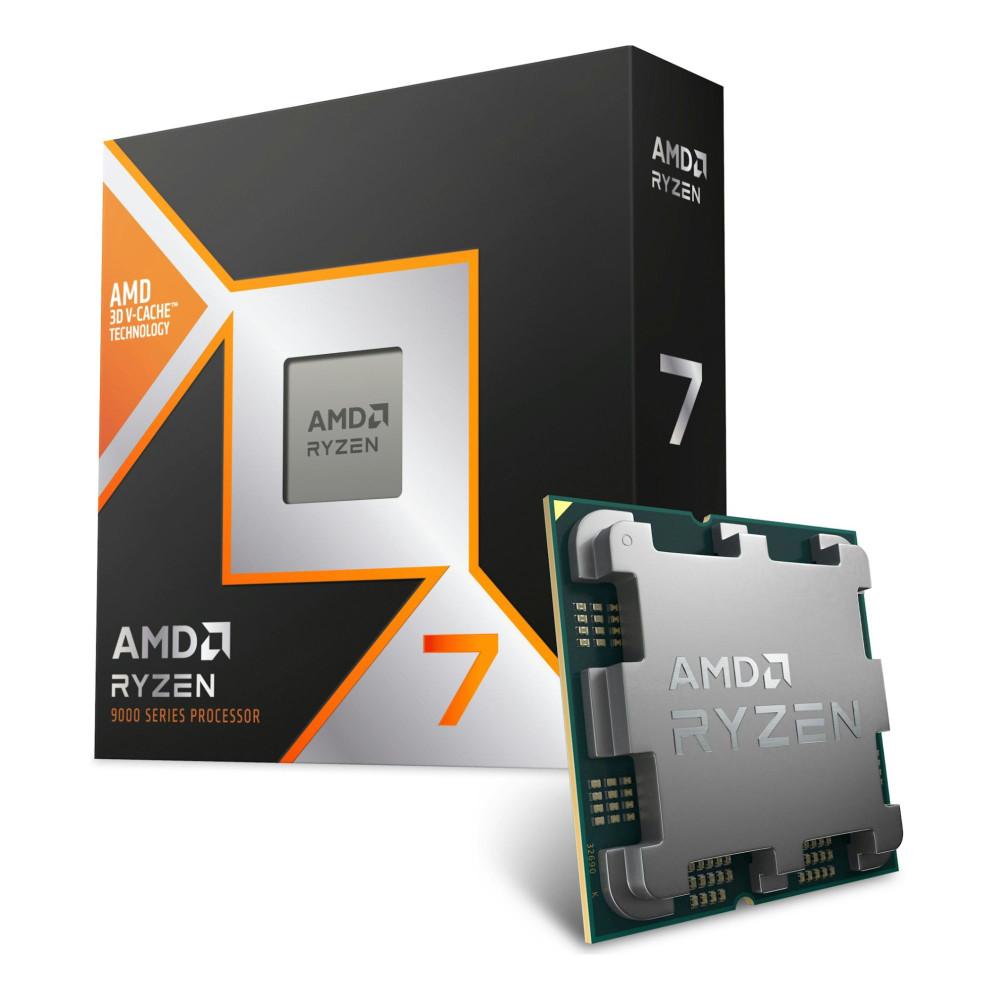
The Ryzen 7 9850X3D desktop processor is now officially available, having launched on 29 January 2026 following its reveal at CES 2026. AMD positioned it as a refined addition to its X3D gaming CPU lineup, sitting within the Ryzen 9000 series as a higher clocked option designed to push gaming performance further rather than replace existing models.
Built on Zen 5 architecture and AMD's 3D V-Cache technology, the Ryzen 7 9850X3D targets gamers who care about frame time consistency, responsiveness, and CPU-bound performance rather than headline core counts. With the Ryzen 7 9850X3D now released in the UK, gamers planning an upgrade or a new AM5 build have a clearer picture of where this processor fits and what kind of real-world gains to expect.
In this guide, we break down what actually changes with the Ryzen 7 9850X3D, how it behaves in modern games, and who it makes sense for as one of AMD's most focused gaming CPU launches of early 2026.
Already made up your mind on the Ryzen 7 9850X3D? Buy it now from Box.co.uk.
Ryzen 7 9850X3D Gaming Performance — What Changes
For most players, the Ryzen 7 9850X3D is less about chasing higher peak frame rates and more about how games feel during real play. Built as a Ryzen X3D gaming CPU, it focuses on reducing CPU bottlenecks that occur in competitive, fast-paced titles, especially at high refresh rates. Compared to standard Zen 5 chips in the AMD Ryzen processors, the extra cache plays a bigger role than raw clock speed in everyday gaming scenarios.
Where X3D CPUs Deliver Real Gaming Gains
The biggest improvements with the Ryzen 7 9850X3D appear in CPU-bound gaming, where the processor, not the GPU, limits performance. Esports titles, strategy games, and simulation-heavy releases benefit most, as these rely heavily on fast data access. This is where the Ryzen 7 X3D processor design helps maintain higher and more stable frame rates than non-X3D CPUs.
Frame Consistency and 1% Lows (Why Gamers Notice It)
What many gamers notice first with the Ryzen 7 9850X3D is improved frame time consistency rather than a dramatic FPS jump. Stronger 1% lows mean fewer stutters and dips during busy scenes, which matters in high refresh rate gaming, where smoothness directly affects responsiveness. For competitive players, this behaviour is often more valuable than raw averages.
When Performance Gains Are Limited (GPU-Bound Scenarios)
In GPU-bound situations, such as playing at 1440p or 4K with a powerful graphics card, the Ryzen 7 9850X3D offers smaller gains. At these resolutions, the GPU does most of the work, so differences between CPUs narrow. Even so, the processor still helps maintain consistent performance during heavy moments, especially when paired sensibly within a balanced gaming build.
What's New with The Ryzen 7 9850X3D
This generation, AMD is not reinventing its gaming formula. Instead, the Ryzen 7 9850X3D focuses on refinement, stability, and smarter use of existing strengths within the AMD Ryzen 9000 series. For gamers familiar with earlier X3D chips such as AMD Ryzen 7 9800X3D, the changes are subtle but intentional, aimed at improving consistency rather than reshaping how games behave.
Zen 5 + X3D — What's Different This Generation
At its core, the Ryzen 7 9850X3D combines Zen 5 architecture with second-generation 3D V-Cache, allowing AMD to fine-tune how cache and cores interact under gaming workloads. While the overall X3D concept remains the same, memory access and scheduling have been refined to better support modern game engines.
Clock Behaviour and Cache Improvements (High Level)
One of the key updates with the Ryzen 7 9850X3D is how it balances higher clock speeds alongside its large cache pool. Rather than pushing aggressive frequencies at all times, AMD has focused on more predictable boost behaviour that works in harmony with cache-heavy gaming scenarios. This approach helps the Ryzen 7 X3D processor maintain smoother performance without relying on extreme tuning or manual adjustments.
What Stays Familiar for Existing X3D Users
Despite these updates, much of the experience remains familiar. The Ryzen 7 9850X3D continues to use the AM5 socket, supports DDR5 RAM, and fits cleanly into existing AM5 gaming builds. This consistency is deliberate, ensuring that users upgrading within the AMD Ryzen ecosystem can move to the latest Ryzen processor without needing to rethink their entire platform.
Specs That Actually Matter for Gamers
On paper, the Ryzen 7 9850X3D looks familiar, but a few key characteristics are what define how it performs in real gaming builds. This section focuses only on what affects gameplay, not spec-sheet noise.
Core Count, Boost Behaviour and Cache
With 8 cores and 16 threads, the Ryzen 7 9850X3D sits in the sweet spot for modern games that favour strong single-threaded performance over high core counts. Its boost behaviour is tuned to work alongside 3D V-Cache, allowing the AMD Ryzen 7 processor to prioritise fast data access rather than relying purely on frequency. For gaming workloads, this balance matters far more than adding extra cores.
Power Draw and Cooling Expectations
Rated at 120W, the Ryzen 7 9850X3D is designed to deliver high gaming performance without excessive power spikes. Thermal behaviour remains predictable, but sustained performance benefits from a quality cooling solution. Pairing the chip with capable CPU coolers helps maintain consistent boost behaviour during long gaming sessions.
What the Spec Sheet Doesn't Tell You About Gaming
What sets the Ryzen 7 9850X3D apart as a Ryzen X3D gaming CPU is not just its raw specifications, but how efficiently it feeds game engines with data. Reduced memory dependency, smoother frame delivery, and improved responsiveness are outcomes you feel while playing, even when average FPS numbers look similar to other high-end CPUs.
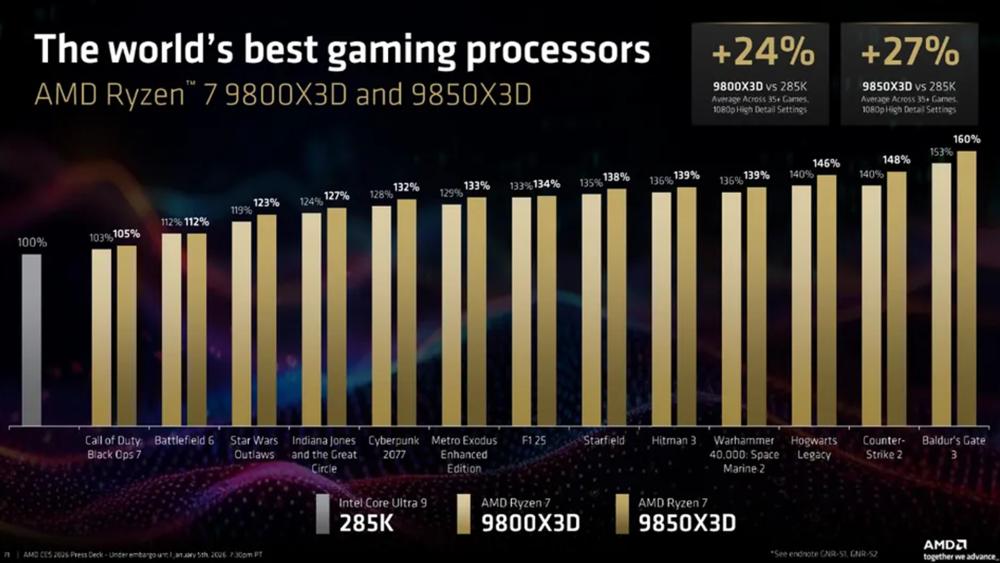
Image Credits: AMD
Platform Compatibility Checklist (AM5)
The Ryzen 7 9850X3D is designed to slot cleanly into the existing AM5 ecosystem, but there are a few practical checks UK gamers should make before installing or building a new 9850X3D build.
AM5 Motherboard Support
The Ryzen 7 9850X3D uses the AM5 socket and is supported across current AM5 AMD motherboards, including B650, X670, and newer chipsets. From a hardware standpoint, no platform change is required, making upgrades straightforward for users already on AM5.
BIOS Updates and Launch-Day Readiness
Before installing the Ryzen 7 9850X3D, a BIOS update is essential. Motherboards need the correct AGESA version to recognise and properly optimise the processor. Checking manufacturer support pages ahead of time helps avoid boot issues on first power-up.
DDR5 Pairing Basics for Stability
The Ryzen 7 9850X3D is far less sensitive to memory speed than non-X3D chips. Stable DDR5 desktop memory matters more than chasing high frequencies.
PCIe 5.0 — When It Matters and When It Doesn't
While the platform supports PCIe 5.0, most gamers will see little difference in day-to-day play. For the Ryzen 7 9850X3D, PCIe 5.0 is more about future-proofing than immediate gaming gains.
Who The Ryzen 7 9850X3D Is For
The Ryzen 7 9850X3D is designed for gamers who prioritise smooth, consistent performance in modern titles rather than raw core counts or mixed workloads. Its strengths are most apparent in focused gaming builds where CPU behaviour directly affects responsiveness and frame delivery. The Ryzen 7 9850X3D is likely a strong fit if you fall in one of the categories below.
- Competitive and high refresh rate gamers: If you play esports titles or fast shooters on 144Hz, 240Hz, or higher displays, the Ryzen 7 9850X3D delivers smoother frame delivery and stronger consistency where CPU-bound gaming matters most.
- Single-GPU gaming builds: The Ryzen 7 9850X3D works best in focused gaming systems with one powerful GPU, where CPU scheduling and cache efficiency directly affect moment-to-moment responsiveness. It performs really well when you pair it with an AMD graphics card in a balanced build.
- Gamers prioritising smoothness over peak FPS: If you value stable gameplay, fewer dips, and better frame pacing rather than chasing the highest benchmark number, the Ryzen X3D gaming CPU design aligns closely with that goal.
Upgrading vs Building New — What UK Gamers Should Consider
Deciding how to adopt the Ryzen 7 9850X3D depends on where you are starting from. For UK gamers, the biggest factors are platform age, budget efficiency, and how much existing hardware can realistically carry over.
- Upgrading from older Ryzen systems: If you are running an older Ryzen platform, moving to the Ryzen 7 9850X3D represents a clear step forward in gaming-focused performance. The upgrade makes the most sense when your current system is already showing limits in newer or more CPU-intensive titles.
- Upgrading from Intel platforms: For Intel users, the jump to the Ryzen 7 9850X3D is more of a reset than a drop-in upgrade. That said, gamers focused on competitive play and smooth frame delivery may find the shift worthwhile, especially if their current CPU struggles in CPU-bound scenarios.
- Building a new gaming PC around the 9850X3D: In a new gaming PC build, the Ryzen 7 9850X3D works best as part of a well-balanced system rather than an over-spec'd one. When the rest of the build is aligned with its gaming-first design, the result is a setup that feels responsive, stable, and consistent across modern titles.
Final Words
The Ryzen 7 9850X3D is a focused gaming processor that prioritises consistency, responsiveness, and smooth frame delivery over headline-grabbing specs. Introduced as part of AMD's CES 2026 lineup, it refines the X3D formula rather than reinventing it, making it especially appealing for gamers who play CPU-sensitive titles or run high refresh rate displays.
Frequently Asked Questions
What gaming improvements does the Ryzen 7 9850X3D bring?
The Ryzen 7 9850X3D focuses on smoother gameplay through better frame time consistency and stronger 1% lows. These improvements are most noticeable in CPU-bound games and competitive titles where responsiveness matters.
What's new compared to previous X3D Ryzen processors?
As part of the AMD Ryzen 9000 series, the Ryzen 7 9850X3D builds on Zen 5 with refined cache behaviour and improved boost control. The changes are incremental, aimed at stability and efficiency rather than large generational jumps.
Do I need a new motherboard to use the Ryzen 7 9850X3D?
The Ryzen 7 9850X3D uses the AM5 socket. If you already have an AM5 system, a compatible BIOS update is usually all that's required. Older platforms will need a full motherboard upgrade.
Is memory speed important for the Ryzen 7 9850X3D?
Unlike many CPUs, the Ryzen 7 9850X3D is less sensitive to memory speed thanks to its large cache. Stable DDR5 configurations tend to matter more than pushing high frequencies.
Who should consider the AMD R7 9850X3D?
The AMD R7 9850X3D is best suited for gamers focused on smooth performance, competitive play, and high refresh rate gaming. Users prioritising heavy productivity workloads may find better value elsewhere.
You can pay with:
*PayPal Credit Representative Example: Assumed credit limit £1,200, Representative 23.9% APR (variable). Purchase rate 23.9% p.a (variable).Terms & Conditions apply.


PayPal Credit and PayPal Pay in 3 are trading names of PayPal UK Ltd, 5 Fleet Place, London, United Kingdom, EC4M 7RD. Terms and conditions apply. Credit subject to status, UK residents only, Five Tech LTD acts as a broker and offers finance from a restricted range of finance providers. PayPal Pay in 3 is not regulated by the Financial Conduct Authority. Pay in 3 eligibility is subject to status and approval. 18+. UK residents only. Pay in 3 is a form of credit. Check if affordable and how you will repay. May make other borrowing more difficult or expensive. See product terms for more details.
Copyright © 1996-2026 Fivetech LTD | Terms and Conditions
box.co.uk & Box are trading names of Five Tech Limited. Registered office: Box LTD, Unit 10 Woodford Trading Estate, Woodford Green IG8 8HF