


 Menu
MenuMenu


Get Sales Advice from Mon - Fri 9am - 5:00pm:
020 3337 8950LAST UPDATED: July 07, 2026
What Is 5G? A Simple Guide to How It Works and Why It Matters
If you have seen 5G on your phone, router, or broadband plan and wondered what is 5G, the simple answer is this: 5G is the fifth generation of mobile network technology. It is designed to give faster mobile speeds, lower latency, and better network capacity than older mobile networks.
This guide explains the 5G meaning in plain English, how 5G works, what 5G does, how it compares with 4G, what 5G+ means, and whether you actually need it. We will also cover 5G smartphones, laptops, routers, broadband, and everyday uses like streaming, gaming, and video calls.
Quick answer: 5G is a newer mobile network designed for faster speeds, quicker response times, and better performance in busy areas. It can help with downloads, streaming, online gaming, video calls, mobile broadband, and connected devices, but the real experience depends on your device, network, location, and coverage.
What Is 5G?

5G is the next generation of mobile network technology after 4G. It connects phones, tablets, routers, laptops, and smart devices to the internet using radio signals from mobile masts.
The main goal of 5G is to improve three things:
- Speed
- Response time
- Network capacity
That means 5G can support faster downloads, smoother streaming, better performance in crowded places, and more connected technology. Mobile networks have improved in stages:
| Network | What It Helped Enable |
|---|---|
| 2G | calls and texts |
| 3G | mobile internet and early smartphones |
| 4G | faster browsing, apps and video streaming |
| 5G | faster speeds, lower latency and better capacity |
How It Differs from Older Mobile Networks
5G improves on older mobile networks by using newer network technology and more efficient use of spectrum. In everyday terms, it can offer:
- Faster mobile speeds
- Lower latency
- Better capacity in busy areas
- Stronger support for smart devices
- Improved mobile broadband options
- Better performance for real-time apps
However, 5G coverage is not the same everywhere. A 5G phone in a strong signal area can feel very quick, while the same phone in a weak 5G area may not feel much different from 4G.
Why It Matters Today
5G matters because more people now rely on mobile connectivity for work, entertainment, and daily tasks.
It helps with:
- Streaming on mobile
- Online gaming on mobile
- Video calls
- Remote work
- Mobile hotspot use
- 5G broadband
- Connected cars
- Smart devices
- Business devices
- Crowded venues
If you are buying a new phone, it makes sense to compare 5G smartphones, especially if you want a device that is ready for faster networks over the next few years.
How 5G Works
5G works by connecting your device to a mobile network through radio signals. Your phone or router sends and receives data from nearby mobile masts, which connect back into the wider internet.
The experience depends on:
- Your 5G device
- Your mobile network
- The nearest mast
- Signal strength
- Network traffic
- Building materials
- Distance from the mast
- The type of 5G being used
The Basics of Mobile Network Technology
A 5G mobile network has three simple parts:
- Device: Your phone, tablet, laptop, or router.
- Radio access network: The masts and antennas that connect your device.
- Core network: The system that manages data, traffic, and connections.
When you stream a video or open an app, your device sends a request through the network. The network then returns the data to your device. 5G aims to make that process faster and more efficient.
Speed, Capacity and Latency
Three terms matter most when comparing 5G:
| Term | What It Means | Why It Matters |
|---|---|---|
| Speed | How quickly data downloads or uploads | Faster apps, downloads and streaming |
| Capacity | How many users/devices the network can support | Better performance in busy areas |
| Latency | How quickly the network responds | Better gaming, video calls and real-time apps |
Low latency is especially useful for gaming and live communication because it reduces delay between your action and the network response.
Why 5G Feels Faster
5G can feel faster because it improves more than download speed.
It can help with:
- Quicker app loading
- Smoother video streaming
- Faster file downloads
- Better hotspot performance
- Less lag in some online games
- Smoother video calls
- Better performance at events or stations
That said, 5G speeds vary. The best results usually come when you have a compatible device, strong signal, and good 5G coverage.
What Is 5G+?
5G+ is usually a network provider’s name for a more advanced 5G experience. In the UK, some networks use names like 5G+ or 5G Ultra for 5G Standalone services.
The key point: 5G+ is not always a universal technical label. It can mean different things depending on the provider.
5G+ Meaning in Simple Terms
5G+ often refers to a newer version of 5G that uses a more complete 5G network from end to end.
Standard 5G can sometimes rely partly on older 4G network infrastructure. 5G+ or 5G Standalone is designed to use a full 5G core, which can help unlock better performance over time.
5G vs 5G+
| Feature | 5G | 5G+ |
|---|---|---|
| Basic meaning | Fifth-generation mobile network | More advanced 5G service, often standalone 5G |
| Availability | Wider | More limited and location-dependent |
| Device support | Many modern phones | Needs compatible phone and plan |
| Performance | Faster than 4G in good conditions | Better capacity, latency and reliability potential |
| Best for | Everyday mobile use | Busy places, gaming, video calls and future services |
Is 5G+ Better or Worse Than 5G?
5G+ is generally better than standard 5G when it is available, but only if your phone, plan and location support it.
It may offer:
- Faster uploads and downloads
- Better reliability in busy areas
- Lower latency
- Improved power efficiency
- Better end-to-end security
- Stronger future-ready network features
For most people, normal 5G is already enough for everyday use. 5G+ matters more if you want the best mobile network experience available in your area.
5G vs 4G: What’s the Difference?
The simplest 5G vs 4G comparison is this: 5G is built to be faster, more responsive, and better at handling lots of connected devices.
4G is still useful and widely available, but 5G is better suited to modern data-heavy tasks.
For a deeper comparison, read our full guide to 5G vs 4G that covers it in more detail.
Speed Improvements
5G speeds can be much faster than 4G, but real-world speeds depend on signal, coverage, device, and network congestion.
5G can help with:
- Faster app downloads
- Quicker system updates
- Smoother HD and 4K streaming
- Faster cloud file access
- Better mobile hotspot use
- Improved 5G broadband
Network Response Time
Latency is the time it takes for data to travel between your device and the network.
Lower latency helps with:
- Online gaming
- Video calls
- Live streaming
- Remote working apps
- Cloud gaming
- Real-time navigation
- Connected technology
4G is still fine for many everyday tasks, but 5G is designed to respond more quickly.
Device and Coverage Considerations
To use 5G, you need:
- A 5G-ready device
- A 5G plan or SIM
- 5G coverage in your area
- Network support from your provider
If one of those is missing, your device will usually fall back to 4G or another available network.
What 5G Means for Everyday Use
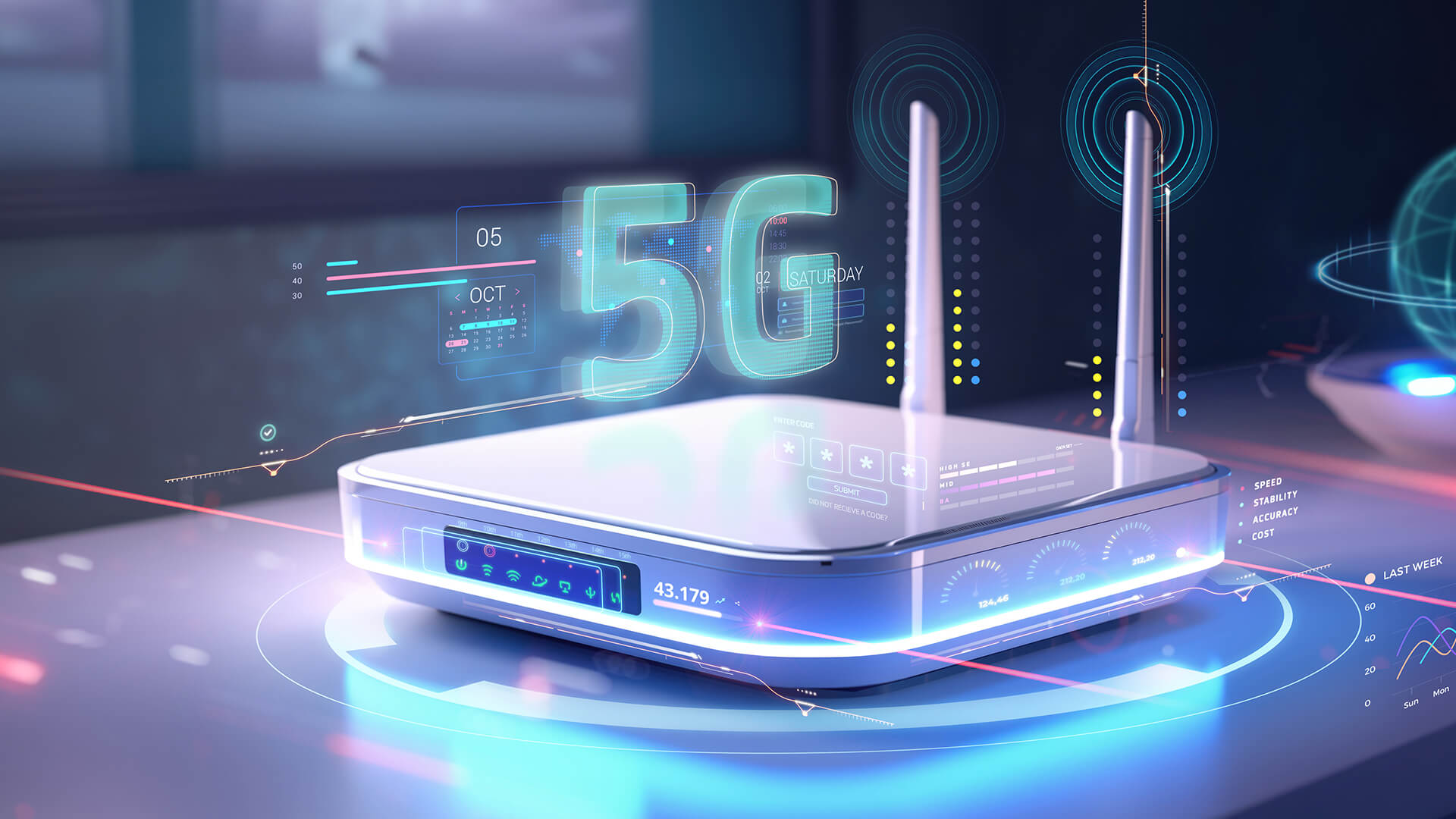
The benefits of 5G are easiest to understand through daily tasks.
Streaming and Downloads
5G can make streaming and downloads feel smoother, especially when signal is strong.
It can help with:
- Netflix and YouTube streaming
- Music streaming
- App downloads
- Large file downloads
- Cloud backups
- Software updates
- Hotspot use for laptops
For people who watch video on the move, 5G can reduce buffering and make higher-quality streaming more reliable.
Gaming and Real-Time Apps
Mobile gaming benefits from both speed and latency. 5G can help online games feel more responsive, especially for cloud gaming and multiplayer games.
It can help with:
- Cloud gaming
- Mobile shooters
- Racing games
- Live multiplayer
- Voice chat
- Game downloads
- Updates and patches
If you already play online games, 5G will not magically fix every lag issue. Server distance, Wi-Fi quality, phone performance, and game optimisation also matter.
Video Calls and Remote Work
5G can improve video calls when you are away from home broadband.
It can help with:
- Teams calls
- Zoom meetings
- Online classes
- Remote interviews
- File sharing
- Mobile hotspot use
- Working from cafés or trains
If you use a laptop away from Wi-Fi, it may be worth comparing laptops with mobile connectivity or checking whether your phone hotspot and data plan are enough.
Which Devices Use 5G?
5G is not only for phones. It is also used by routers, tablets, laptops, hotspots, and connected technology.
5G Smartphones
Most people access 5G through a smartphone. A 5G phone can connect to a 5G mobile network when coverage is available.
A 5G smartphone is useful if you want:
- Faster mobile data
- Better streaming on mobile
- Smoother hotspot use
- Improved downloads
- Better long-term device support
- Access to 5G+ where supported
Before buying, check that the phone supports the right UK 5G bands and your chosen network.
Laptops and Mobile Devices
Some laptops and tablets can connect directly to mobile networks using built-in mobile connectivity. Others rely on a phone hotspot or mobile router.
Mobile connectivity is useful for:
- Students
- Commuters
- Field workers
- Business travellers
- Remote workers
- Users without reliable Wi-Fi
If you only work from home or the office, Wi-Fi may be enough. If you move around a lot, mobile connectivity can be a big help.
Routers and Connected Tech
5G is also used for home broadband through mobile routers. A 5G router connects to the mobile network and then shares internet around your home using Wi-Fi.
This can be useful if:
- Full fibre is not available
- You rent and want simple setup
- You need broadband without a fixed line
- You want portable internet
- You need a backup connection
- Your area has strong 5G coverage
You can compare latest networking devices, networking add-ons, and network routers if you are building a better home or small office setup.
What About 5G Broadband?
5G broadband uses a mobile network instead of a fixed phone line or fibre cable. You usually receive a 5G router or hub, place it in a strong signal area, and connect devices over Wi-Fi.
5G Broadband Can Be Useful If:
- You cannot get full fibre
- You want quick setup
- You live in rented accommodation
- You need flexible broadband
- You want a backup for fixed broadband
- Your local 5G coverage is strong
5G Broadband May Not Be Ideal If:
- 5G coverage is weak indoors
- Speeds vary at busy times
- Your home has thick walls
- You need ultra-stable latency
- Your data plan has limits
- Fibre broadband is faster and cheaper locally
5G broadband can be excellent in the right area, but always check coverage and real-world speed expectations before replacing fixed broadband.
5G Range and Coverage
5G range depends on the frequency band being used. Lower-frequency signals generally travel further and get through buildings better, while higher-frequency signals can offer more capacity but shorter range.
Why 5G Coverage Varies
5G coverage can change from street to street because of:
- Distance from the mast
- Building materials
- Hills and obstacles
- Indoor signal loss
- Network congestion
- Local mast upgrades
- Phone antenna design
- Weather and environment
This is why one person may get great 5G speeds while another nearby only gets average results.
5G UK Coverage
5G UK coverage has improved a lot, but it is not identical across all networks or locations.
Before buying a 5G device or broadband plan, check:
- Your postcode coverage
- Indoor and outdoor coverage
- Your network’s 5G map
- 5G+ or standalone availability
- Whether your device supports the network
- Whether your plan includes 5G access
A 5G-ready device is only useful if your network and location support it.
Is 5G Safe?
5G uses radio waves, like previous mobile networks. In the UK, public exposure to radio waves is monitored against safety guidelines.
The official UK position is that 5G exposure from base stations is well below international guideline levels. 5G signals are also part of non-ionising radiofrequency energy, which means they do not have enough energy to break chemical bonds like ionising radiation can.
Do 5G Towers Affect Your Health?
Based on current UK guidance, 5G base-station exposures are well below safety limits. That means 5G towers operating within regulations are not considered a public health risk.
If you are concerned, use official sources such as UKHSA and Ofcom rather than social media claims.
Do You Really Need 5G?
Not everyone needs 5G immediately. The right answer depends on how you use your devices.
When 5G Makes a Difference
5G is worth having if you:
- Stream a lot on mobile
- Download large files
- Use your phone as a hotspot
- Work while travelling
- Play cloud games
- Use video calls on the move
- Live in a strong 5G area
- Want a future-ready phone
- Need 5G broadband
When 4G Is Still Enough
4G is still enough if you mainly use:
- Messaging
- Emails
- Browsing
- Maps
- Music streaming
- Social media
- Occasional video calls
- Light mobile data
If your current 4G signal is strong and your usage is light, 5G may feel nice rather than necessary.
Choosing the Right Device
Choose a 5G device if:
- You are buying a new phone anyway
- You want better long-term support
- You use mobile data often
- You travel or commute regularly
- You want faster hotspot performance
- Your area has good 5G coverage
Stick with 4G for now if:
- You are on a tight budget
- Your area has weak 5G coverage
- You rarely use mobile data
- You already have reliable Wi-Fi
- You do not need faster speeds
Common 5G Myths and Confusions
Is 5G the Same as 5GHz Wi-Fi?
No. 5G and 5GHz Wi-Fi are different.
- 5G is a mobile network technology.
- 5GHz Wi-Fi is a Wi-Fi frequency used by home routers.
This is why “5G WiFi” can be confusing. Some people use it to mean 5GHz Wi-Fi, not 5G mobile.
Is 5G Faster Than Wi-Fi?
It depends. Strong 5G can be faster than weak Wi-Fi. Fast fibre broadband over Wi-Fi can be faster and more stable than mobile 5G.
Compare based on:
- Signal strength
- Router quality
- Broadband speed
- Network congestion
- Distance from router or mast
- Device support
At home, good fibre broadband with a strong router is usually the most stable option. On the move, 5G can be much better than public Wi-Fi.
Can 5G WiFi Go Through Walls?
If you mean 5GHz Wi-Fi, it can go through walls, but not as well as 2.4GHz Wi-Fi. It is usually faster at short range but weaker through thick walls.
If you mean 5G mobile, indoor performance depends on your distance from the mast, the frequency being used, and the building materials around you.
Wrapping Up
So, what is 5g in simple terms? It is the fifth generation of mobile network technology, designed to deliver faster mobile speeds, lower latency and better network capacity than older mobile networks.
5G matters because it supports how people now use connected technology: streaming, gaming, video calls, remote work, mobile hotspots, smart devices and 5G broadband. It is not perfect everywhere, and 4G is still enough for many users, but 5G is the more future-ready option.
The key takeaways:
- 5G means fifth-generation mobile network.
- It can be faster and more responsive than 4G.
- It works best with strong coverage and a compatible device.
- 5G+ usually means a more advanced 5G service, often standalone 5G.
- 5G broadband can be useful where fixed broadband is limited.
- 4G is still fine for light everyday use.
- 5G is most useful for heavy mobile data, streaming, gaming, and work on the move.
If you are buying a new phone, router, or connected device in 2026, 5G is worth considering. Just make sure your area, network, and plan support the experience you expect.
FAQs
-
What is 5G in simple words?
5G is the fifth generation of mobile network technology. It helps phones, routers, and connected devices access the internet with faster speeds, lower latency, and better capacity than older mobile networks.
-
Is 5G faster than Wi-Fi?
Sometimes, but not always. Strong 5G can be faster than weak Wi-Fi, especially on the move. At home, a good fibre broadband connection with a strong router may be faster and more stable than mobile 5G.
-
Do 5G towers affect your health?
Current UK guidance says exposure from 5G base stations is well below international safety guideline levels. 5G uses non-ionising radio waves, like other mobile networks.
-
Can 5G WiFi go through walls?
If you mean 5GHz Wi-Fi, it can go through walls, but it usually has shorter range through walls than 2.4GHz Wi-Fi. If you mean 5G mobile, indoor signal depends on coverage, frequency, distance from the mast, and building materials.
-
Is 5G faster than 4G?
Yes, 5G can be faster than 4G, especially in strong coverage areas with a compatible device and plan. It can also offer lower latency and better capacity, but real-world results vary by location and network.
-
Is 5G+ better or worse than 5G?
5G+ is generally better than standard 5G when available. It usually refers to a more advanced 5G service, often based on standalone 5G, with potential improvements in speed, reliability, latency and performance in busy areas.
-
Do I need a new phone for 5G?
Yes, you need a 5G-compatible phone to use a 5G mobile network. You also need a mobile plan that includes 5G and coverage in your area.
-
What is 5G broadband?
5G broadband uses a mobile 5G network to provide home internet through a router or hub. It can be useful where fixed broadband is poor, unavailable, or inconvenient, but performance depends on local 5G coverage and signal strength.
You can pay with:
*PayPal Credit Representative Example: Assumed credit limit £1,200, Representative 23.9% APR (variable). Purchase rate 23.9% p.a (variable).Terms & Conditions apply.


PayPal Credit and PayPal Pay in 3 are trading names of PayPal UK Ltd, 5 Fleet Place, London, United Kingdom, EC4M 7RD. Terms and conditions apply. Credit subject to status, UK residents only, Five Tech LTD acts as a broker and offers finance from a restricted range of finance providers. PayPal Pay in 3 is not regulated by the Financial Conduct Authority. Pay in 3 eligibility is subject to status and approval. 18+. UK residents only. Pay in 3 is a form of credit. Check if affordable and how you will repay. May make other borrowing more difficult or expensive. See product terms for more details.
Copyright © 1996-2026 Fivetech LTD | Terms and Conditions
box.co.uk & Box are trading names of Five Tech Limited. Registered office: Box LTD, Unit 10 Woodford Trading Estate, Woodford Green IG8 8HF