


 Menu
MenuMenu


Get Sales Advice from Mon - Fri 9am - 5:00pm:
020 3337 8950LAST UPDATED: July 07, 2026
4G vs 5G: The Real Difference in Speed, Latency and Coverage
The 5G vs 4G question usually comes down to three things: speed, latency, and coverage. 5G is the newer mobile network, built for faster mobile speeds, lower network delay and better capacity in busy areas. 4G is older, but still reliable, widely available and good enough for many everyday tasks.
This guide explains the real difference between a 5G network and a 4G network in simple terms. We will cover 5G internet speed, 4G speed, 5G latency, 4G latency, coverage, everyday use and whether upgrading to 5G is actually worth it.
Quick answer: 5G is usually faster and more responsive than 4G when coverage is strong and your device supports it. 4G still has excellent reach and remains enough for browsing, messaging, music, maps and standard video streaming. Choose 5G if you stream, game, hotspot, download large files or want a more future-ready phone.
What Is the Difference Between 5G and 4G?
The main difference between 5G vs 4G is performance under demand. 4G is still reliable for everyday mobile use, while 5G is built to deliver faster speeds, lower latency and better capacity when more people and devices are using the network.
For the user, that means 4G is usually enough for browsing, maps, messaging, music streaming and standard video. 5G starts to matter more when you download large files, stream in higher quality, use your phone as a hotspot, play online games or use mobile data in busy places.
If you want the basics first, read our simple guide on what is 5G.
4G Explained in Simple Terms
4G is the fourth generation of mobile network technology. It is also commonly linked with the LTE standard, which stands for Long-Term Evolution.
For most people, 4G is the network that made mobile internet feel properly usable. It supports everyday tasks such as browsing, social media, maps, video calls, app downloads, and streaming without needing Wi-Fi.
Its biggest strength is coverage. 4G is mature, widely available and still acts as the fallback network when 5G is weak, unavailable or not supported by your plan.
What 5G Changes
5G is the fifth generation of mobile network technology. It improves on 4G in three key areas:
- Speed: better for downloads, streaming and large files
- Latency: lower delay for gaming, video calls and real-time apps
- Capacity: stronger performance in busy areas with lots of connected devices
This is why 5G can feel smoother at concerts, stations, shopping centres, campuses and other high-traffic places. It is not only about peak speed. It is about keeping the connection responsive when mobile data demand is higher.
Speed: How Much Faster Is 5G?
5G can be much faster than 4G, but real-world results depend on where you are, which network you use, your phone, your signal and how busy the network is.
Do not judge 5G only by headline speeds. The real question is whether it makes your daily tasks faster.
Download and Upload Performance
Download speed affects how quickly you can:
- Download apps
- Save files
- Stream video
- Load websites
- Update games
- Download photos and videos
- Use cloud storage
Upload speed affects how quickly you can:
- Send videos
- Back up photos
- Join video calls
- Upload coursework or work files
- Stream live video
- Send large attachments
In good conditions, 5G internet speed can be noticeably faster than 4G speed, especially for large downloads. For smaller tasks, such as messaging or checking emails, the difference may not feel huge.
Streaming and File Transfers
For streaming, 4G is already good enough for many users. It can handle music, social media videos and standard video streaming when signal is strong.
5G becomes more useful for:
- 4K video streaming
- Downloading films or series
- Cloud gaming
- Large app updates
- Big file transfers
- Hotspot use for laptops
- Working away from Wi-Fi
If you often download large files or use your phone as a mobile hotspot, 5G can feel like a proper upgrade.
Real-World Speed Expectations
5G is not always faster in every situation. A weak 5G signal can perform worse than a strong 4G signal. A busy city centre, indoor location or weak coverage area can also affect performance.
Expect speeds to vary based on:
- Signal strength
- Distance from the mast
- Indoor or outdoor use
- Network congestion
- Phone model
- Mobile plan
- Network provider
- 5G standalone or non-standalone availability
The best experience usually comes from a good 5G phone, strong signal and a network with good local coverage.
Latency: Why Response Time Matters
Speed gets most of the attention, but latency is just as important for real-time tasks.
What Latency Means
Latency is the delay between your device sending a request and the network responding. It is usually measured in milliseconds.
Lower latency helps with:
- Online gaming
- Cloud gaming
- Video calls
- Live streaming
- Remote work apps
- Smart devices
- Navigation
- Real-time communication
Think of speed as how much data can move, and latency as how quickly the network reacts.
5G vs 4G for Gaming and Video Calls
For gaming, 5G latency can help reduce delay. This matters most in fast-paced games where every input counts.
A lower-latency connection can help with:
- Smoother cloud gaming
- Quicker response in online matches
- Less delay in voice chat
- Better real-time app performance
- More stable video calls
That said, 5G is not magic. Online gaming performance also depends on game servers, phone performance, network load and signal quality. A strong 4G connection can sometimes feel better than weak 5G.
Where Lower Latency Makes a Difference
Lower latency matters most when timing matters.
It can improve:
- Multiplayer gaming
- Cloud gaming
- Video calls
- Remote desktop work
- Live collaboration
- AR and VR apps
- Connected vehicles
- Industrial devices
- Smart city technology
For everyday browsing, lower latency can make apps feel snappier, but the difference may be less obvious than with gaming or video calls.
Coverage: Is 5G Available Everywhere?
5G coverage is growing, but it is not the same everywhere. 4G coverage is still more established and remains the fallback in many places.
5G Availability vs 4G Reach
4G is mature and widespread. It remains the network many phones use when 5G is unavailable, weak or not supported by the plan.
5G coverage is improving quickly, especially in towns, cities, transport hubs and busy areas. However, it can still vary more by location than 4G.
Simple rule:
- 4G Coverage: Wider and more established
- 5G Coverage: Faster where available, but more location-dependent
- Best Result: A phone that supports both, so it can switch between them
Urban and Rural Coverage Differences
5G coverage is usually stronger in urban areas because networks upgrade high-demand locations first. Rural areas may still rely more heavily on 4G.
You are more likely to get strong 5G in:
- Cities
- Town centres
- Train stations
- Shopping areas
- Stadiums
- Business districts
- University areas
You may see more 4G in:
- Rural villages
- Remote roads
- Countryside areas
- Indoor locations with thick walls
- Areas between towns
Before upgrading, check your network’s coverage map for your home, workplace, commute and regular travel routes.
Why Signal Strength Still Matters
A strong 4G signal can beat a weak 5G signal in real life.
Signal strength affects:
- Speed
- Latency
- Call quality
- Streaming stability
- Hotspot performance
- Battery drain
- Reliability
This is why some phones switch between 4G and 5G automatically. The goal is not always to stay on 5G. The goal is to use the best available connection.
5G vs 4G Network Reliability
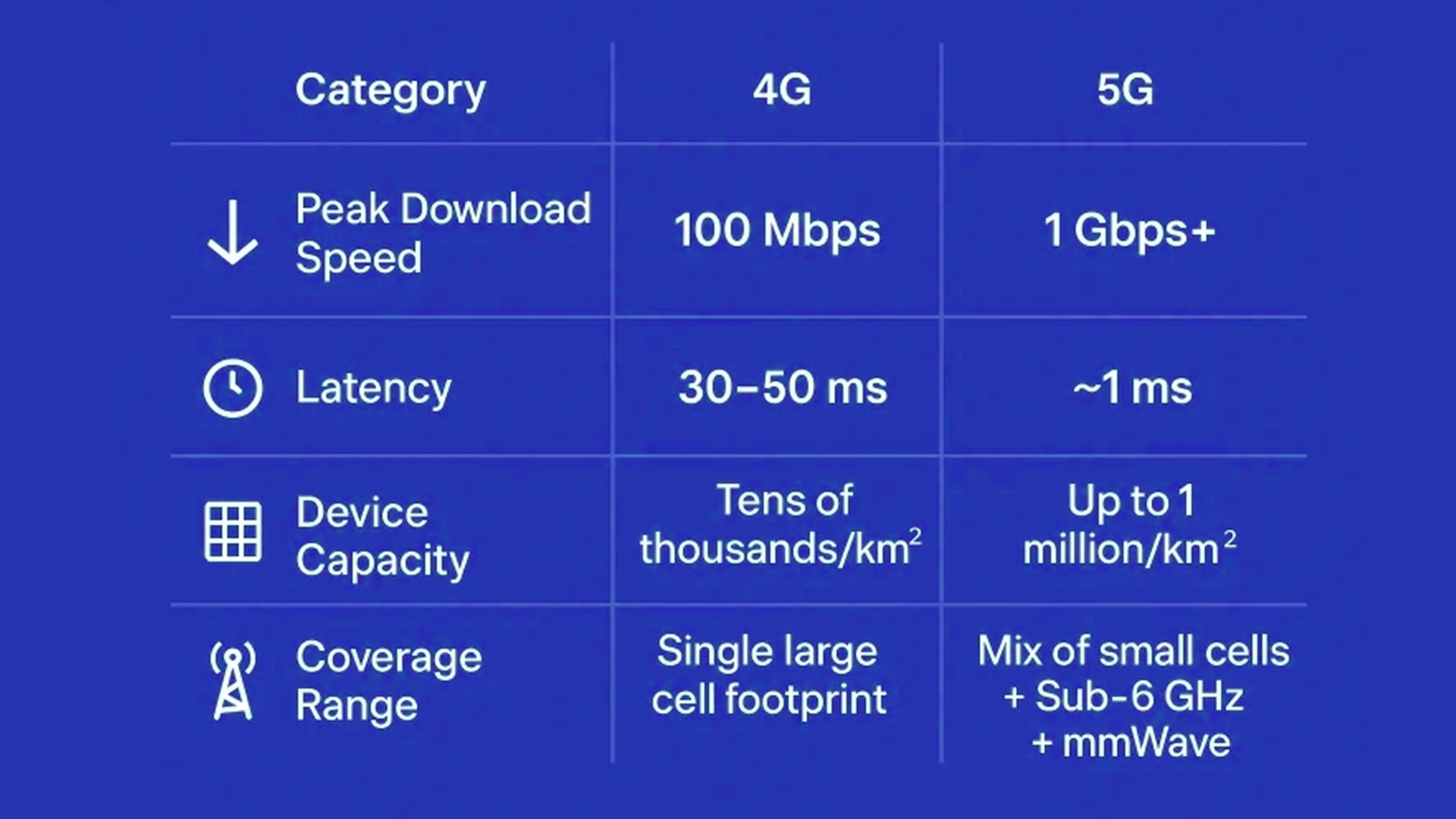
Network reliability is not only about whether 5G exists in your area. It is about how consistent the connection feels.
4G Reliability
4G is reliable because it has had years of rollout and optimisation. It is often the safer choice for basic connectivity in areas where 5G is still patchy.
4G is good for:
- Calls
- Messaging
- Maps
- Browsing
- Music streaming
- Social media
- Standard video streaming
5G Reliability
5G can be excellent where coverage is strong, but it may vary more between networks and locations.
5G is best when you need:
- Faster mobile speeds
- Lower latency
- Better capacity
- Quicker downloads
- Smoother hotspots
- Better performance in busy areas
For the best experience, choose a device and network that perform well in the places you actually use your phone.
Everyday Use: Do Most People Need 5G?
Most people do not strictly need 5G for basic mobile use. But 5G is useful if you use your phone heavily or want your next device to last longer.
4G Is Usually Enough For:
- WhatsApp and messages
- Web browsing
- Social media
- Maps
- Music streaming
- Mobile banking
- Standard video streaming
- Casual app use
5G Is Better For:
- Large downloads
- 4K streaming
- Cloud gaming
- Online gaming
- Mobile hotspot use
- Video calls on the move
- Busy venues
- Downloading games and updates
- Using mobile broadband
- Future-proofing your next phone
If you are buying a new phone, it makes sense to consider 5th generation phones, especially if you keep your devices for several years.
Is It Worth Upgrading from 4G to 5G?
It depends on your location, budget and usage.
Upgrade to 5G If:
- Your area has good 5G coverage
- You stream a lot on mobile
- You use your phone as a hotspot
- You download large files
- You play online or cloud games
- You want a future-ready phone
- Your current phone is due for replacement
- Your plan includes 5G at no major extra cost
Stay with 4G If:
- Your current phone works well
- Your area has weak 5G coverage
- You rarely use mobile data
- You mainly browse and message
- You are on a tight budget
- You already have reliable Wi-Fi
- You do not need faster downloads
The best value move is usually to upgrade to 5G when you are already replacing your phone, rather than buying a new device only for 5G.
5G Broadband vs 4G Broadband
5G and 4G can both be used for home broadband through a router or hub. This is sometimes useful if fibre broadband is not available or you need a flexible connection.
4G Broadband
4G broadband can work well for:
- Basic browsing
- Streaming
- Small households
- Backup internet
- Areas without fixed broadband
It is usually slower than good fixed broadband, but it can be a practical option in the right area.
5G Broadband
5G broadband can offer faster speeds and better capacity than 4G broadband where coverage is strong.
It can help with:
- Streaming
- Working from home
- Gaming downloads
- Video calls
- Multiple devices
- Faster file transfers
- Flexible home internet
If you are building or improving your setup, compare network connectivity devices in our stock including the latest wifi routers to make sure your home network is not the weak link.
What Devices Do You Need for 5G?
To use 5G, you need three things:
- A 5G-compatible phone or router
- A mobile plan that includes 5G
- 5G coverage in your area
If any of these are missing, the device will usually use 4G instead.
Do You Need a 5G Phone?
You need a 5G phone to connect to a 5G mobile network. A 4G phone cannot be upgraded to 5G through software.
When buying, check:
- 5G support
- Battery life
- Processor
- Screen quality
- Storage
- eSIM or SIM support
- Network compatibility
- Software update support
Do 5G Phones Still Use 4G?
Yes. A 5G phone can still use 4G, 3G or 2G where supported by the network. In practice, it will often switch between 5G and 4G depending on signal and coverage.
This is useful because it means a 5G phone still works in areas where 5G is not available.
5G vs 4G for Gaming, Streaming and Work
Gaming
5G is better for gaming when signal is strong because it can offer lower latency and faster downloads. This helps with cloud gaming, game updates and online play.
4G is still fine for casual games, turn-based games and lighter online gaming.
Streaming
4G is enough for standard streaming in good signal areas. 5G is better for HD, 4K, large downloads and streaming in busy areas.
Work
For remote work, 5G helps when you use a laptop hotspot, upload files or join video calls away from Wi-Fi.
4G can still handle email, chat apps and basic cloud tools.
Final Thoughts: 5G or 4G?
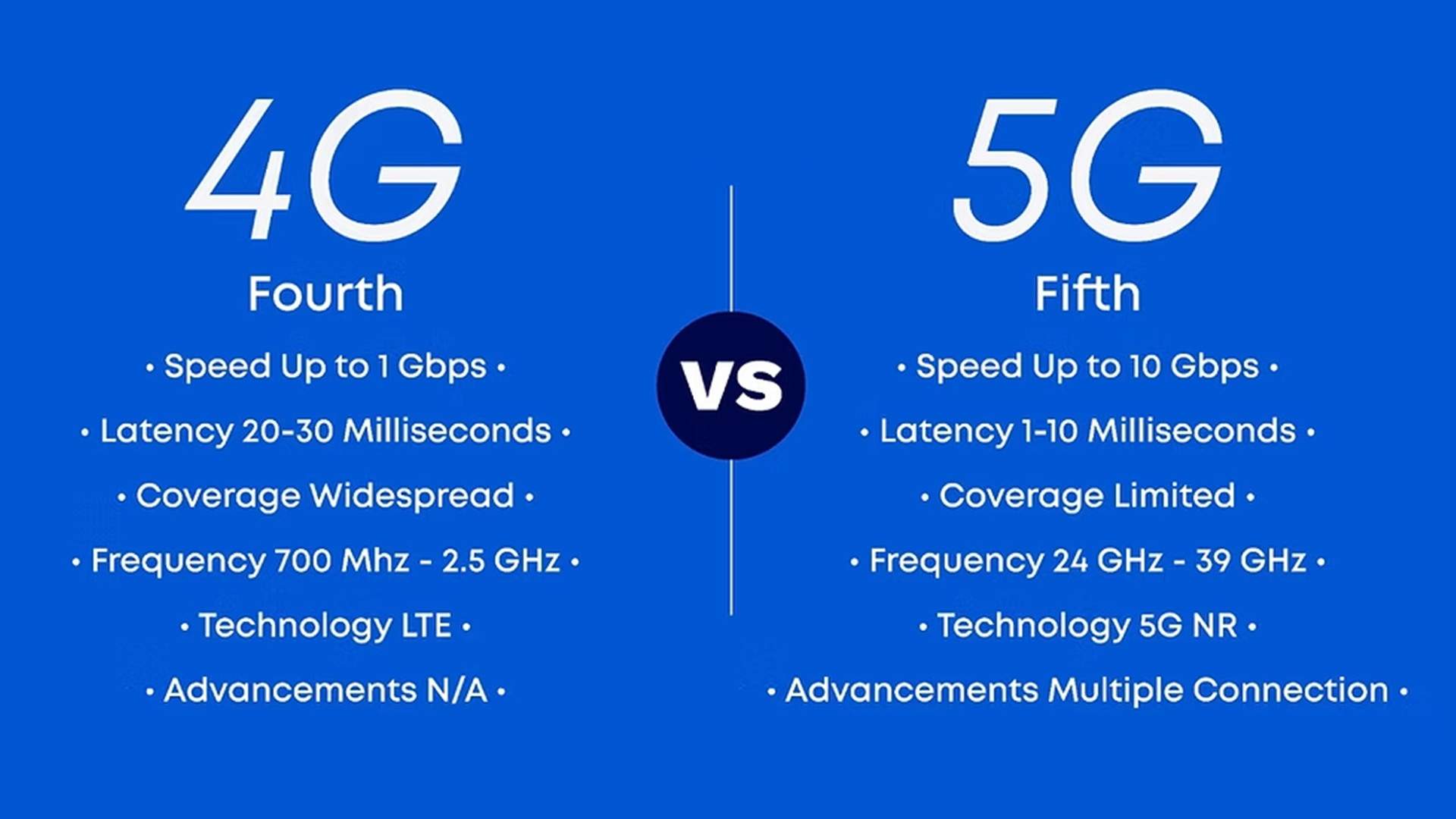
The 5G vs 4G decision is not about one being good and the other being bad. It is about what you need.
5G is better if you want faster mobile speeds, lower latency, better performance in busy areas and a future-ready device. It is the stronger option for heavy mobile data users, gamers, streamers, commuters and anyone who often works away from Wi-Fi.
4G is still useful, reliable and widely available. It is enough for messaging, browsing, maps, music streaming, email and many everyday apps.
The simple answer:
- Choose 5G if you want speed, low latency and future-ready mobile connectivity.
- Stick with 4G if your current phone works well and your usage is light.
- Check coverage first before upgrading, because local signal matters more than marketing claims.
- Buy a 5G phone next if you are already due an upgrade.
For most people buying a new smartphone in 2026, 5G is worth having. For people who already have a good 4G phone and mostly use Wi-Fi, there is no urgent need to upgrade today.
FAQs
-
What is the main difference between 5G and 4G?
The main difference is that 5G is designed for faster speeds, lower latency and better capacity than 4G. 4G is still reliable and widely available, but 5G is better for heavy data use, gaming, streaming, hotspots and future mobile services.
-
Is 5G always faster than 4G?
No. 5G is usually faster when coverage is strong, but a weak 5G signal can be slower or less stable than a strong 4G signal. Speed depends on your device, network, location, signal and congestion.
-
Does 4G have better coverage than 5G?
In many areas, yes. 4G is more mature and widely established. 5G coverage is growing quickly, especially in towns and cities, but it can still vary more by location and network.
-
Is 5G better for gaming than 4G?
Yes, 5G can be better for gaming because it can offer lower latency and faster downloads. It is especially useful for cloud gaming and online multiplayer, but performance still depends on signal strength, network load and game servers.
-
Do I really need 5G?
You need 5G if you want faster downloads, better hotspot performance, lower latency, mobile gaming benefits or a more future-ready phone. You probably do not need it urgently if you mostly use Wi-Fi, browse lightly and have strong 4G coverage.
-
Can a 5G phone use 4G?
Yes. A 5G phone can use 4G when 5G is not available, when signal is weak or when the network chooses 4G as the better connection. This makes 5G phones more flexible.
-
Is 4G still good in 2026?
Yes. 4G is still good for everyday mobile use, including browsing, messaging, maps, music, video streaming and email. 5G is better for heavier data use and future-ready connectivity.
You can pay with:
*PayPal Credit Representative Example: Assumed credit limit £1,200, Representative 23.9% APR (variable). Purchase rate 23.9% p.a (variable).Terms & Conditions apply.


PayPal Credit and PayPal Pay in 3 are trading names of PayPal UK Ltd, 5 Fleet Place, London, United Kingdom, EC4M 7RD. Terms and conditions apply. Credit subject to status, UK residents only, Five Tech LTD acts as a broker and offers finance from a restricted range of finance providers. PayPal Pay in 3 is not regulated by the Financial Conduct Authority. Pay in 3 eligibility is subject to status and approval. 18+. UK residents only. Pay in 3 is a form of credit. Check if affordable and how you will repay. May make other borrowing more difficult or expensive. See product terms for more details.
Copyright © 1996-2026 Fivetech LTD | Terms and Conditions
box.co.uk & Box are trading names of Five Tech Limited. Registered office: Box LTD, Unit 10 Woodford Trading Estate, Woodford Green IG8 8HF