


 Menu
MenuMenu


Get Sales Advice from Mon - Fri 9am - 5:00pm:
020 3337 8950LAST UPDATED: April 09, 2026
What Is DLSS 5 and How Could It Change PC Gaming in 2026?
NVIDIA is pushing things further again with DLSS 5, and this time, it is not just about getting more frames out of your GPU. As per Nvidia's March 2026 announcement, DLSS 5 is a shift towards AI-driven visual realism, something closer to how scenes are rendered in film rather than traditional games.
Since its launch in 2018, DLSS technology has already transformed how games balance performance and image quality. What started as an upscaling solution has evolved into a core part of NVIDIA graphics technology, helping deliver smoother gameplay, higher resolutions, and better overall PC gaming performance.
Now, with this next-gen DLSS, NVIDIA is introducing real-time neural rendering that aims to enhance lighting, materials, and scene detail while the game is running. If it delivers as expected, this could redefine what we consider a gaming performance boost, not just in terms of frame rates, but in how games actually look and feel.
This guide breaks down what DLSS 5 is, how it builds on previous versions, and what it could mean for the future of AI-powered gaming.
What Is DLSS 5?
Before diving into performance and comparisons, it is important to understand what DLSS 5 (launch scheduled for fall 2026) actually is and how it builds on NVIDIA's existing AI rendering stack. This is where the shift from traditional upscaling to full neural rendering becomes clear.
Understanding NVIDIA's DLSS Technology
At its core, Deep Learning Super Sampling (DLSS) is an AI-driven rendering technique designed to improve performance without sacrificing image quality. Instead of rendering every pixel at native resolution, DLSS technology uses trained AI models to reconstruct high-resolution images from lower-resolution inputs.
This approach relies on AI-based upscaling, where frames are generated using data such as motion vectors and previous frames. The result is a noticeable gaming performance boost, especially in demanding titles.
DLSS runs on NVIDIA GeForce RTX GPUs, using dedicated Tensor cores for GPU AI acceleration. These cores are specifically designed to handle AI workloads, making NVIDIA gaming technologies like DLSS possible in real time. This is also why DLSS is tightly integrated into the broader RTX architecture, alongside features like ray tracing.
How DLSS Has Evolved from DLSS 1 to DLSS 4
DLSS has gone through several major upgrades, each improving both performance and visual quality.
- DLSS 1 introduced basic AI upscaling but often struggled with image clarity
- DLSS 2 significantly improved image reconstruction technology, delivering sharper and more stable visuals
- DLSS 3 added frame generation technology, allowing the GPU to create entirely new frames for higher frame rates
- DLSS 4 and 4.5 introduced transformer-based models and advanced frame generation, with NVIDIA stating that up to 23 out of every 24 pixels can be AI-generated in some scenarios
This DLSS evolution shows how the technology has moved from simple upscaling to a much more advanced system that combines reconstruction, prediction, and AI-driven rendering.
What DLSS 5 Is Expected to Bring
With NVIDIA DLSS 5, the focus shifts beyond performance into full neural rendering.
Instead of only reconstructing pixels, DLSS 5 uses a real-time AI model that takes a frame's colour and motion data, then enhances it with photoreal lighting and material detail. This allows the system to simulate how light interacts with surfaces like skin, fabric, and hair more naturally.
Key expected capabilities include:
- Real-time neural rendering for enhanced scene realism
- Photoreal lighting and material detail applied per frame
- Deterministic output for consistent visuals during gameplay
- Real-time processing at up to 4K resolution
- Developer controls for intensity, masking, and colour grading
This is why this next-gen DLSS is being positioned as a major leap in AI graphics technology. Rather than just improving performance, it aims to bridge the gap between real-time rendering and cinematic-quality visuals.
In simple terms, DLSS 5 is not just about making games run faster, but about making them look significantly more realistic while still running in real time.
How DLSS 5 Could Improve Gaming Performance
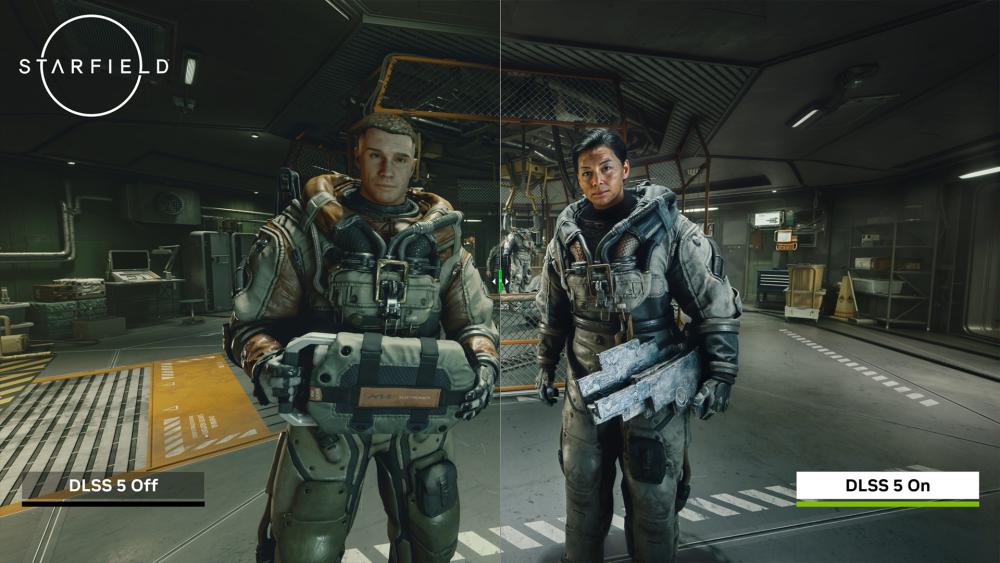
DLSS 5 is not just about visuals. It still builds on the core idea of improving performance while maintaining image quality, but now with a more advanced AI layer that affects how frames are created and displayed in real time.
AI Upscaling and Frame Generation
At a fundamental level, DLSS 5 continues to use AI upscaling gaming techniques to reduce the workload on the GPU. Instead of rendering every pixel natively, the system reconstructs frames using AI, which significantly improves efficiency.
Building on earlier versions, DLSS frame generation remains a key part of the process. By generating additional frames between rendered ones, the GPU can deliver smoother gameplay without needing to fully render every frame.
This is powered by GPU AI acceleration through Tensor cores, making it possible to combine upscaling, frame generation, and now neural rendering in a single pipeline.
Higher Frame Rates Without Losing Visual Quality
One of the biggest advantages of DLSS has always been its ability to balance performance and clarity. In a DLSS vs native resolution comparison, the difference is often minimal visually, while performance gains can be significant.
DLSS 5 builds on this by improving how scenes are interpreted, not just reconstructed. This means:
- Higher frame rates in demanding games
- Cleaner visuals compared to lower native resolutions
- More consistent image quality across fast-moving scenes
For gamers using high-performance GPUs, this translates into a more stable and responsive experience without needing to lower settings aggressively.
Impact on 4K and High-Resolution Gaming
High-resolution gaming has traditionally required powerful hardware, especially when combined with ray tracing. DLSS helps reduce that burden, and DLSS 5 takes it further.
- Supports real-time rendering at up to 4K resolution
- Reduces the performance cost of advanced visual effects
- Makes high-resolution gaming more accessible across different setups
When paired with ultra-smooth gaming displays, this can deliver both visual clarity and fluid motion, even in graphically demanding titles.
Overall, DLSS 5 continues to improve PC gaming performance, but with a stronger focus on combining performance gains with more advanced visual output.
DLSS 5 vs Previous DLSS Versions
To understand why DLSS 5 matters, it helps to compare it with what came before. Earlier versions focused mainly on boosting frame rates and cleaning up reconstructed images. DLSS 5 keeps that foundation, but pushes further into scene realism with real-time neural rendering. NVIDIA describes it as its biggest graphics breakthrough since real-time ray tracing debuted in 2018, while DLSS 4.5 remains focused on performance, latency, and image reconstruction improvements.
Improvements Over DLSS 3 and DLSS 4
| Features | DLSS 3 | DLSS 4 / 4.5 | DLSS 5 |
| Main focus | Higher FPS through frame generation | Better performance, lower latency, cleaner reconstruction | Photoreal realism through neural rendering |
| Core technology | Super Resolution + Frame Generation | Multi Frame Generation, Dynamic MFG, transformer models | Real-time neural rendering model |
| Visual goal | Smoother gameplay | Smoother gameplay with sharper, more stable images | More lifelike lighting and materials |
| AI workload | Frame creation and image reconstruction | More advanced reconstruction and frame creation | Scene-level enhancement using colour and motion data |
| Best fit | Performance-focused gaming | High-refresh and high-resolution gaming today | Cinematic AAA visuals in future titles |
DLSS 4 introduced Multi Frame Generation and transformer models, while DLSS 4.5 added Dynamic Multi Frame Generation and a second-generation transformer model for Super Resolution. DLSS 5 moves beyond that by infusing frames with photoreal lighting and material detail, rather than only reconstructing or generating pixels.
Better Image Quality and Stability
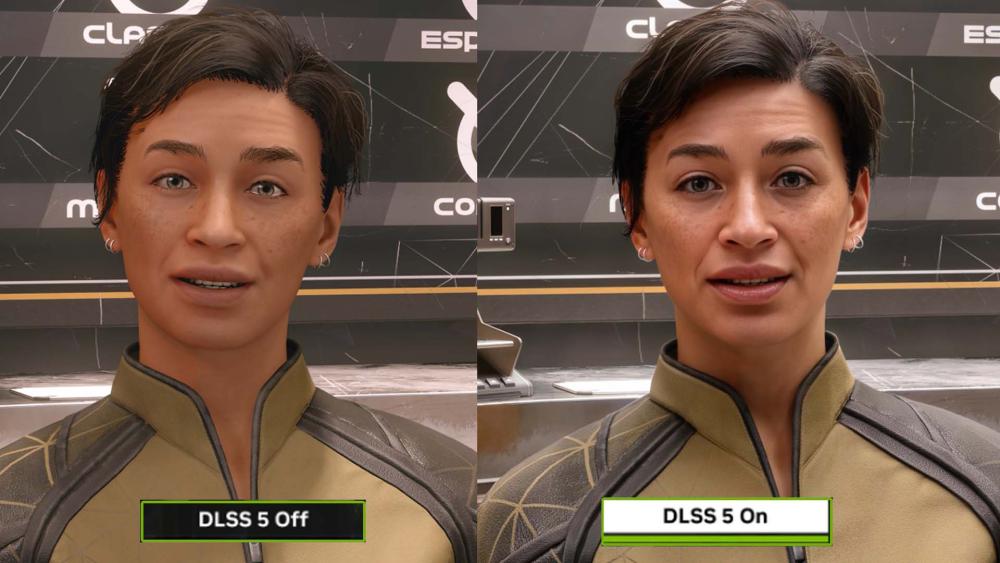
This is where the jump becomes more interesting. DLSS 3 and DLSS 4 are mainly about making rendered frames look cleaner and run faster. DLSS 5 is designed to interpret scene semantics such as skin, hair, fabric, and lighting conditions, then apply that understanding in a deterministic, temporally stable way from frame to frame. NVIDIA says it works from a frame's colour and motion vectors and runs in real time at up to 4K.
In practical terms, that means DLSS 5 is aiming for a bigger visual change than earlier versions. Instead of simply improving DLSS performance, it could reshape how materials, lighting response, and overall scene fidelity look in motion.
Latency and Responsiveness
For competitive play, responsiveness still matters as much as raw frame rate. NVIDIA continues to pair DLSS features with NVIDIA Reflex, which reduces system latency and helps offset some of the delay introduced by heavier rendering pipelines. DLSS 4 is already positioned as a suite that boosts FPS, reduces latency, and improves image quality, and DLSS 5 integrates through the same Streamline framework used by DLSS and Reflex today.
What Hardware Will Support DLSS 5?
DLSS is exclusive to NVIDIA's hardware ecosystem, and DLSS 5 continues that trend.
RTX GPUs and AI Acceleration
DLSS relies on specialised AI hardware, which is why it is exclusive to NVIDIA's RTX GPUs. These GPUs include dedicated Tensor cores designed for GPU AI acceleration, enabling real-time AI rendering.
This is a key part of NVIDIA graphics technology, where features like DLSS, ray tracing, and neural rendering work together within the RTX ecosystem.
- RTX GPUs are required for DLSS features
- Tensor cores handle AI calculations
- Integrated with Nvidia GPU features such as ray tracing and Reflex
For anyone looking to use DLSS 5, choosing from the latest NVIDIA GPUs is essential, as non-RTX hardware is not supported.
Future GPU Requirements
DLSS 5 is expected to be most effective on newer GPU architectures, particularly those designed with more advanced AI capabilities.
- RTX 50 Series GPUs are the most likely to offer full DLSS 5 support
- Newer architectures improve AI processing and neural rendering performance
- Older RTX GPUs may not support all features
This makes DLSS 5 part of a wider shift towards next-generation GPU features, where AI plays a larger role in rendering.
If you are building or upgrading a system, pairing DLSS-ready GPUs with powerful gaming systems ensures better long-term performance and compatibility.
Compatibility Expectations
While NVIDIA has not confirmed a full compatibility list yet, current expectations are based on how previous DLSS features have been rolled out.
- RTX 50 Series → Full support expected
- RTX 40 Series → Likely support, but possibly limited features
- Older RTX GPUs → Partial or reduced support
- Non-RTX GPUs → Not supported
This means DLSS 5 will likely follow the same pattern as earlier versions, where newer hardware benefits the most. For gamers investing in top-end GPUs, this makes newer RTX models the safest choice for future-ready features.
Overall, DLSS 5 is designed around modern AI-capable hardware, reinforcing the importance of choosing the right GPU if you want to take full advantage of upcoming AI-driven rendering advancements.
DLSS 5 and Real-Time Ray Tracing
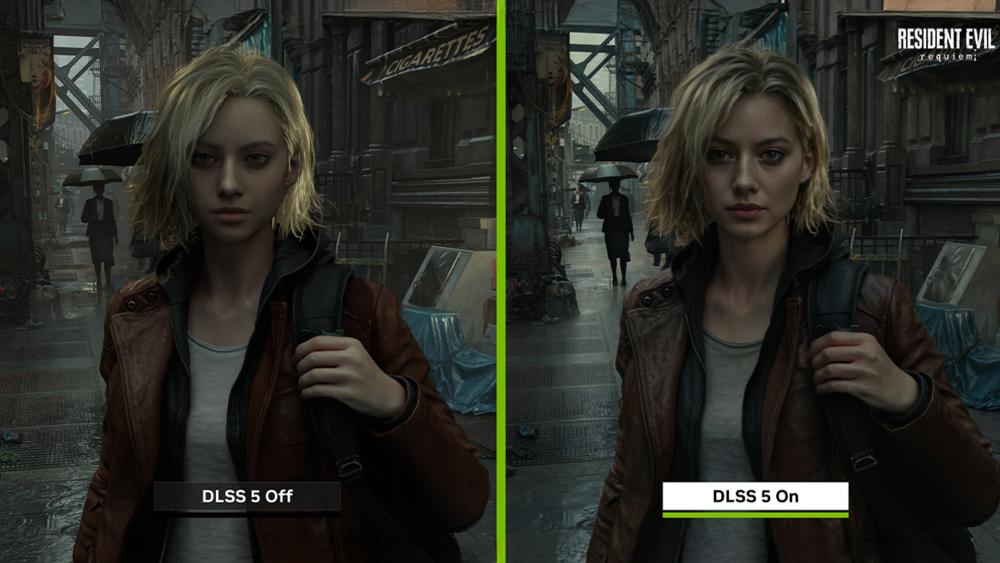
Nvidia DLSS 5 is not replacing ray tracing; it is designed to work alongside it. Together, they form a more complete rendering pipeline where one handles how light behaves, and the other improves how the final scene is presented.
Real-time ray tracing already delivers more accurate reflections, shadows, and lighting, but it is computationally expensive. This is where DLSS becomes important, helping maintain performance while enabling these advanced effects.
With DLSS 5, the focus shifts further towards visual realism:
- Enhances how ray-traced lighting appears on surfaces
- Improves material response, including skin, fabric, and reflections
- Adds more depth and consistency to complex scenes
Instead of just making ray tracing faster, DLSS 5 aims to make the final output look closer to cinematic rendering. This combination is a key part of modern NVIDIA gaming technology, where AI and traditional rendering work together. It means better-looking scenes without a proportional increase in performance cost, especially in visually demanding AAA titles.
What DLSS 5 Means for the Future of PC Gaming
DLSS 5 points towards a bigger shift in how games are rendered, moving away from purely hardware-driven graphics towards AI-assisted pipelines that combine traditional rendering with neural processing.
More Accessible High-End Gaming
As AI takes on more of the rendering workload, high-end visuals become easier to achieve without relying only on raw GPU power. This means more players can experience advanced graphics without needing top-tier hardware.
When paired with balanced systems using powerful AMD processors, this shift can make demanding games more accessible across a wider range of setups.
AI-Driven Graphics Evolution
The direction is clear: games are becoming more dependent on AI graphics technology rather than just increasing polygon counts or resolution.
Technologies like DLSS 5 introduce neural rendering, where AI understands scene elements and enhances them dynamically. This marks a move towards smarter rendering rather than heavier rendering.
The Future of Real-Time Rendering
Traditional rendering relies on brute force, but Nvidia DLSS 5 highlights the limits of that approach. A real-time game frame has roughly 16 milliseconds to render, while cinematic VFX can take minutes or even hours per frame.
NVIDIA's advancements, including massive compute growth over time, show that AI is becoming essential to closing this gap. The result is a future where real-time graphics feel closer to pre-rendered visuals, without sacrificing interactivity.
In simple terms, DLSS 5 is part of a broader transition where AI plays a central role in shaping how games look and perform.
Which Games Will Support DLSS 5?

DLSS 5 is expected to launch with support from major studios, and NVIDIA has already confirmed several titles that will adopt the technology as it rolls out in Fall 2026.
Confirmed and expected DLSS 5-supported games include:
- Assassin's Creed Shadows
- Starfield
- Hogwarts Legacy
- Resident Evil Requiem
- Delta Force
- Phantom Blade Zero
- The Elder Scrolls IV: Oblivion Remastered
- Where Winds Meet
- AION 2
- NARAKA: BLADEPOINT
- Neverness to Everness
NVIDIA has also confirmed partnerships with major publishers like Bethesda, Ubisoft, CAPCOM, Tencent, and Warner Bros., which suggests broader adoption across upcoming AAA releases.
Keep in mind, like previous DLSS versions, real-world results will depend on how each game implements the technology rather than just support alone.
Should You Wait for DLSS 5 Before Upgrading?
DLSS 5 is shaping up to be a major step forward, but timing matters. NVIDIA has confirmed a Fall 2026 release window, which means it is still a future-facing feature rather than something you can use today.
For current buyers, technologies like DLSS 4 and 4.5 already deliver strong improvements in PC gaming, including better image reconstruction, frame generation, and lower latency. These features are available now and supported across a wide range of games.
If you are planning an upgrade:
- Buying now makes sense if you want immediate performance gains
- Waiting may be worth it if you are targeting the latest RTX hardware
- DLSS 5 support will depend on both hardware and game adoption
In short, DLSS 5 is exciting, but it should be seen as a future upgrade rather than the only reason to delay your next gaming system.
Final Thoughts: Is DLSS 5 the Next Big Leap?
DLSS 5 feels less like a routine update and more like a shift in how games are rendered. Instead of focusing only on performance, it introduces a new layer of AI-driven visual enhancement that could change how lighting, materials, and overall scene quality are handled in real time.
What makes DLSS 5 interesting is that it builds on an already proven foundation. Earlier versions improved frame rates and image quality, while this next step aims to redefine visual realism without sacrificing performance.
That said, its real impact will depend on how well developers use it. Some games will benefit more than others, especially those built around cinematic visuals and detailed environments.
For now, it is best viewed as a forward-looking upgrade and is viewed as the future of DLSS and the role of AI in gaming. If it lands as expected, DLSS 5 could mark one of the most important steps in modern PC gaming.
Frequently Asked Questions
What is DLSS 5?
DLSS 5 is NVIDIA's next-generation AI rendering technology that uses neural rendering to improve lighting, materials, and overall visual realism in real time.
Will DLSS 5 be on the 50 series?
Yes, RTX 50 Series GPUs are expected to offer the most complete support for DLSS 5 features.
How is DLSS different from FSR?
DLSS uses dedicated AI hardware (Tensor cores) on NVIDIA GPUs, while FSR is a more general upscaling solution that works across different hardware.
How does DLSS improve gaming performance?
DLSS boosts performance by rendering at a lower resolution and using AI to upscale and generate frames, resulting in higher FPS with minimal quality loss.
Which cards support DLSS 5?
DLSS 5 is expected to be supported on RTX GPUs, with RTX 50 Series being the most likely to support all features.
Is DLSS 5 better than native resolution?
In many cases, DLSS can deliver similar or better visual quality than native resolution while significantly improving performance.
When will DLSS 5 be available in games?
DLSS 5 is expected to roll out starting Fall 2026, with support depending on individual game developers.
You can pay with:
*PayPal Credit Representative Example: Assumed credit limit £1,200, Representative 23.9% APR (variable). Purchase rate 23.9% p.a (variable).Terms & Conditions apply.


PayPal Credit and PayPal Pay in 3 are trading names of PayPal UK Ltd, 5 Fleet Place, London, United Kingdom, EC4M 7RD. Terms and conditions apply. Credit subject to status, UK residents only, Five Tech LTD acts as a broker and offers finance from a restricted range of finance providers. PayPal Pay in 3 is not regulated by the Financial Conduct Authority. Pay in 3 eligibility is subject to status and approval. 18+. UK residents only. Pay in 3 is a form of credit. Check if affordable and how you will repay. May make other borrowing more difficult or expensive. See product terms for more details.
Copyright © 1996-2026 Fivetech LTD | Terms and Conditions
box.co.uk & Box are trading names of Five Tech Limited. Registered office: Box LTD, Unit 10 Woodford Trading Estate, Woodford Green IG8 8HF