


 Menu
MenuMenu


Get Sales Advice from Mon - Fri 9am - 5:00pm:
020 3337 8950LAST UPDATED: April 22, 2026
Best RTX 5080 Graphics Cards in 2026: ASUS, MSI, Gigabyte & More
Choosing the best RTX 5080 GPU model is not really about choosing the fastest display chip. Every GeForce RTX 5080 uses the same core NVIDIA GPU: 10,752 CUDA cores, 16GB of GDDR7 memory, a 256-bit memory bus, and Blackwell architecture, with a 360W total graphics power reference. What changes between cards is everything built around that GPU: the cooler, the PCB, the power delivery, the factory overclock, the noise profile, the card size, and how much you are paying for those extras.
That is why the RTX 5080 comparison between partner cards matters more than many buyers expect. An expensive model is not automatically the smartest one. Some are built for maximum cooling and quieter operation. Some are made for smaller cases. Some push premium design, displays, or extra OC headroom. Others simply give you the core RTX 5080 experience for less money and make far more sense for a normal gaming build.
This guide keeps the focus where it should be: which NVIDIA 5080 models actually make sense for different buyers in 2026. We will break down what matters in a partner-card design, compare ASUS, MSI, and Gigabyte lineups, explain where factory overclocks do and do not matter, and highlight the models that stand out most for cooling, value, compact builds, and premium high-end systems. If you are already browsing 5080 GPUs for a new build, this guide should help you choose the right card rather than just the most expensive one.
What to Look for in an RTX 5080 Graphics Card
Before looking at specific models, it helps to be clear about what actually separates one RTX 5080 from another.
-
Cooling and Thermal Design
Cooling is one of the biggest differences between partner cards. At this tier, most buyers will be choosing between larger 5080 tri-fan models and more compact designs tuned for smaller or cleaner builds. The reference-level RTX 5080 itself is already a 360W card, so thermal design is not something you can treat as cosmetic.
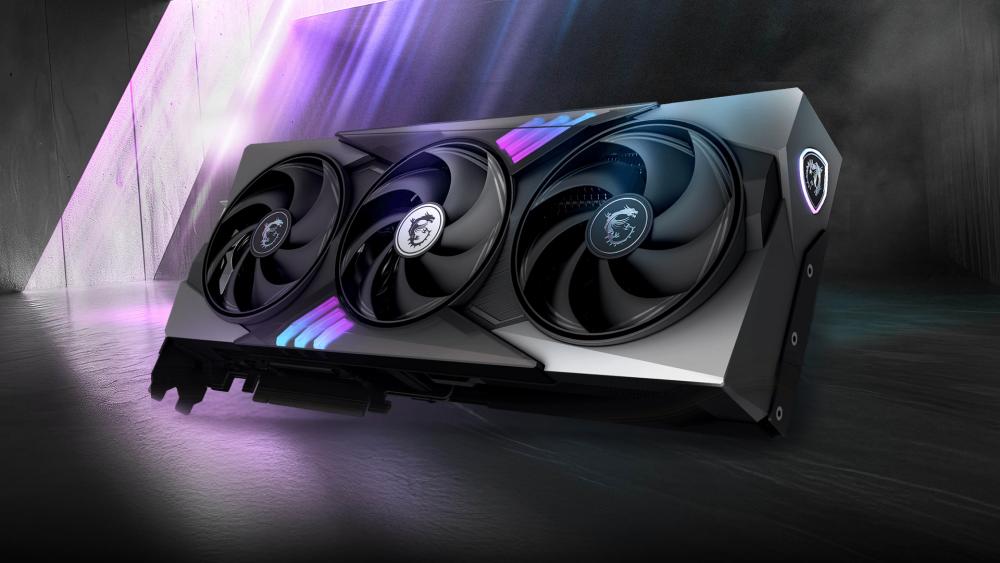
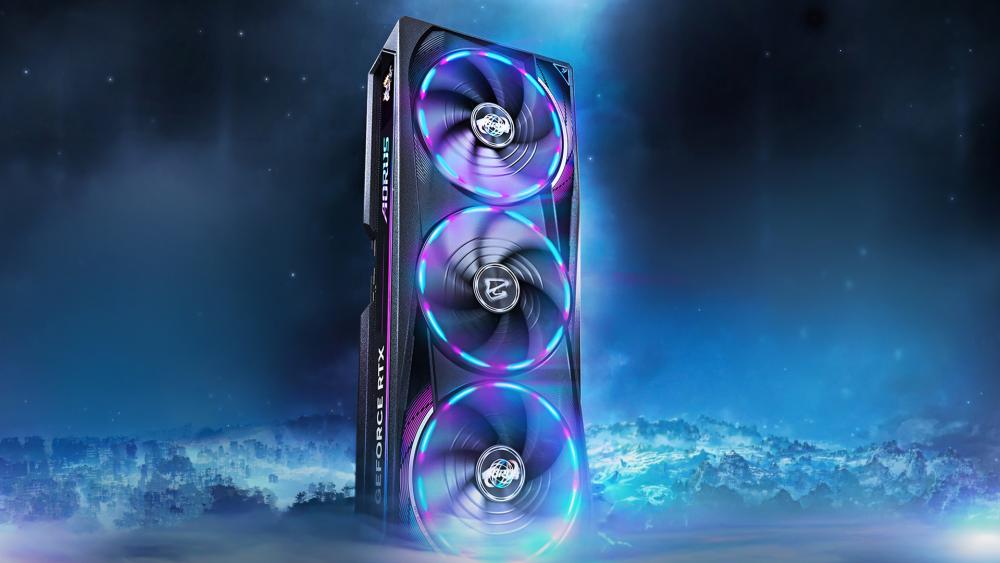
Premium models tend to justify their higher prices through stronger cooling hardware. ASUS positions the ROG Astral RTX 5080 around its first quad-fan design, with a patented vapour chamber, increased fin density, and a phase-change thermal pad, while saying the layout improves airflow and pressure by up to 20%. MSI's Gaming Trio focuses on its TRI FROZR 4 thermal design, STORMFORCE fans, copper baseplate, core pipes, and dual BIOS support for gaming or quieter use. Gigabyte's higher-end AORUS MASTER cards lean on the latest WINDFORCE design, composite materials, a large vapour chamber, and dual BIOS.
In practical terms, better cooling usually means lower temperatures, less fan noise, and more sustained boost behaviour, especially in longer gaming sessions or tighter cases.
-
Clock Speeds and Performance Variations
Factory overclocks can look important on a listing page, but they rarely change the whole buying decision by themselves. NVIDIA lists the RTX 5080 reference boost clock at 2.62GHz. From there, partner cards stretch upwards:
- MSI Gaming Trio: up to 2625MHz in Extreme Performance mode
- Gigabyte WINDFORCE OC SFF: 2670MHz
- Gigabyte AORUS MASTER: 2805MHz
- PNY Triple Fan OC: 2730MHz
- PNY ARGB EPIC-X RGB OC: 2780MHz
- ASUS Noctua OC: 2730MHz
- ROG Astral RTX 5080: 2670MHz in OC mode
Those figures matter, but only within limits. They can affect ranking between similarly priced models, but they do not turn one RTX 5080 into a completely different class of GPU.
-
Build Quality and Size
Card size matters more than many buyers realise. The Founders Edition spec is 304mm long, 137mm wide, and 2-slot, but partner cards vary significantly, especially once you move into premium coolers.
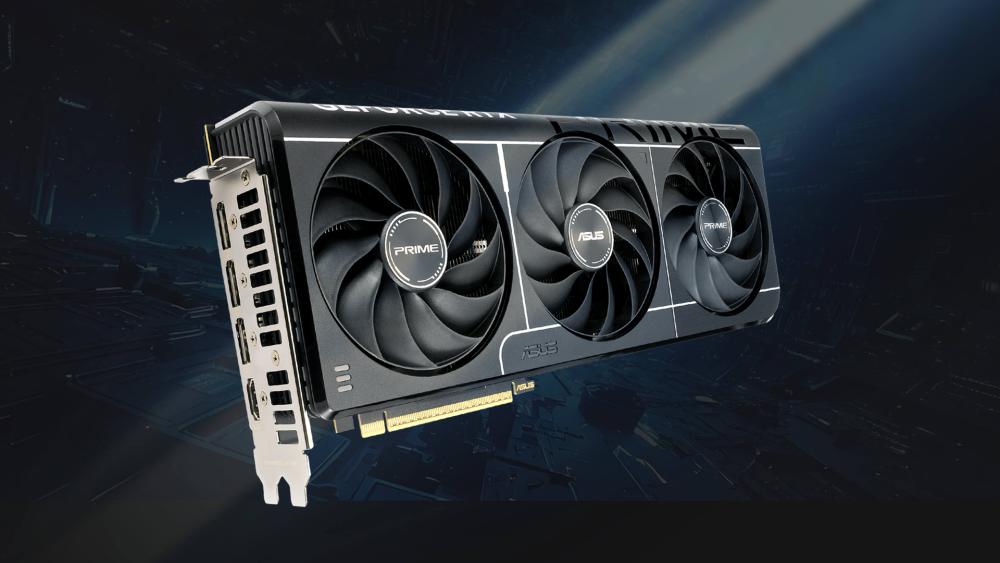
Compact or SFF-friendly cards stand out for a reason. The Gigabyte WINDFORCE SFF 16G is listed at 304 x 126 x 50mm and uses a 16-pin connector with an 850W recommended PSU, making it one of the more obvious choices for buyers trying to fit an RTX 5080 into a smaller or more restrictive case. ASUS also positions its PRIME RTX 5080 OC and ProArt RTX 5080 around 2.5-slot SFF-ready styling, with ProArt adding a USB-C port for creator workflows. If you want to learn more about RTX 5080 PSU requirements, our guide is a must-read.
This is why case planning matters just as much as GPU choice. If you are building around an RTX 5080, your choice of desktop computer cases and airflow layout can be just as important as the brand printed on the card.
Best RTX 5080 Graphics Cards in 2026
Once you narrow the field down to actual cards on sale, the choice becomes much more practical. At this point, you are not deciding whether the RTX 5080 is a strong GPU. You are deciding which version gives you the right mix of cooling, price, size, and overall build quality for your setup.
-
Best for Cooling Performance
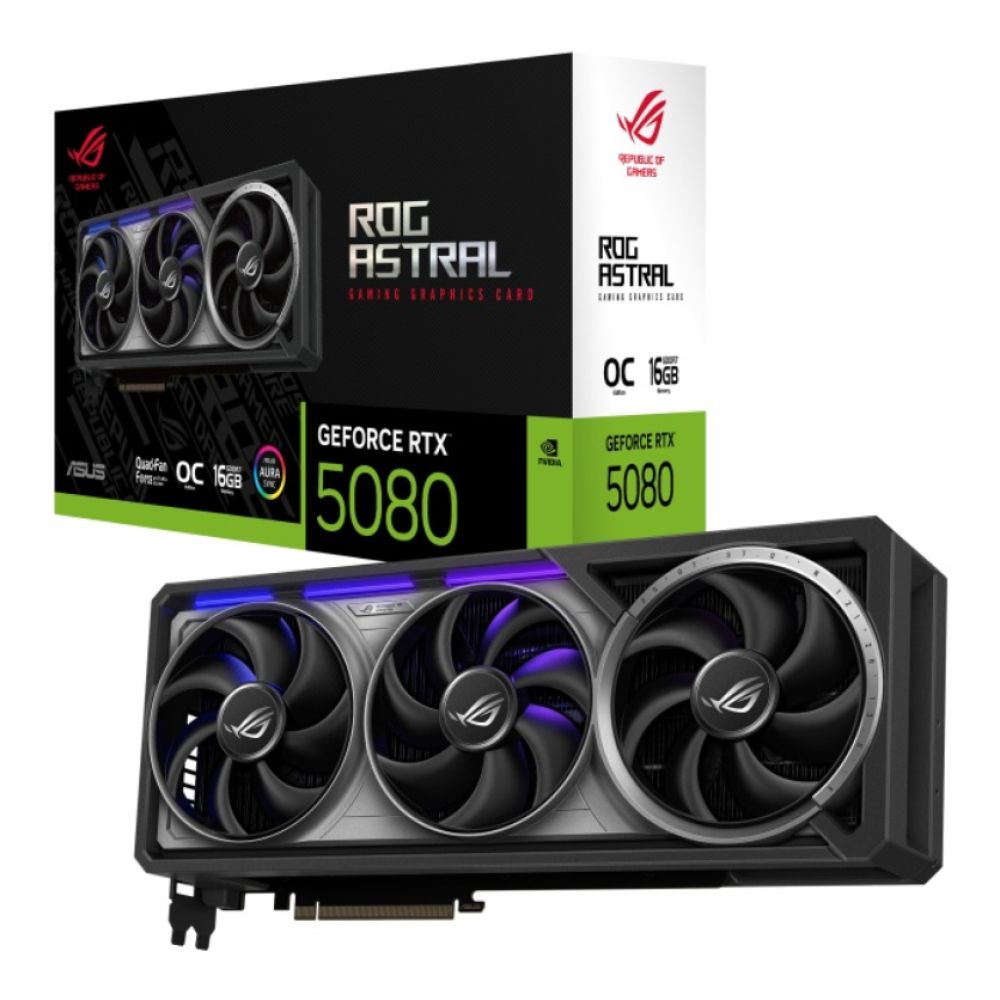
If cooling is your top priority, the ASUS GeForce RTX 5080 ROG Astral 16GB OC Edition is the standout option. It is clearly built as a flagship card, with a premium cooler design and one of the strongest overall hardware packages in the current RTX 5080 lineup. Considering the price, it is a bit expensive, but this is the sort of model aimed at buyers who care more about thermals, acoustics, and premium engineering than price efficiency.
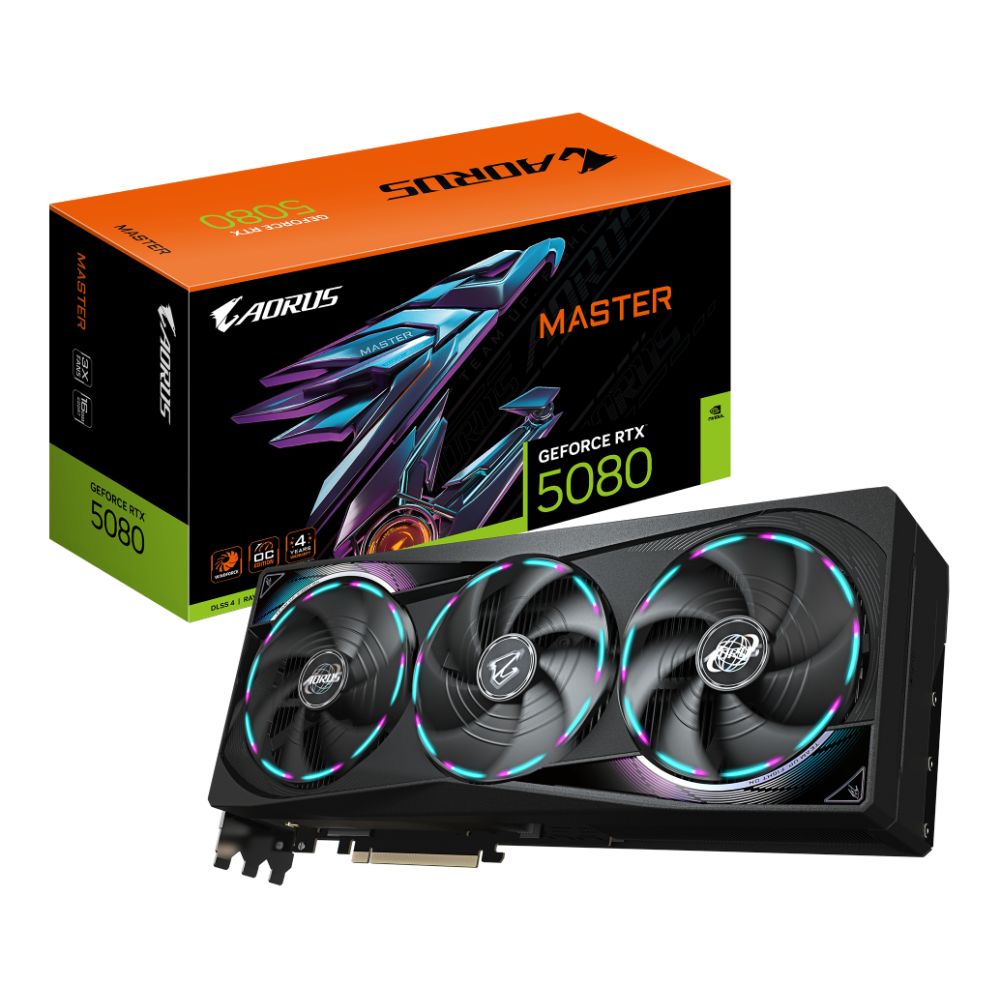
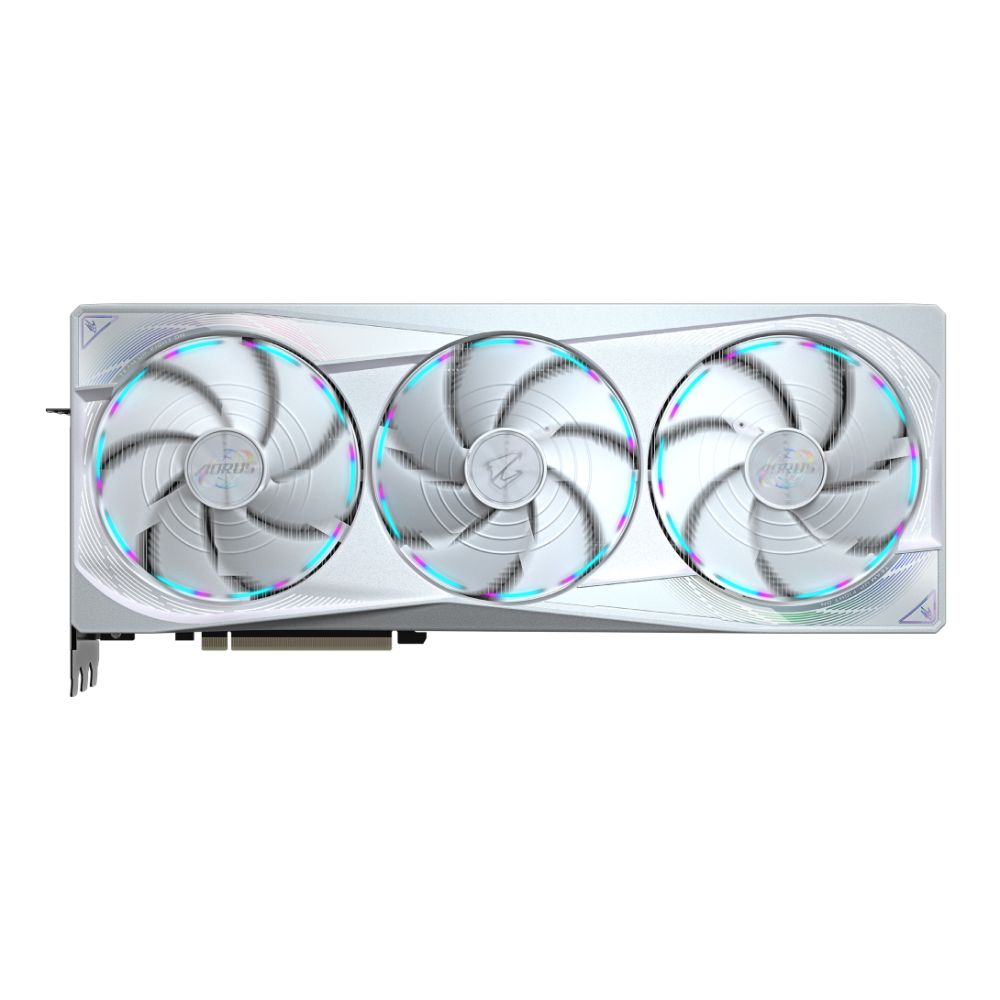
The GIGABYTE AORUS GeForce RTX 5080 MASTER 16GB and AORUS MASTER ICE 16GB also deserve a mention here. Both sit in the same upper-end class and make strong alternatives if you want a premium cooling-focused card but prefer Gigabyte's approach to design and tuning.
Best picks for cooling-focused builds:
- ASUS GeForce RTX 5080 ROG Astral 16GB OC Edition
- GIGABYTE AORUS GeForce RTX 5080 MASTER 16GB
- GIGABYTE GeForce RTX 5080 AORUS MASTER ICE 16GB
-
Best Value RTX 5080
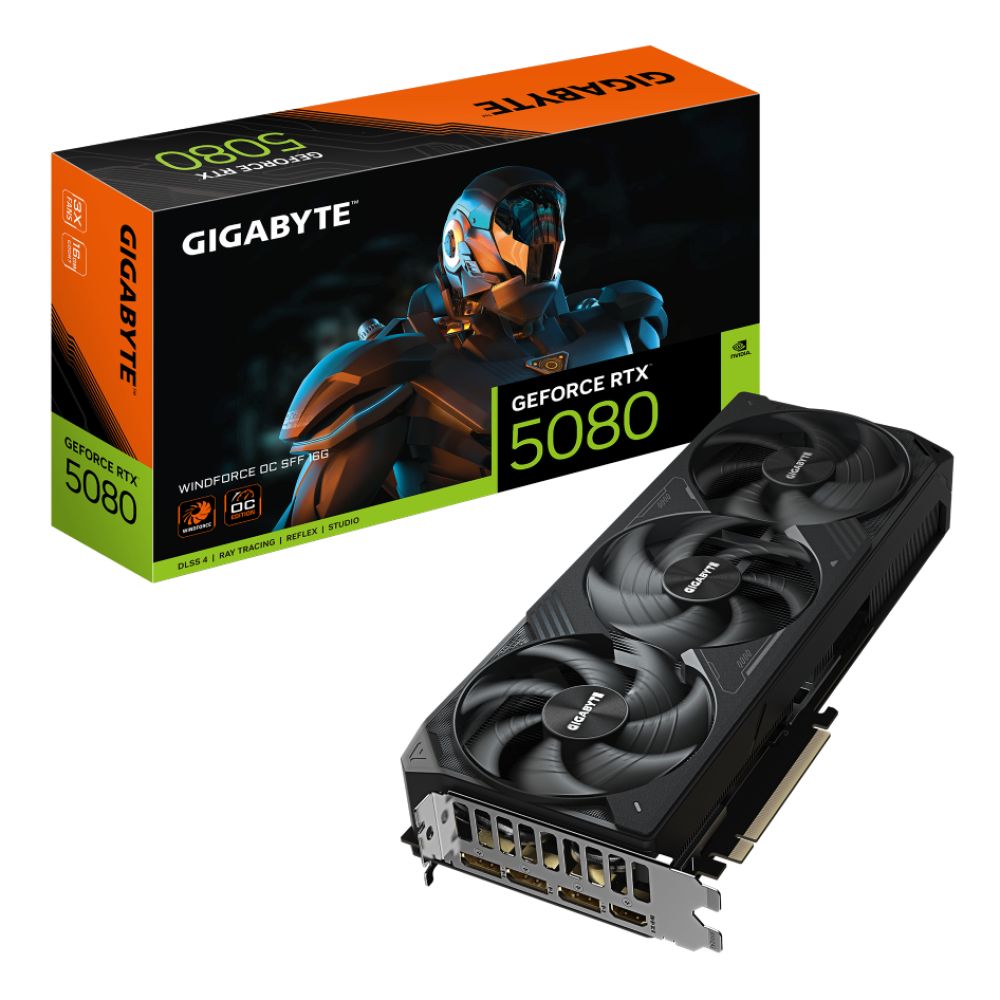
The strongest value option from this list is the GIGABYTE GeForce RTX 5080 WINDFORCE SFF 16GB. It is one of the least expensive RTX 5080 cards here, yet it still gives you triple-fan cooling, a factory overclock, and a design that is easier to fit into a wider range of cases.
That makes it especially appealing for buyers who want into the RTX 5080 tier without spending deep into premium-brand pricing. It is not trying to be flashy or ultra-luxury. It is simply one of the smartest ways to get RTX 5080 performance for less.
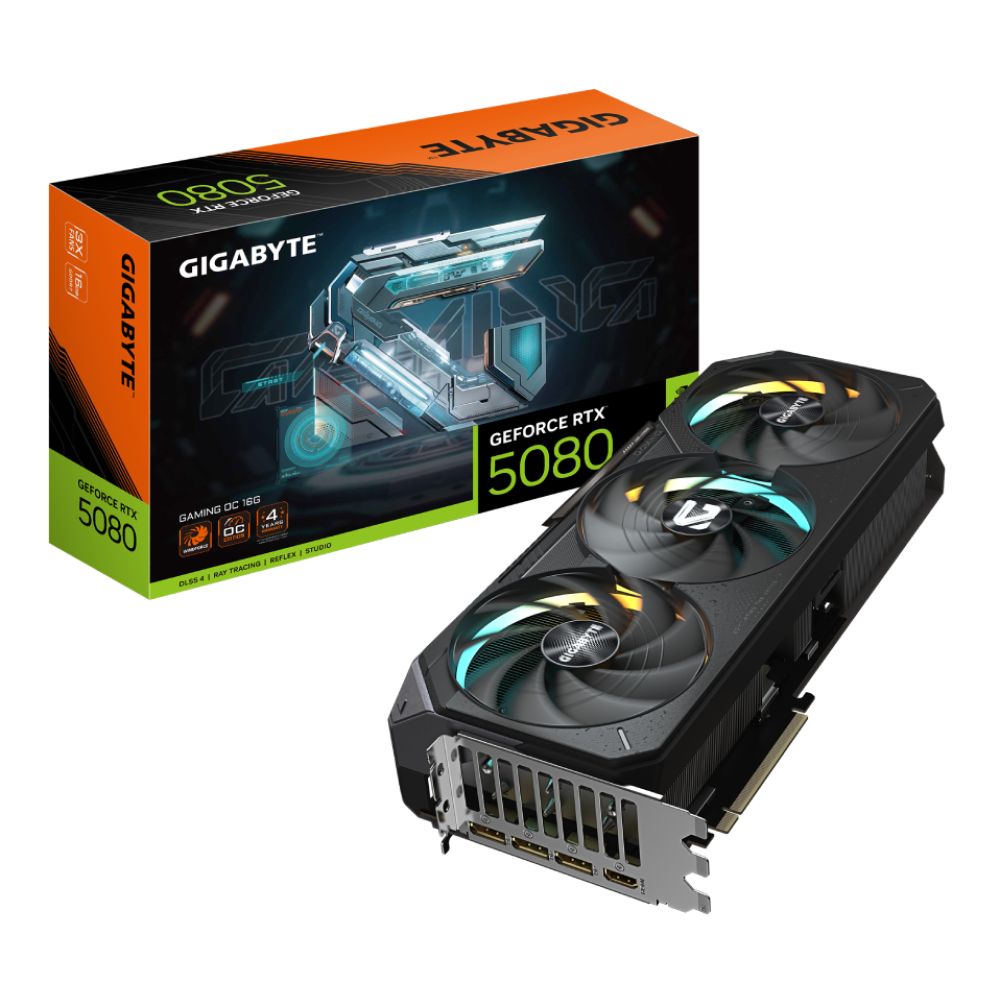
The GIGABYTE GeForce RTX 5080 GAMING OC 16GB is also a very strong value-oriented alternative if you want something a little less compact and slightly more traditionally positioned within Gigabyte's gaming lineup.
Best value picks:
- GIGABYTE GeForce RTX 5080 WINDFORCE SFF 16GB
- GIGABYTE GeForce RTX 5080 GAMING 16GB OC
-
Best Compact RTX 5080
If case space matters, the GIGABYTE GeForce RTX 5080 WINDFORCE SFF 16GB is the clearest compact recommendation. It is specifically positioned around an SFF-friendly design while still keeping triple-fan cooling, which makes it far easier to recommend for space-conscious builds than bulkier premium cards.
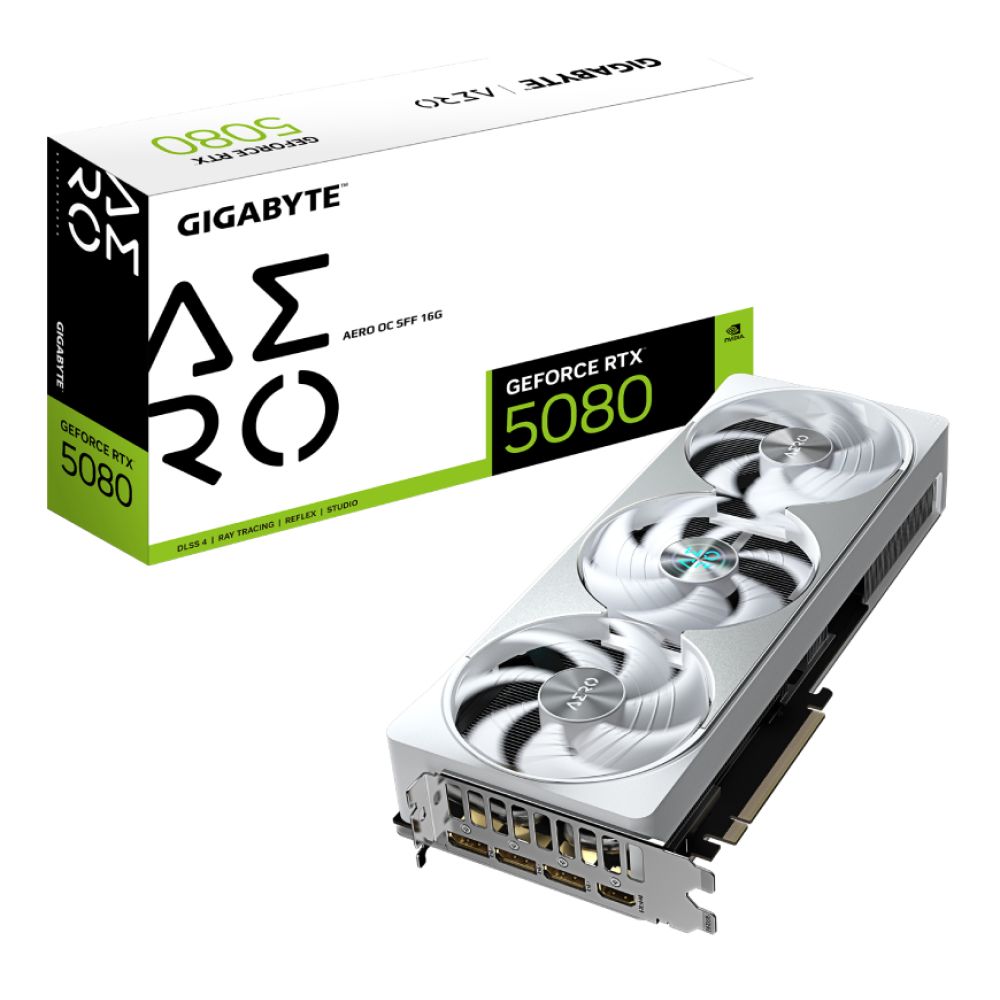
The GIGABYTE GeForce RTX 5080 AERO SFF 16GB OC is the other standout here. It costs more, but it gives buyers a more design-led option in the same compact-friendly category, especially if you want a white-themed or cleaner-looking system.
Best compact picks:
- GIGABYTE GeForce RTX 5080 WINDFORCE SFF 16GB
- GIGABYTE GeForce RTX 5080 AERO SFF 16GB OC
-
Best Premium Alternative Outside the Big Three
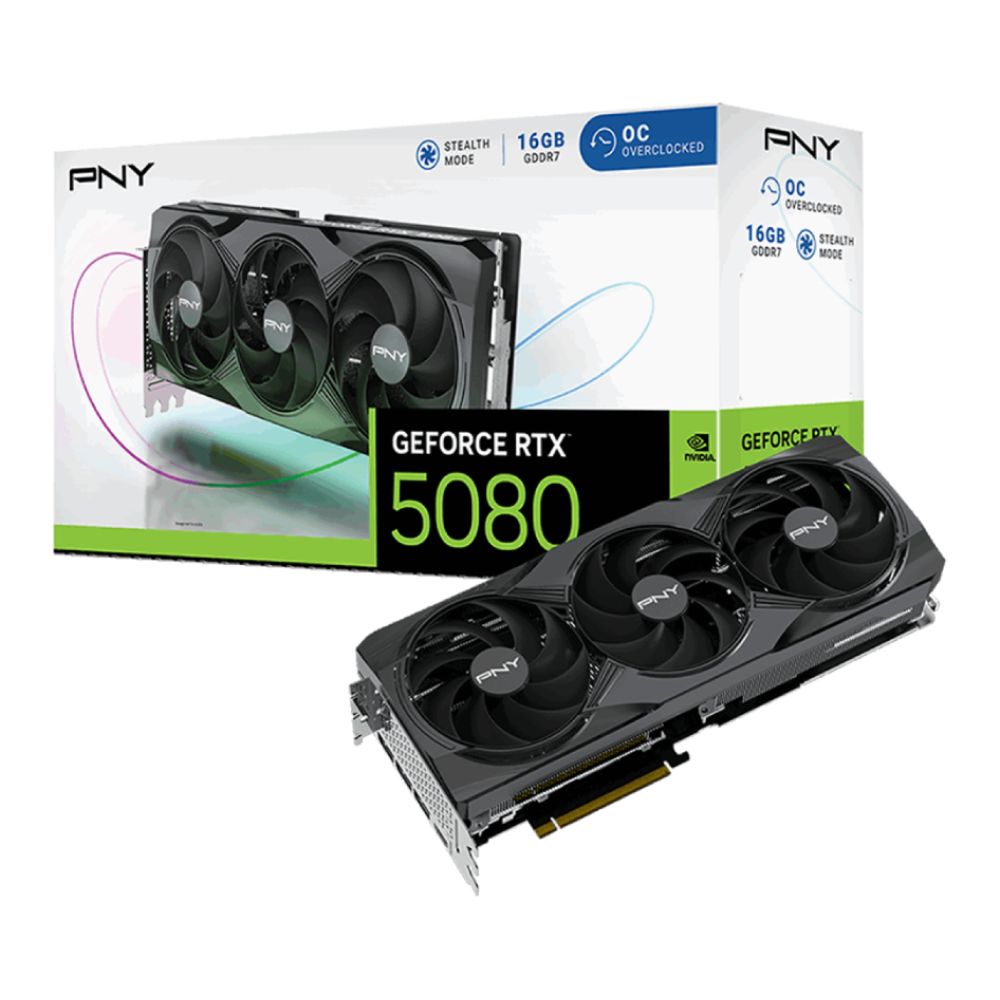
If you want something different from ASUS, MSI, or Gigabyte, the PNY GeForce RTX 5080 16GB OC Gaming Graphics Card is the most interesting alternative on this list. It sits in the middle of the market and offers a factory overclock with a straightforward triple-fan gaming design.
It is not the obvious headline card in the way the Astral or AORUS MASTER models are, but it is a valid option for buyers who want a solid RTX 5080 without paying extra for one of the more heavily marketed premium sub-brands.
-
Best for Creator-Style or Workstation-Leaning Builds
The ASUS GeForce RTX 5080 PROART 16GB OC Graphics Card is the most specialised card here. It is not really aimed at the same buyer as the TUF, GAMING TRIO, or WINDFORCE models. Instead, it suits users who want a cleaner, more workstation-friendly design and more practical display connectivity, including USB Type-C. It is clearly a premium niche option rather than a mainstream gaming value pick.
If your build leans more towards content creation, professional-style desk setups, or a cleaner visual look, this is the one RTX 5080 card here that clearly feels purpose-built for that kind of use.

-
Best Overall RTX 5080
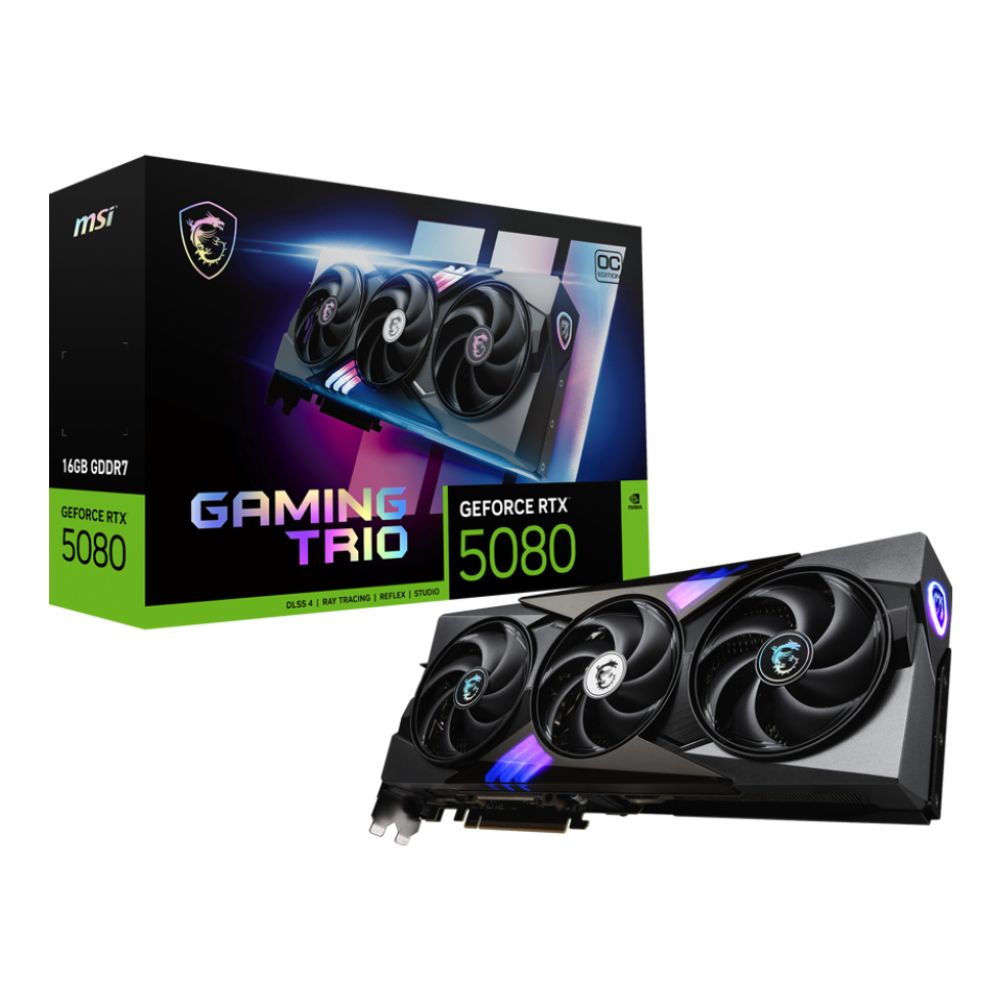
For most buyers, the MSI GeForce RTX 5080 16G GAMING TRIO OC is the strongest all-round choice. Considering its price, it sits in a much more approachable position than the premium halo cards, while still offering a well-established triple-fan design, a factory overclock, and the kind of build quality most buyers want in a high-end gaming system.
What makes it stand out is balance. It does not push as far into flagship pricing as cards like the ASUS ROG Astral or Gigabyte AORUS MASTER, but it still feels properly premium and much easier to recommend broadly than the most expensive models in the stack.
Why it stands out:
- strong all-round fit for most high-end gaming builds
- premium cooling and factory overclock without extreme pricing
- easier to justify than halo-tier RTX 5080 models
So, in simple terms:
- go ROG Astral if premium cooling matters most
- go Gigabyte WINDFORCE SFF for the best value and compact fit
- go AERO SFF if you want compact plus more visual polish
- go ProArt if your system leans more creator than gamer
- go MSI Gaming Trio for the best all-round choice
ASUS vs MSI vs Gigabyte: Which Brand Is Better?
There is no single brand that wins for everyone, because ASUS, MSI, and Gigabyte each approach the RTX 5080 market a little differently. The better choice depends on whether you care most about premium design, cooling, compact sizing, or overall value.
-
ASUS RTX 5080 Models
ASUS has one of the broadest and most clearly tiered RTX 5080 line-ups. You can explore options ranging from:
- ROG Astral RTX 5080 16GB OC
- TUF RTX 5080 16GB OC
- PRIME RTX 5080 16GB OC
- PROART RTX 5080 16GB OC
That spread gives ASUS a strong advantage for buyers who want more choice within one brand. The ROG Astral sits at the flagship end as the halo model for buyers who want the most premium cooling and build approach.
The TUF is the more mainstream premium gaming option, which makes it easier to justify in a high-end gaming build without moving all the way to Astral pricing.
The PRIME is the more straightforward option for buyers who still want ASUS design and quality but in a simpler tier.
The PROART is the most specialised model in the group, aimed more at creator-style or workstation-leaning systems, especially with its cleaner design and USB-C output.
If you want the widest range of premium RTX 5080 choices from one brand, ASUS is the easiest to recommend.
-
MSI RTX 5080 models
MSI's RTX 5080 line-up feels more focused and easier to read at a glance. It includes options such as the MSI GeForce RTX 5080 16G GAMING TRIO OC which is an excellent choice for anyone going for an enthusiast build.
The Gaming Trio is the kind of card that sits comfortably in the middle of the premium market. It is aimed at buyers who want a well-cooled, factory-overclocked card that feels like a serious gaming product without pushing into the most expensive flagship territory.
That makes MSI especially appealing for buyers who do not want to overthink the lineup. Rather than offering lots of specialist variants, MSI tends to make its choice simpler: if you want a premium gaming card with strong all-round appeal, Gaming Trio is the obvious place to look.
So, while ASUS offers more variety, MSI tends to feel more straightforward and easier to shop within.
-
Gigabyte RTX 5080 models
Gigabyte has one of the most versatile RTX 5080 ranges in terms of size, value, and build style. You can find options such as:
- WINDFORCE SFF
- AERO SFF
- GAMING OC
- AORUS MASTER
- AORUS MASTER ICE
That gives Gigabyte a strong position across several different buyer types. The WINDFORCE SFF is one of the most appealing options for buyers who want a lower-cost or more compact way into RTX 5080 ownership. The AERO SFF builds on that with a more design-led white finish and a slightly more premium feel. The GAMING OC sits in the middle as the straightforward mainstream gaming option. Then at the top end, the AORUS MASTER and AORUS MASTER ICE step in as Gigabyte's more premium flagship-style cards, with stronger cooling, heavier styling, and a more enthusiast-focused presentation.
That makes Gigabyte particularly strong for buyers who want either:
- better value for money
- a more compact RTX 5080 option
- or a premium flagship without automatically defaulting to ASUS
If you care about compactness, performance-per-pound, or simply having a few more practical options across different price points, Gigabyte is one of the easiest brands to like in the RTX 5080 market.
Which Brand Makes the Most Sense?
In simple terms:
- ASUS is best if you want the broadest premium range and the clearest spread from mainstream premium to halo and creator-focused models.
- MSI is best if you want a simpler, easier-to-understand lineup with strong all-round gaming appeal.
- Gigabyte is best if you want a better mix of value, compact options, and premium models without losing flexibility.
So, the better brand really depends on what kind of build you are putting together. If your priority is variety, ASUS stands out. If you want simplicity, MSI makes a lot of sense. If you want flexibility across size and price, Gigabyte is arguably the most practical choice.
Performance Differences Between RTX 5080 Models
Once you move past the branding and cooler designs, the actual performance gap between RTX 5080 cards is usually much smaller than the price difference might suggest. All of these cards use the same NVIDIA GeForce RTX 5080 GPU and the same 16GB GDDR7 memory configuration, so you are not choosing between completely different levels of graphics performance. What you are really choosing between is cooling quality, factory tuning, noise levels, physical size, and overall finish.
-
Do Factory Overclocks Matter?
Factory overclocks do matter, but usually not enough to justify spending heavily on that feature alone. The reference RTX 5080 boost clock starts from the same baseline GPU, and partner cards push that a little further depending on how aggressively they are tuned. For example, cards such as the GIGABYTE AORUS GeForce RTX 5080 MASTER 16GB and ASUS GeForce RTX 5080 ROG Astral 16GB OC Edition are clearly designed to sit at the more performance-focused end of the stack, with higher advertised clocks and more premium cooling hardware to support them.
That said, factory overclocks are best treated as a bonus rather than the main reason to buy one model over another. They can help a premium card feel more complete, but they are not the sort of difference that completely changes the gaming experience on their own.
-
Real-World Gaming Differences
In actual gaming, most RTX 5080 cards will perform far more similarly than their prices suggest. The main GPU and VRAM are the same, so the biggest real-world differences usually come from how well the card sustains its boost clocks, how cool it stays under load, and how much noise the cooler makes while doing it.
That is why the smarter question is rarely which card is technically the fastest. The more useful question is which card gives you the right balance of cooling, size, build quality, and value for your system. A card like the MSI GeForce RTX 5080 16G GAMING TRIO OC is a good example of this approach. It sits well below halo pricing, but still offers the sort of cooling and premium feel that will satisfy most high-end builders. The GIGABYTE GeForce RTX 5080 GAMING 16GB OC plays a similar role, giving you a well-rounded gaming card without immediately jumping to flagship-tier cost.
-
Noise and Temperature Comparison
This is where more expensive RTX 5080 models tend to justify themselves best. Better coolers usually mean:
- lower temperatures
- lower fan speeds
- quieter load behaviour
- more stable boost performance during longer sessions
That is why premium models make the most sense for buyers who care about acoustics and thermal performance rather than just clock speed. Cards such as the ROG Astral RTX 5080, GIGABYTE AORUS MASTER, and AORUS MASTER ICE are much easier to justify on those grounds than on raw FPS alone. They are not necessarily massively faster than a cheaper RTX 5080, but they are often better at delivering that performance more quietly and more comfortably.
Wrapping Up
The best RTX 5080 GPU model is not the same for every buyer, because the right choice depends more on your build priorities than on any huge difference in raw GPU performance.
If you want the most premium RTX 5080 experience, the ROG Astral RTX 5080 is the clear halo choice. If you want a smarter all-round premium gaming card, the MSI Gaming Trio RTX 5080, Gigabyte RTX 5080 GAMING OC, and ASUS PRIME RTX 5080 make much more practical sense. If you want the strongest value or a more compact-friendly option, the Gigabyte WINDFORCE SFF RTX 5080 stands out most clearly.
That is the real lesson in this RTX 5080 brands comparison. You are not choosing between fundamentally different GPUs. You are choosing which cooler, size, feature set, and price point best fits your build. In other words, the smartest RTX 5080 is not always the most expensive one. It is the one that makes sense with your case, your airflow, your budget, and the kind of high-end system you are actually building.
If you want to get the most out of the card, it is worth pairing it with the right 4K high-resolution display so the monitor matches the GPU's capabilities. It is also important to choose effective cooling for high-performance builds, especially when using a top-tier graphics card like the RTX 5080 or RTX 5090, so the system stays cool and performs at its best.
FAQs
-
Which 5080 GPU should I buy?
For most buyers, the best answer depends on the build. A premium card like the ROG Astral RTX 5080 suits no-compromise systems, models like the MSI Gaming Trio, Gigabyte GAMING OC, or ASUS PRIME suit balanced high-end builds, and a card like the Gigabyte WINDFORCE SFF makes the most sense for value or compact-friendly setups.
-
Which GPU is equivalent to the RTX 5080?
Within NVIDIA's own stack, the RTX 5080 sits as a high-end GeForce card below the RTX 5090. Across partner brands, the core GPU remains the same, so the main differences come from cooling, clock tuning, size, and design rather than the GPU itself changing from brand to brand.
-
Which RTX 5080 is best for gaming?
For pure high-end gaming, premium models like the ROG Astral, Gigabyte AORUS MASTER, and AORUS MASTER ICE are the strongest fits. For most buyers, though, the best gaming choice is usually the card that balances price, cooling, and build fit rather than the one with the most extreme factory overclock.
-
Do more expensive RTX 5080 models perform better?
Usually yes, but only slightly. They often run cooler, quieter, and with somewhat higher boost clocks, but the real-world gaming gap is typically much smaller than the price gap. More expensive cards are usually best understood as better-cooled and more premium-built rather than dramatically faster.
You can pay with:
*PayPal Credit Representative Example: Assumed credit limit £1,200, Representative 23.9% APR (variable). Purchase rate 23.9% p.a (variable).Terms & Conditions apply.


PayPal Credit and PayPal Pay in 3 are trading names of PayPal UK Ltd, 5 Fleet Place, London, United Kingdom, EC4M 7RD. Terms and conditions apply. Credit subject to status, UK residents only, Five Tech LTD acts as a broker and offers finance from a restricted range of finance providers. PayPal Pay in 3 is not regulated by the Financial Conduct Authority. Pay in 3 eligibility is subject to status and approval. 18+. UK residents only. Pay in 3 is a form of credit. Check if affordable and how you will repay. May make other borrowing more difficult or expensive. See product terms for more details.
Copyright © 1996-2026 Fivetech LTD | Terms and Conditions
box.co.uk & Box are trading names of Five Tech Limited. Registered office: Box LTD, Unit 10 Woodford Trading Estate, Woodford Green IG8 8HF