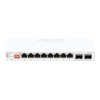
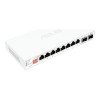
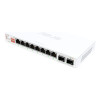
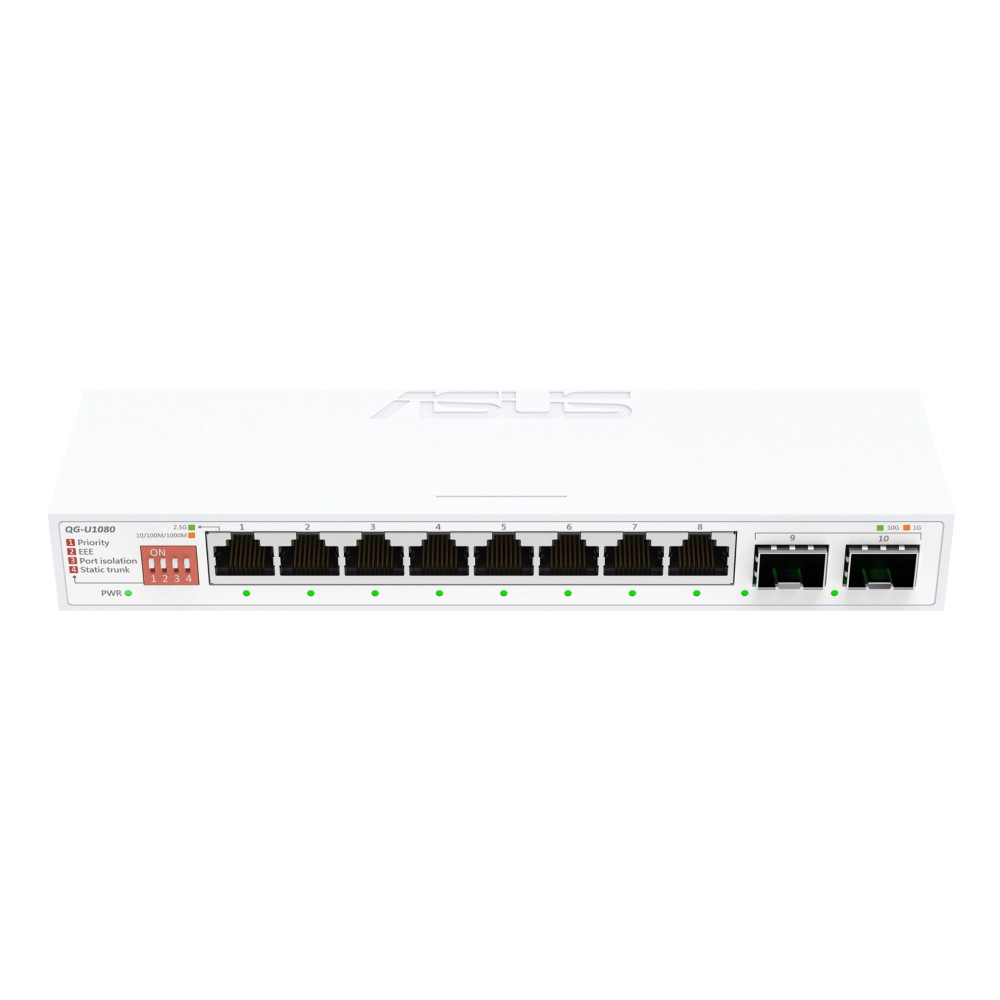
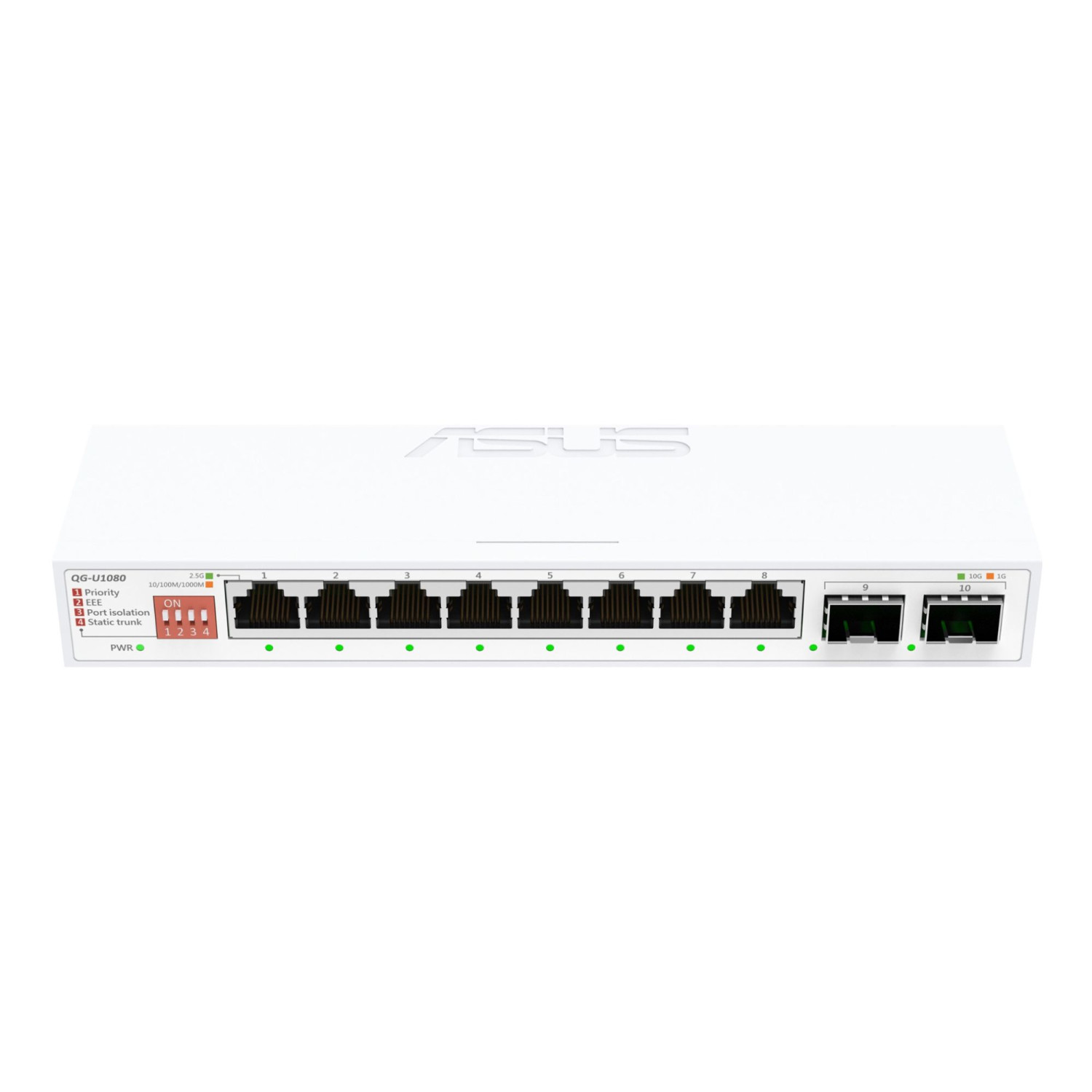
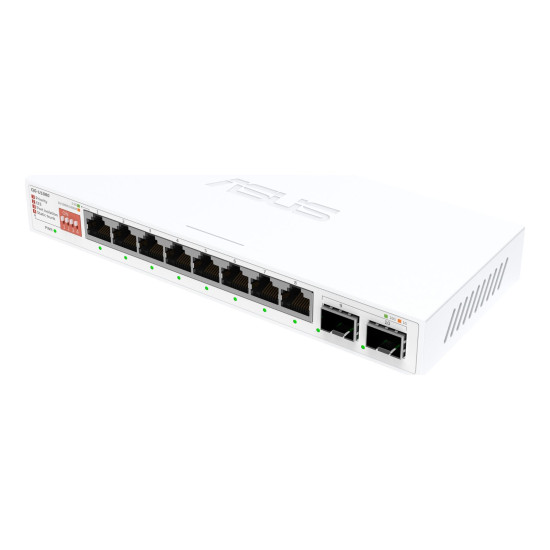
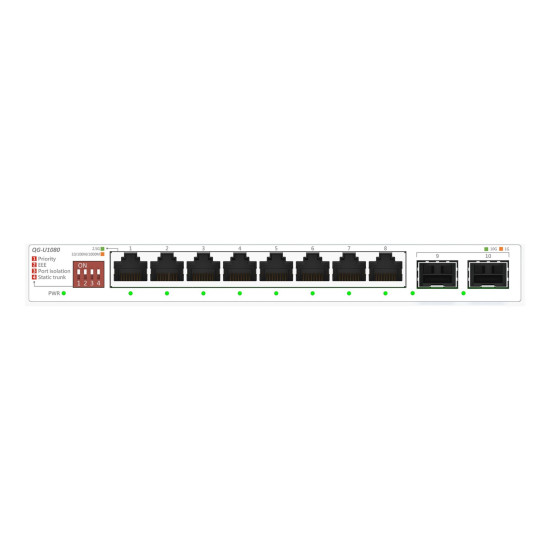
The ASUS QG-U1080 is a compact and efficient unmanaged switch designed to enhance your network performance, particularly for gaming and high-bandwidth applications. With ten ports capable of supporting speeds up to 2.5 gigabits per second, this device caters to users who require a reliable and speedy network without the complexities of managed switches. Its white finish gives it a modern appearance, allowing it to blend seamlessly into home or office environments.
This switch distinguishes itself by offering high-speed connectivity at an affordable price, making it an ideal choice for gamers and home office users looking to upgrade their networking capabilities. Unlike more complex managed switches, the ASUS QG-U1080 requires no configuration, allowing for quick setup and deployment straight out of the box, which is beneficial for those less familiar with networking devices.
User-friendly and compact, the QG-U1080 is suitable for small to medium-scale setups, providing ample bandwidth for multiple devices. It excels in scenarios where low latency and fast data transfer rates are crucial, such as online gaming, video streaming, and large file transfers, yet remains accessible to casual users who simply want enhanced connectivity.
What Makes It Different?
The ASUS QG-U1080 sets itself apart from typical entry-level switches by offering 2.5G Ethernet capabilities, which is not commonly found in devices at this price point. This feature allows for much faster data transfer compared to standard Gigabit switches, catering specifically to users who require higher bandwidth for demanding applications.
Moreover, as an unmanaged switch, it simplifies the user experience by eliminating the need for complex configuration. This makes it a practical choice for users who prefer a plug-and-play solution without the need for IT expertise, while more advanced users might opt for managed switches to gain greater control over their networks.
Performance & Everyday Use
The switch operates at various speeds, supporting both 1000 and 2500 Mbps bandwidths across its ten ports, which means it can easily accommodate multiple devices simultaneously without sacrificing performance. This makes it especially useful for gaming setups or home offices, where several computers, consoles, or smart devices may be connected at once.
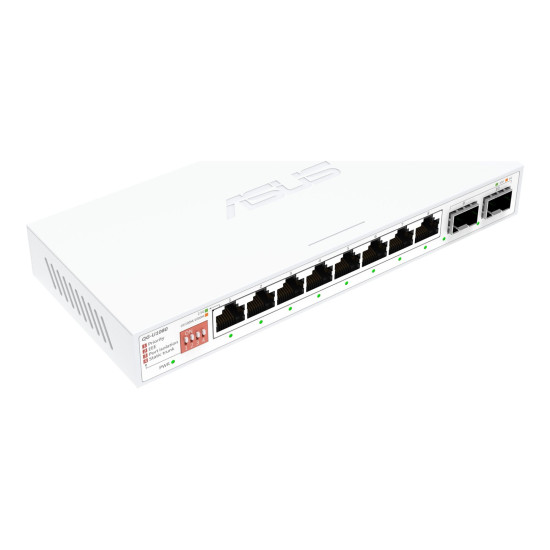
Portability is not a primary concern for this switch due to its fixed design; however, its compact dimensions of 26 x 193 x 84.1 mm and lightweight of just 0.42 kg allow it to fit conveniently in different spaces, whether on a desk or mounted out of the way. The switch is built to operate in a range of environments, with a temperature tolerance from 0 to 40 degrees Celsius and humidity resistance, making it suitable for various settings.
In terms of connectivity reliability, the ASUS QG-U1080 is engineered to maintain stable performance even during peak usage times. While it may lack some advanced features found in higher-tier switches, for most home users and gamers, it presents an excellent balance of performance, simplicity, and price.
Why Choose This ASUS QG-U1080?
For users looking for a robust yet uncomplicated network upgrade, the ASUS QG-U1080 stands out due to its speed and ease of use.
- Offers 2.5G connectivity for faster data transfer.
- Plug-and-play functionality simplifies installation for all users.
- Compact design allows for versatile placement.
- Ideal for users engaging in high-bandwidth activities like gaming and streaming.
However, power users who require network management features may want to consider upgraded options.
- Not suitable for extensive enterprise-level network management.
- Lacks advanced features such as VLAN support and monitoring tools.
- May not meet the performance demands of very high-throughput environments.
Great For
The ASUS QG-U1080 is an optimal choice for home users and gamers who need a reliable network solution without the complexity of a managed switch. Its design and performance make it particularly appealing for smaller setups where speed is paramount, and ease of use is essential.
- Home gaming setups requiring stable and high-speed internet connection.
- Small office networks with multiple connected devices.
- Casual users seeking simple, plug-and-play connectivity.
- Multiple devices relying on quick data transfer for streaming and browsing activities.


 Menu
Menu




 sales@box.co.uk - get in touch to set up a Trade Account
  020 3337 8950 020 3337 8950 available Monday to Friday, 9:00 AM to 5:00 PM.


