


 Menu
MenuMenu


Get Sales Advice from Mon - Fri 9am - 5:00pm:
020 3337 8950LAST UPDATED: April 21, 2026
Ryzen 9 9950X3D2 Explained: What Dual 3D V-Cache Actually Changes
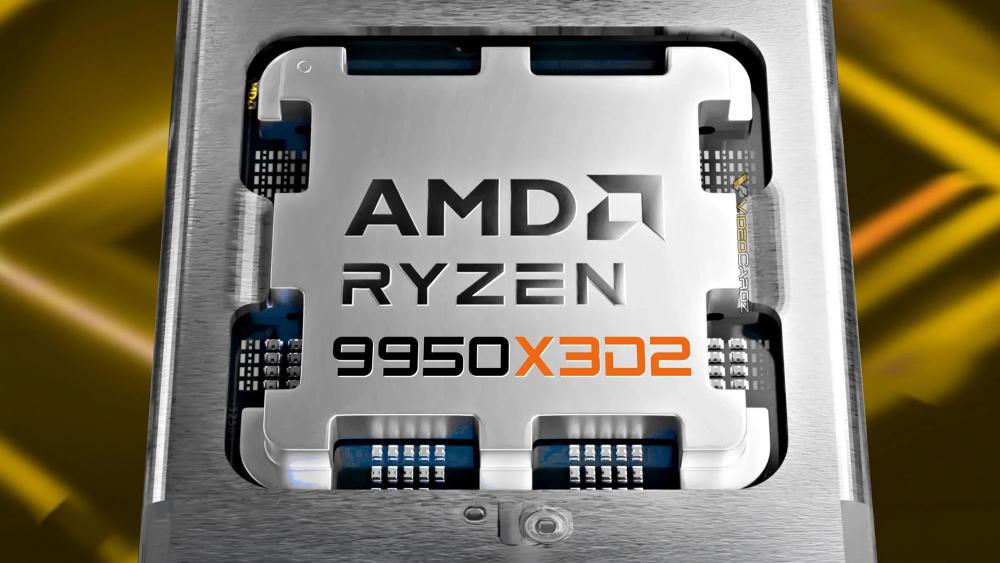
AMD continues to push the boundaries of desktop CPU performance with the launch of the AMD Ryzen™ 9 9950X3D2 Dual Edition Desktop Processor. Built on the latest Zen 5 architecture, this flagship chip introduces a major innovation dual AMD 3D V-Cache™ technology designed to improve both gaming and productivity performance in a more balanced way.
While previous X3D processors already demonstrated how additional cache could boost gaming performance, the 9950X3D2 series takes this further by refining how cache is distributed across the CPU. With a massive 192MB of L3 cache, this processor is built to reduce latency, improve data access speeds and deliver more consistent performance across different workloads.
This processor is particularly relevant for gamers chasing higher and more stable FPS, creators who need strong multitasking performance, and PC enthusiasts building high-end systems
If you're exploring latest processors, you can browse the full range of 9000 processors to compare where the 9950X3D fits in the lineup.
What Is Ryzen 9 9950X3D2 and Why It Matters
The Ryzen 9 9950X3D2 Dual Edition is AMD's top-tier desktop processor, designed for users who need both high core performance and advanced cache optimisation.
Key Specs and Architecture Overview
At its core, the 9950X3D2 is a 16-core, 32-thread processor with boost speeds of up to 5.6GHz. It is built using TSMC's 4nm process and supports the modern AM5 platform.
Key specifications include:
- Zen 5 architecture (Granite Ridge AM5)
- 192MB total L3 cache with dual 3D V-Cache
- 16 cores / 32 threads
- PCIe 5.0 and DDR5 memory support
- 200W TDP (liquid cooling recommended)
- Unlocked for overclocking (PBO, EXPO support)
This combination makes it one of the most advanced AMD processors for multitasking and gaming currently available.
What Makes It Different from Standard Ryzen CPUs
Unlike standard Ryzen CPUs, the 9950X3D2 uses a vertically stacked cache to significantly increase the amount of fast-access memory available to the processor.
Traditional CPUs rely more heavily on system RAM, which introduces latency. By increasing on-chip cache, AMD reduces the need for slower memory access, improving responsiveness especially in gaming.
What makes this processor unique is how that cache is deployed. Instead of concentrating cache on a single chiplet, AMD improves distribution across the CPU, helping to reduce performance inconsistencies seen in earlier designs.
Who Should Consider This Processor
The Ryzen 9 9950X3D2 is not designed for casual users; it targets high-performance scenarios.
It's best suited for:
- High-end gaming systems with powerful GPUs
- Users building best CPUs for gaming builds
- Streamers and content creators
- Developers working with heavy workloads
For users considering desktop CPU upgrades for gaming, this processor represents one of the most advanced options currently available.
Understanding 3D V-Cache Technology
To understand why the 9950X3D2 matters, it's important to first understand how 3D V-Cache works and why it improves performance.
What Is 3D V-Cache in Simple Terms
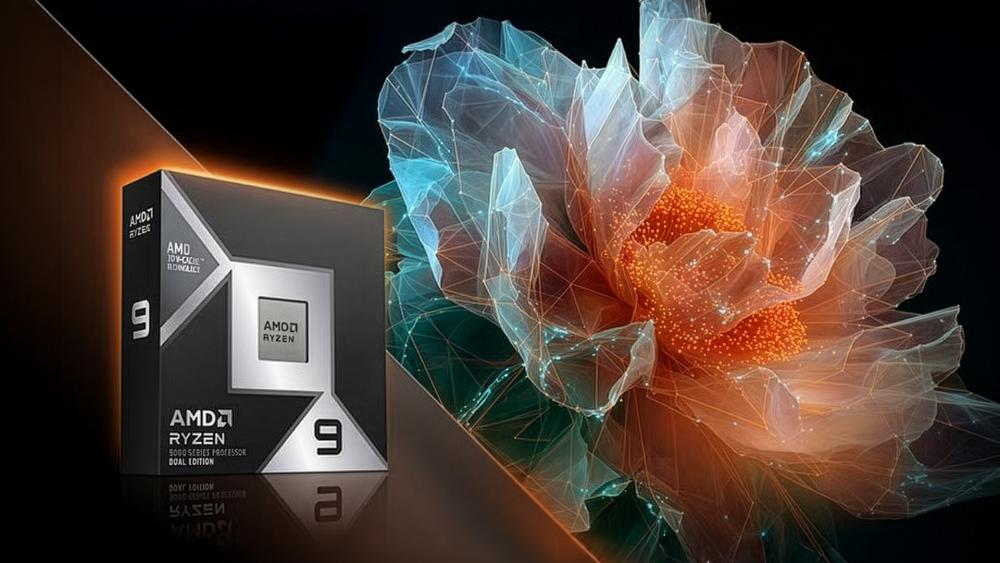
3D V-Cache is a technology that increases the amount of cache available on a CPU by stacking additional memory vertically on top of the processor die.
Instead of expanding the CPU horizontally, AMD adds extra cache layers on top of existing ones. This allows for a much larger cache without increasing the physical footprint significantly.
In simple terms, it gives the CPU faster access to more data.
How Vertical Cache Stacking Works
Traditional CPUs are limited by space when adding cache. AMD solves this by using vertical stacking, placing additional cache directly above the existing L3 cache.
This stacked cache is connected using high-speed interconnects, allowing data to move quickly between layers.
The result is:
- Larger cache capacity
- Reduced latency when accessing frequently used data
- Improved efficiency for certain workloads
Why Cache Matters for Gaming Performance
Cache plays a critical role in gaming because it stores frequently accessed data close to the CPU cores.
In gaming workloads, this means:
- Faster access to game data
- Reduced memory latency
- More consistent frame delivery
This is why large cache CPUs like X3D models often deliver better gaming performance compared to standard CPUs, even if clock speeds are similar.
What Does "Dual 3D V-Cache" Actually Mean?
The introduction of dual 3D V-Cache is what sets the Ryzen 9 9950X3D2 apart from previous generations.
Single vs Dual V-Cache CCD Design Explained
In earlier X3D processors, only one CCD typically had the extra 3D V-Cache. The other CCD operated like a standard CPU chiplet.
With the 9950X3D2, AMD moves toward a dual V-Cache approach, meaning both chiplets can benefit from increased cache.
This reduces the imbalance between cores and improves how workloads are handled across the CPU.
How AMD Distributes Cache Across Chiplets
By distributing cache more evenly, AMD aims to:
- Improve performance consistency
- Reduce latency when tasks move between cores
- Optimise scheduling across the CPU
This is particularly important in modern workloads where tasks are constantly shifting between cores.
Latency, Bandwidth and Scheduling Impacts
Dual V-Cache affects how data moves within the CPU.
It can:
- Reduce latency in certain scenarios
- Improve bandwidth for data-heavy tasks
- Help the scheduler allocate tasks more efficiently
These changes are subtle but important, especially for gaming and mixed workloads.
Real Performance Impact of Dual 3D V-Cache
The real question is how these architectural changes translate into performance.
Gaming Performance Gains vs Previous X3D Chips
In gaming, dual 3D V-Cache can improve:
- Frame consistency
- Minimum FPS
- Performance in CPU-bound scenarios
While raw FPS gains may vary, the biggest improvement is often in stability and smoothness.
Productivity and Multithreaded Workloads
Unlike earlier X3D chips, which prioritised gaming, the 9950X3D2 aims to balance gaming with productivity.
This makes it more suitable for:
- Streaming while gaming
- Content creation
- Heavy multitasking
Power Efficiency and Thermal Behaviour
Despite its performance, the CPU remains relatively efficient due to architectural improvements.
However:
- It has a 200W TDP
- Requires strong cooling (liquid recommended)
- Overclocking is limited compared to non-X3D chips
Ryzen 9 9950X3D2 vs 9950X3D vs Previous X3D CPUs
To understand the real value of the Ryzen 9 9950X3D2, it helps to compare it with previous X3D processors. Each generation has improved in different ways, but the introduction of dual 3D V-Cache marks a notable shift.
9950X3D2 vs 9950X3D
The AMD Ryzen™ 9 9950X3D2 Dual Edition and the Ryzen 9 9950X3D are very similar in terms of core specifications, both offering 16 cores and 32 threads on the AM5 platform. However, the key difference lies in how they handle cache and overall performance consistency.
The 9950X3D2 Dual Edition features a much larger 192MB L3 cache, compared to 128MB on the standard 9950X3D. This is made possible by AMD's improved dual 3D V-Cache design, which enhances how data is accessed across the CPU.
In practical use, this means the 9950X3D2 delivers better consistency in gaming and multitasking, especially in scenarios where workloads shift between cores. While both CPUs offer similar raw performance, the additional cache helps reduce latency and improves stability in demanding applications.
The standard 9950X3D, on the other hand, maintains slightly higher boost clocks and a lower power requirement, making it efficient while still delivering strong performance across most tasks.
Overall, the difference isn't about massive performance gains, but rather how smoothly each CPU handles workloads. The 9950X3D2 is designed for better balance and consistency, while the 9950X3D remains a powerful and efficient high-end processor.
Quick Comparison
| Feature | Ryzen 9 9950X3D2 Dual Edition | Ryzen 9 9950X3D |
| Cores / Threads | 16 / 32 | 16 / 32 |
| Architecture | Zen 5 (enhanced X3D) | Zen 5 X3D |
| Base Clock | ~4.3 GHz | 4.3 GHz |
| Boost Clock | Up to ~5.6 GHz | Up to 5.7 GHz |
| L3 Cache | 192 MB (Dual V-Cache) | 128 MB |
| Cache Advantage | Higher, more balanced | Lower, standard X3D |
| TDP | Higher (approx. 200W class) | 170W |
| Single-Core Performance | Very close | Slightly higher peak boost |
| Multi-Core Performance | Slightly higher overall | Very strong |
| Performance Focus | Consistency + cache-heavy workloads | Raw speed + balanced performance |
| Best For | Gaming + multitasking + future-proofing | High-end gaming + general workloads |
9950X3D2 vs 7950X3D
When comparing the AMD Ryzen™ 9 9950X3D2 Dual Edition with previous X3D processors, the key differences come down to architecture, cache design and how performance is distributed across workloads.
The Ryzen 9 7950X3D was already a powerful processor, built on Zen 4 with 16 cores and AMD's first-generation 3D V-Cache implementation. However, it used a hybrid cache design, where only one CCD (chiplet) had access to the additional stacked cache. This meant the CPU relied heavily on software scheduling to assign the right workloads to the right cores. While effective, this could sometimes introduce inconsistencies, especially in mixed workloads where tasks frequently shift between cores.
The Ryzen 9 9950X3D2 Dual Edition improves this by introducing a more advanced approach with dual 3D V-Cache and a significantly larger 192MB L3 cache. Instead of creating an imbalance between chiplets, AMD focuses on improving how cache is distributed and accessed across the CPU. This reduces dependency on scheduling and leads to more consistent performance across both gaming and productivity tasks.
In real-world use, this translates to smoother frame delivery in games, better handling of background processes, and improved stability when combining workloads such as gaming, streaming, and content creation.
9950X3D2 vs 7800X3D
The Ryzen 7 7800X3D, on the other hand, takes a different approach. It focuses purely on gaming performance with a single CCD design and 96MB of L3 cache. Because all cores have direct access to the same cache, it delivers excellent gaming performance with minimal scheduling complexity. However, with only 8 cores and 16 threads, it is less suited for multitasking or heavy productivity workloads.
Compared to both, the 9950X3D2 stands out as a more balanced processor, combining high core counts, improved cache architecture and better workload distribution. While the 7800X3D remains one of the strongest pure gaming CPUs, and the 7950X3D offers strong hybrid performance, the 9950X3D2 is designed to deliver consistent high performance across a wider range of use cases.
Is the Upgrade Worth It?
Whether upgrading to the Ryzen 9 9950X3D2 is worth it depends on your current setup.
It makes the most sense if you:
- Are upgrading from older or non-X3D CPUs
- Want a more balanced CPU for gaming and productivity
- Are building a high-end system for long-term use
If you already own a recent X3D processor, the upgrade may offer improvements, but the gains will depend on your specific workloads.
Ryzen 9 9950X3D2 vs Previous X3D CPUs – Quick Comparison
| Feature | Ryzen 9 9950X3D2 Dual Edition | Ryzen 9 7950X3D | Ryzen 7 7800X3D |
| Architecture | Zen 5 | Zen 4 | Zen 4 |
| Codename | Granite Ridge AM5 | Raphael AM5 | Raphael AM5 |
| Cores / Threads | 16C / 32T | 16C / 32T | 8C / 16T |
| Max Boost Clock | Up to 5.6 GHz | Up to 5.7 GHz | Up to 5.0 GHz |
| Base Clock | 4.3 GHz | 4.2 GHz | 4.2 GHz |
| L3 Cache | 192 MB (Dual 3D V-Cache) | 128 MB (Single CCD V-Cache) | 96 MB (Single CCD V-Cache) |
| Cache Design | Dual V-Cache (balanced across chiplets) | Hybrid (one CCD with V-Cache) | Single CCD with V-Cache |
| Scheduling Complexity | Lower (more balanced architecture) | Higher (depends on OS scheduling) | Minimal (single CCD) |
| Gaming Performance | Highest consistency + strong FPS | Excellent but variable in mixed loads | Outstanding for pure gaming |
| Multitasking Performance | Excellent (best overall balance) | Very good | Limited compared to Ryzen 9 |
| Productivity Performance | Strong (better than previous X3D chips) | Good | Moderate |
| TDP | 200W | 120W | 120W |
| Process Node | TSMC 4nm | TSMC 5nm | TSMC 5nm |
| Memory Support | DDR5 (up to 256GB) | DDR5 (up to 128GB) | DDR5 (up to 128GB) |
| PCIe Support | PCIe 5.0 | PCIe 5.0 | PCIe 5.0 |
| Overclocking Support | Yes (PBO, EXPO, Curve Optimiser) | Yes | Yes |
| Best Use Case | Gaming + streaming + heavy workloads | High-end gaming + mixed workloads | Pure gaming builds |
| Cooling Requirement | High (liquid recommended) | Moderate-high | Moderate |
Potential Drawbacks and Limitations
While the Ryzen 9 9950X3D2 is a high-performance CPU, it's important to understand its limitations before making a decision.
Software Scheduling Challenges
Even with improvements, multi-chiplet CPUs still rely on software scheduling to assign tasks efficiently.
Operating systems like Windows need to decide which cores handle specific workloads. While this has improved over time, there can still be scenarios where performance depends on how well tasks are distributed.
Price vs Performance Consideration
As a flagship processor, the 9950X3D2 sits at the higher end of the price range.
For some users, especially those focused purely on gaming, lower-tier CPUs may offer better value. The additional performance of the 9950X3D2 is most noticeable in high-end systems or mixed workloads.
Compatibility and Platform Requirements
The Ryzen 9 9950X3D2 uses the AM5 platform, which means:
- You need a compatible motherboard
- DDR5 memory is required
- Upgrading may involve additional costs
While this platform offers future support, it's something to consider when planning a build.
Who Should Buy Ryzen 9 9950X3D2?
The Ryzen 9 9950X3D2 is designed for specific types of users who can fully benefit from its capabilities.
Best Use Cases
This processor is ideal for:
- High-end gaming systems with powerful GPUs
- Streaming and gaming simultaneously
- Content creation and heavy multitasking
- Users building long-term, high-performance PCs
For those looking at high-performance gaming CPUs, this is one of the most advanced options available.
Who Should Avoid It
This CPU may not be the best choice for:
- Casual users with basic computing needs
- Budget builds where cost is a major factor
- Users who won't utilise its full performance potential
In these cases, more affordable CPUs can deliver better value.
Ideal GPU Pairings
To fully utilise the 9950X3D2, pairing it with a high-end GPU is essential.
This ensures:
- No CPU bottleneck in gaming
- Maximum FPS performance
- Better overall system balance
It works best with modern gaming graphics cards, especially in high-resolution gaming setups.
Final Verdict: Does Dual 3D V-Cache Really Matter?
The Ryzen 9 9950X3D2 represents a meaningful step forward in CPU design, particularly with the introduction of dual 3D V-Cache.
While the improvements may not always appear as massive FPS gains, they provide something equally important consistency, efficiency and balance across workloads.
For gamers, this means smoother performance and better frame stability. For creators and multitaskers, it means improved flexibility without sacrificing gaming performance.
Ultimately, dual 3D V-Cache matters most for users who want a CPU that can handle both gaming and demanding workloads without compromise.
If you're exploring latest processors, you can browse the full range of 9000 processors at Box.co.uk and compare options to find the right fit for your build.
FAQs
What is dual 3D V-Cache in Ryzen 9 9950X3D2?
Dual 3D V-Cache refers to AMD's approach of adding stacked cache across multiple chiplets, improving performance consistency, and reducing latency.
Is Ryzen 9 9950X3D2 better than 7950X3D for gaming?
It can offer more consistent performance and better balance, especially in mixed workloads, though gaming gains may vary.
Does dual V-Cache improve productivity performance?
Yes, it helps improve performance in multitasking and data-heavy workloads by increasing available cache.
Is Ryzen 9 9950X3D2 worth upgrading from 7800X3D?
It depends on your use case. For pure gaming, the difference may be smaller, but for multitasking and productivity, it offers clear benefits.
How does 3D V-Cache affect FPS in games?
It reduces memory latency and improves data access, which can lead to higher and more stable FPS in many games.
You can pay with:
*PayPal Credit Representative Example: Assumed credit limit £1,200, Representative 23.9% APR (variable). Purchase rate 23.9% p.a (variable).Terms & Conditions apply.


PayPal Credit and PayPal Pay in 3 are trading names of PayPal UK Ltd, 5 Fleet Place, London, United Kingdom, EC4M 7RD. Terms and conditions apply. Credit subject to status, UK residents only, Five Tech LTD acts as a broker and offers finance from a restricted range of finance providers. PayPal Pay in 3 is not regulated by the Financial Conduct Authority. Pay in 3 eligibility is subject to status and approval. 18+. UK residents only. Pay in 3 is a form of credit. Check if affordable and how you will repay. May make other borrowing more difficult or expensive. See product terms for more details.
Copyright © 1996-2026 Fivetech LTD | Terms and Conditions
box.co.uk & Box are trading names of Five Tech Limited. Registered office: Box LTD, Unit 10 Woodford Trading Estate, Woodford Green IG8 8HF