


 Menu
MenuMenu


Get Sales Advice from Mon - Fri 9am - 5:00pm:
020 3337 8950LAST UPDATED: July 06, 2026
AMD Ryzen 5 5500U vs Intel i5 (11th/12th Gen): Which Laptop CPU Should You Choose?
Choosing between the AMD Ryzen 5 5500U vs Intel i5 is really a question of how much laptop performance you want for your money in 2026. These processors sit in the mid-range part of the market, where laptops are expected to handle everyday work, study, multitasking, streaming, and light creative use without pushing into premium pricing. That makes them especially relevant for buyers who want a capable all-round machine rather than a specialist high-end laptop.
The Ryzen 5 5500U is a 6-core, 12-thread mobile processor that became popular for offering strong everyday performance and solid multi-core value in mainstream laptops. On the Intel side, the comparison usually comes down to Core i5 11th Gen and Core i5 12th Gen laptops, because those are the generations most commonly found in the same wider buying conversation. The difference matters. Intel’s 11th Gen i5 chips were built around the Tiger Lake era of thin-and-light laptops, while 12th Gen brought a newer hybrid design that changed how Intel handled performance and efficiency in mobile systems.
That is why this comparison needs to go beyond a simple brand fight. The real decision is whether you want the proven value and multi-core strength of the Ryzen 5 5500U, or whether an Intel i5 laptop, especially a 12th Gen model, gives you the better mix of responsiveness, efficiency, and long-term usability. This guide breaks that down properly, covering performance, graphics, battery life, value for money, and which option makes more sense for students, work, and everyday use.
The shortest answer to Ryzen 5 5500U vs Intel i5 is this: the Ryzen 5 5500U is still a very solid budget-to-mid-range laptop CPU for everyday use and sustained multitasking, while Intel i5 laptop options become more attractive once you move from 11th Gen into 12th Gen, where the architecture changes more meaningfully. AMD lists the Ryzen 5 5500U at 6 cores and 12 threads, up to 4.0GHz boost, with Radeon integrated graphics and a 15W default TDP. Intel’s 11th Gen launch material centres on Tiger Lake, Willow Cove, and Iris Xe for thin-and-light laptops, while Intel’s 12th Gen mobile brief highlights the jump to a hybrid design on Intel 7.
-
Key Specs at a Glance
On paper, the Ryzen 5 5500U gives you a clear six-core, twelve-thread layout with a 2.1GHz base clock, up to 4.0GHz boost, 8MB of L3 cache, Radeon graphics with 7 graphics cores, and configurable power from 10W to 25W. That makes it easy to understand as a value-focused mobile processor. Intel’s i5 side is less tidy because 11th Gen and 12th Gen cover different designs and different laptop classes rather than one simple like-for-like opponent.
-
Core Differences in Architecture
The big architectural difference in Ryzen 5 5500U vs Intel i5 is that Ryzen 5 5500U stays conventional with six full CPU cores and SMT, while Intel 11th Gen was still built around the older thin-and-light Tiger Lake approach, and 12th Gen moved to a hybrid design with performance and efficiency cores working together. That 12th Gen shift matters because it changed how Intel mobile CPUs handle bursty foreground tasks and background activity.
-
Who Each CPU is Designed for
The Ryzen 5 5500U makes the most sense for buyers chasing solid everyday speed, dependable multitasking, and good value in mainstream laptops. 11th Gen Intel i5 was designed for thin-and-light productivity machines with Iris Xe graphics and Intel Evo-style responsiveness, while 12th Gen Intel i5 widened the gap by adding a more modern hybrid structure and newer platform direction. In practical terms, that makes Ryzen more appealing in older value-led designs and 12th Gen i5 more appealing in newer all-round machines.
Understanding the CPUs
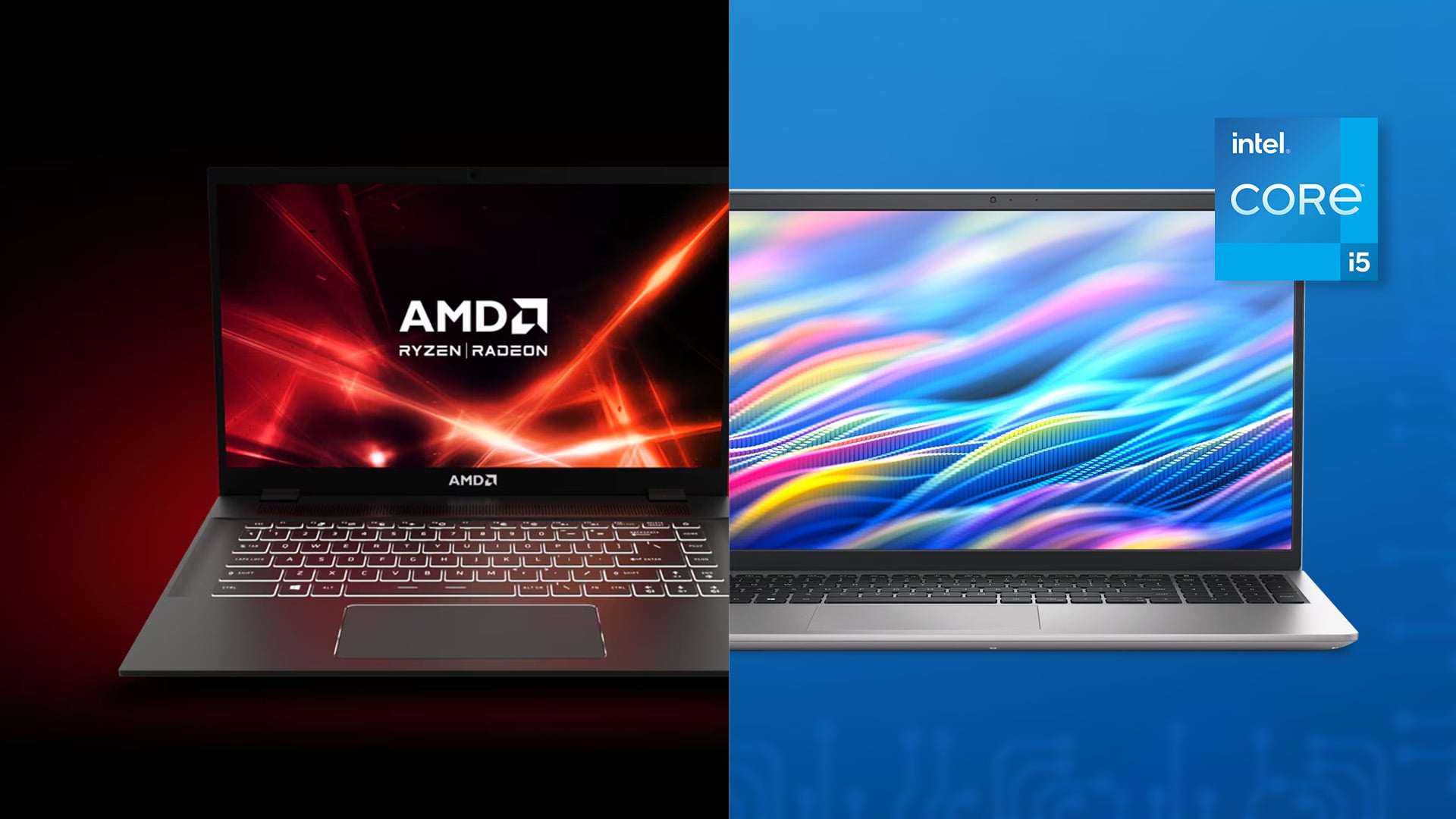
A lot of the confusion in Ryzen 5 5500U vs Intel i5 comes from the fact that Ryzen 5 5500U is one specific processor, while Intel i5 is a family name spread across multiple generations and chip classes. So before comparing performance, it helps to separate what each one actually is.
-
What is AMD Ryzen 5 5500U?
AMD’s own specs make the Ryzen 5 5500U very clear. It is a Ryzen 5000 Series mobile processor with 6 CPU cores, 12 threads, a 15W default TDP, 10-25W configurable power, and integrated Radeon graphics with 7 graphics cores running at up to 1800 MHz. It launched in January 2021 and is still commonly found in value-focused mainstream laptops rather than premium 2026 flagships.
-
What is Intel Core i5 11th Gen?
Intel’s 11th Gen Core mobile launch focused on Tiger Lake for thin-and-light laptops, Willow Cove CPU design, Intel Iris Xe graphics, and a stronger premium-ultrabook push through Evo. A common reference point on the i5 side is the Core i5-1135G7, which Intel used in its own NUC 11 Performance kit documentation. In other words, when buyers compare Ryzen 5 5500U vs Intel i5 11th vs 12th Gen, the 11th Gen side usually means an older thin-and-light design rather than Intel’s more modern hybrid-era laptops.
-
What is Intel Core i5 12th Gen?
Intel’s official 12th Gen mobile brief is where the story really changes. Intel says 12th Gen mobile processors introduced an all-new performance hybrid architecture on Intel 7, combining two types of specialised cores. That is the shift that makes 12th Gen i5 feel more modern than the 11th Gen. So, if you are deciding between Ryzen 5 5500U and a newer i5 machine, 12th Gen is usually the more relevant Intel comparison point.
Performance Comparison: Ryzen 5 5500U vs Intel i5
For most buyers, Ryzen 5 5500U vs Intel i5 is not about synthetic numbers. It is about whether the laptop feels quick enough for real life. That means browser tabs, documents, Teams or Zoom calls, streaming, spreadsheets, light editing, and the kind of multitasking that can make weaker machines feel sluggish.
-
Single-Core vs Multi-Core Performance
On paper, the Ryzen 5 5500U has the cleaner multi-core story because its six-core, twelve-thread layout gives it more obvious room for sustained parallel workloads than older 11th Gen i5 chips such as the quad-core i5-1135G7 reference design. Against 12th Gen i5, the comparison gets trickier because Intel’s hybrid layout is newer and better suited to mixed foreground and background loads. In broad practical terms, Ryzen 5 5500U usually looks stronger against 11th Gen i5 than it does against 12th Gen i5. That is the biggest pattern in a realistic Ryzen vs Intel laptop performance discussion.
-
Everyday Tasks
For everyday work, all of these processors are still comfortably usable in 2026 if the laptop has enough RAM and an SSD. Browsing, office apps, streaming, admin work, coursework, and general home use are not the kinds of jobs that make a meaningful gap between Ryzen 5 5500U and most i5 laptops instantly obvious. This is why the best CPU for laptops question at this level is often really about the whole system rather than the processor alone. Current retail listings still present both Ryzen 5 5500U laptops and Intel Core i5 laptops as everyday productivity machines.
-
Multitasking and Productivity
The Ryzen 5 vs i5 laptop comparison becomes more interesting once workloads get heavier. If you often run lots of browser tabs, office apps, messaging, video calls, and background syncing together, the Ryzen 5 5500U still holds up well because of its 6-core, 12-thread layout. But if the Intel side is a 12th Gen i5 rather than an 11th Gen chip, the newer architecture and task-splitting approach make Intel the safer pick for a more modern productivity laptop in 2026.
Graphics Performance (Integrated GPU)
Integrated graphics matter a lot in Ryzen 5 5500U vs Intel i5, because many laptops in this category do not include a dedicated GPU. That means your processor choice can affect light gaming, casual creative work, media handling, and how comfortable the laptop feels without discrete graphics.
-
AMD Radeon Graphics vs Intel Iris Xe
AMD lists the Ryzen 5 5500U with Radeon graphics featuring 7 graphics cores at up to 1800 MHz. Intel’s 11th Gen mobile pitch revolves heavily around Iris Xe graphics, especially for thin-and-light laptops. In practice, that means both sides take integrated graphics seriously rather than treating them as an afterthought. For 12th Gen i5, the graphics story varies more by exact chip and laptop configuration, which is one reason older Iris Xe branding is often easier for buyers to recognise.
-
Light Gaming Performance
For light gaming, neither side should be treated like a proper gaming solution, but both are usable for esports, older titles, simpler indie games, and lower-settings play. If gaming is only occasional, a Ryzen 5 5500U laptop or an Intel i5 laptop with decent integrated graphics can still make sense.
-
Creative Tasks and Media Use
For media playback, casual editing, and lighter creative workloads, these processors are fine. The real limiter is usually memory, storage speed, and whether the laptop is configured sensibly. A well-balanced Ryzen 5 5500U system can still feel more capable than a poorly configured Intel i5 machine, and the reverse is true as well. That is why Intel i5 laptop performance and Ryzen 5 5500U value should always be judged in the context of the laptop build, not just the chip name.
 Battery Life and Power Efficiency
Battery life is where buyers often want a simple winner, but Ryzen 5 5500U vs Intel i5 is not that simple. CPU design matters, but so do battery size, screen type, brightness, Windows power mode, cooling, and background activity. Microsoft also highlights with its Windows 11 guidance that power mode, screen settings, and energy saver choices all materially affect battery life.
-
Power Consumption Differences
AMD sets the Ryzen 5 5500U at a 15W default TDP with a 10W to 25W configurable range, which clearly places it in the efficient mainstream mobile class. Intel’s 11th Gen thin-and-light messaging and 12th Gen mobile design both target portable laptops too, but the 12th Gen story leans more on hybrid core behaviour than on one simple wattage headline. In practical terms, Ryzen 5 5500U is efficient on paper, while 12th Gen Intel is the newer design direction.
-
Real-World Battery Life
In real use, battery life is usually decided more by the laptop than the chip alone. A dimmer screen, Best Power Efficiency mode, shorter sleep timers, and dynamic refresh rate can all extend runtime in Windows 11. That is why two laptops with the same processor can behave quite differently away from the charger. So if battery life is the main priority in Ryzen 5 5500U vs Intel i5, it is worth judging the whole laptop design rather than assuming the processor name tells the full story.
-
Best for All-Day Use
If you want the safest modern answer for all-day use, a well-built 12th Gen Intel i5 laptop is usually easier to justify in 2026 than an older 11th Gen model. But the Ryzen 5 5500U is still a very reasonable choice in lower-cost laptops where value matters more than having the newest CPU architecture. That is the practical compromise at the heart of this comparison.
Ryzen 5 5500U vs Intel i5 11th vs 12th Gen: Key Differences
The single biggest difference in Ryzen 5 5500U vs Intel i5 is not AMD versus Intel. It is older Intel versus newer Intel. 11th Gen and 12th Gen Core i5 are not a minor refresh apart.
-
12th Gen Architecture Changes
Intel’s 12th Gen mobile brief makes the change very clear: 12th Gen redefined multi-core laptop architecture with an all-new hybrid design on Intel 7. That is why 12th Gen deserves to be treated separately from 11th Gen.
-
Hybrid Design and Efficiency Cores
The hybrid design matters because it changes how the processor allocates work. Background activity and lighter tasks can be handled differently from more demanding foreground work. That makes the 12th Gen i5 more attractive for modern mixed workloads than older 11th Gen i5 laptops, even before you start comparing exact model numbers.
-
Overall Real-World Advantage
So the practical summary is straightforward. Ryzen 5 5500U generally looks stronger against 11th Gen i5 than it does against 12th Gen i5. If you are choosing between Ryzen 5 5500U and a 12th Gen i5 laptop at a similar overall price and build quality, the newer Intel option is usually the safer long-term choice. If the comparison is with an older 11th Gen i5 laptop, the Ryzen side becomes much easier to recommend.
Which CPU Is Better for Different Use Cases?
This is where Ryzen 5 5500U vs Intel i5 becomes useful rather than theoretical.
-
Best for Students and Everyday Use
For students and general home users, the Ryzen 5 5500U still makes a lot of sense when the laptop is priced aggressively and paired with sensible specs. It is especially easy to recommend in value-led work and study machines, including practical business-style options like Lenovo V Series Laptops. If the Intel option is only 11th Gen, Ryzen usually feels like the smarter buy.
-
Best for Multitasking and Office Work
For office work and multitasking, Ryzen 5 5500U remains good, but 12th Gen Intel i5 is often the more balanced modern option because of the newer platform direction and hybrid design. If you are specifically browsing Intel Core i5 Laptops, this is the part of the market where newer Intel i5 machines make the strongest case.
-
Best for Light Gaming and Casual Creators
For light gaming and casual creators, the answer depends on the laptop around the CPU. Both platforms are workable without dedicated graphics, but neither should be treated as a true gaming replacement. If you want a machine mainly for everyday use with occasional creative work, either platform can work. If you want more than that, it is better to move up the stack rather than overthinking this specific CPU fight.
In 2026, the market position of these CPUs matters almost as much as their specs. Ryzen 5 5500U now sits clearly in value territory, while Intel i5 spans a broader spread of current laptops.
-
Typical Laptop Pricing
Current retail listings still show Ryzen 5 5500U in budget-to-lower-midrange laptops such as mainstream 14-inch work and study models. Intel Core i5 laptops cover a much wider band, and 12th Gen Intel i5 machines are still easy to find in practical student and office laptops. So, the pricing question is not just CPU versus CPU. It is also old-value-platform versus broader current-market availability.
-
Value for Money
For pure value, Ryzen 5 5500U still has a case. If you find it in a well-priced laptop with 8GB or 16GB RAM and a 512GB SSD, it is still a practical buy. But if the price gap to a 12th Gen Intel i5 laptop is small, the Intel machine often makes more sense because the platform is newer and the CPU story is less dated. That is the most useful way to think about best CPU for laptops in this bracket.
-
Which Offers Better Long-Term Value
For long-term value, 12th Gen Intel i5 is the safer answer. For short-term budget value, Ryzen 5 5500U still works. If you want to browse the wider processor families rather than one chip alone, Intel Processors and AMD Ryzen 5 5000 Series Processors at Box allow you to compare where each platform sits in the broader laptop market. If you choose to go with Intel, we have a guide on the best Intel processor laptops that may help you to shortlist great options. As for those moving towards AMD but want to consider something other than the Ryzen 5 5500U, our guide on best AMD processors is a great place to start.
Wrapping Up
The right choice depends less on the badge and more on which Intel i5 laptop you are actually comparing it against. If the decision is between the Ryzen 5 5500U and an older Intel i5 11th Gen laptop, the Ryzen option is often easier to recommend because it still offers strong everyday performance and very solid multitasking value for the money.
If the comparison is with a 12th Gen Intel i5, the balance changes. That is where Intel starts to make a stronger case for buyers who want a newer platform, better long-term efficiency, and a more modern overall laptop experience.
So, the practical takeaway is quite simple. The Ryzen 5 5500U still makes sense when price and value are the priority. A 12th Gen Intel i5 makes more sense when you are looking for the more up-to-date option for longer-term use. If you keep that distinction in mind, the rest of the comparison becomes much easier to judge. If you still need more help deciding the right processor, our processor buying guide is a great place to start.
Frequently Asked Questions
Is Ryzen 5 5500U better than Intel i5?
It depends on the generation. Ryzen 5 5500U is often easier to recommend than older 11th Gen i5 laptops, but 12th Gen Intel i5 is usually the stronger long-term option.
Which is better for gaming, Ryzen 5 or i5?
For light gaming without a dedicated GPU, both are workable. Neither is a substitute for a real gaming laptop, but both can handle casual and esports-style use.
Is Intel 12th Gen i5 worth it over Ryzen 5 5500U?
Yes, usually, if the laptop price gap is reasonable. The newer architecture and more modern platform make 12th Gen i5 easier to justify in 2026.
Which CPU is better for battery life?
Battery life depends heavily on the laptop design, battery size, display, and Windows power settings. On paper, both target efficient mobile use, but newer 12th Gen Intel i5 laptops have the stronger modern efficiency story.
Is Ryzen 5 5500U still good in 2026?
Yes, if the laptop is priced properly and the rest of the spec is sensible. It is no longer a new-platform choice, but it is still a practical value CPU for everyday use and multitasking.
You can pay with:
*PayPal Credit Representative Example: Assumed credit limit £1,200, Representative 23.9% APR (variable). Purchase rate 23.9% p.a (variable).Terms & Conditions apply.


PayPal Credit and PayPal Pay in 3 are trading names of PayPal UK Ltd, 5 Fleet Place, London, United Kingdom, EC4M 7RD. Terms and conditions apply. Credit subject to status, UK residents only, Five Tech LTD acts as a broker and offers finance from a restricted range of finance providers. PayPal Pay in 3 is not regulated by the Financial Conduct Authority. Pay in 3 eligibility is subject to status and approval. 18+. UK residents only. Pay in 3 is a form of credit. Check if affordable and how you will repay. May make other borrowing more difficult or expensive. See product terms for more details.
Copyright © 1996-2026 Fivetech LTD | Terms and Conditions
box.co.uk & Box are trading names of Five Tech Limited. Registered office: Box LTD, Unit 10 Woodford Trading Estate, Woodford Green IG8 8HF