


 Menu
MenuMenu


Get Sales Advice from Mon - Fri 9am - 5:00pm:
020 3337 8950LAST UPDATED: March 26, 2026
RTX 5090 vs RTX 5080: Which Should You Buy?
When the NVIDIA RTX 5000 series was teased, PC gamers everywhere knew a massive generational leap was coming. Now that the 5090 vs 5080 showdown is on everyone's radar, the question is clear. Should you go all in on the flagship RTX 5090 or opt for the more affordable yet powerful RTX 5080? Both are beasts built for 1440p and 4K dominance, boasting advanced ray tracing and DLSS Frame Generation that push the boundaries of modern gaming visuals.
If you're building or upgrading your rig, choosing between these two next-gen cards isn't easy. The RTX 5090 delivers unmatched performance for enthusiasts who crave the absolute best, while the RTX 5080 hits the sweet spot for gamers who demand premium power without overspending. Before making your move, let's break down specs, benchmarks, and real-world performance to see which GPU truly deserves a slot in your setup.
RTX 5090 and RTX 5080 Overview: Where Do They Sit in the Lineup?
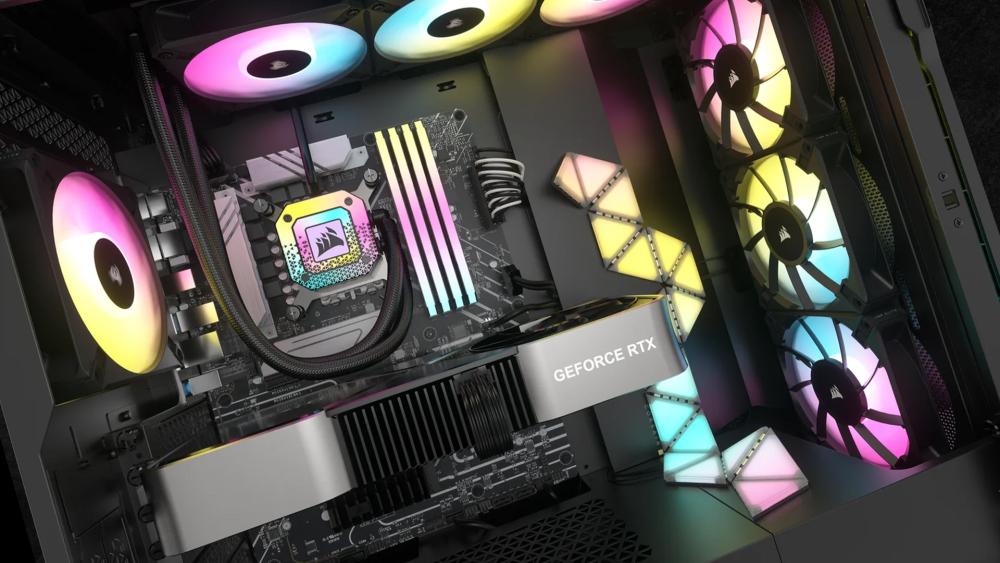
The RTX 5090 and RTX 5080 are NVIDIA's next-generation powerhouse GPUs, debuting under the all-new Blackwell architecture that drives the RTX 50 Series Graphics Cards. Announced around CES 2026, these cards are designed to push PC gaming, AI workloads, and creative production to new heights.
The RTX 5090 graphics card leads the charge as the flagship model, using the advanced GB202 GPU die paired with a massive 32 GB of GDDR7 memory on a 512-bit bus, setting the stage for record-breaking bandwidth and frame rates. Meanwhile, the RTX 5080 graphics card, powered by the GB203 chip, features 16 GB of GDDR7 on a narrower 256-bit interface. While it trades off some raw performance, it retains much of the generational uplift in efficiency and speed, making it a more accessible choice for serious gamers.
Target Audience for Each GPU
The RTX 5090 caters to those who demand absolute dominance such as gamers pushing for 4K or even 8K gameplay at ultra settings, streamers juggling multiple workloads, and creators tackling GPU-heavy rendering or AI projects. Its vast CUDA core count and memory capacity make it ideal for no-compromise setups paired with High Refresh Rate Gaming Monitors and high-end CPUs.
On the other hand, the RTX 5080 is the smarter pick for enthusiasts seeking elite-level gaming without entering flagship pricing territory. RTX 5080 desktop PCs and laptops are a a brilliant match for 1440p competitive gaming and smooth 4K gaming with DLSS Frame Generation, offering remarkable value within the new RTX 5000 series range.
Architectural Improvements from 40-Series to 50-Series
The Blackwell architecture represents a major evolution from Ada Lovelace, blending raw power with smarter AI acceleration. Here's what makes it stand out:
- 4th-Gen Ray Tracing Cores: Deliver superior real-time lighting, shadows, and reflections in next-gen games.
- 5th-Gen Tensor Cores: Supercharge DLSS 4 with multi-frame generation, enabling AI-assisted upscaling and latency reduction.
- GDDR7 Memory: Faster and more efficient than GDDR6X, offering up to 1.7 TB/s bandwidth on the RTX 5090.
- Enhanced Efficiency: Despite its huge performance gains, Blackwell achieves better performance per watt, thanks to refined power management and support for ATX 3.0 Power Supplies.
- Thermal Advancements: New cooling designs and improved heat dissipation keep the 5000-series GPUs stable under extreme loads.
The jump from the RTX 40-Series to the RTX 50-Series isn't incremental. It's transformative, making 5090 vs 5080 comparisons less about whether to upgrade, and more about how far you want to go. You can learn more by checking out our guide on how RTX 50 series laptops power student life, creativity, and gaming.
Core Specification Comparison: NVIDIA GeForce RTX 5090 vs NVIDIA GeForce RTX 5080
Below is a breakdown of how the two GPUs compare in specs, ideal for discerning gamers and builders weighing the 5090 vs 5080 decision.
Specification Summary:
| Specification | RTX 5090 | RTX 5080 |
| CUDA / Shader Cores | ~21,760 (170 SMs) | ~10,752 cores (84 SMs) |
| Memory & Bus | 32 GB GDDR7 on a 512-bit bus, ~1,792 GB/s bandwidth | 16 GB GDDR7 on a 256-bit bus |
| Boost Clock | ~2.41 GHz (base ~2.01 GHz) | ~2.62 GHz (base ~2.30 GHz) |
| Total Graphics Power (TGP) / PSU requirement | 575 W TGP, ~1,000 W PSU recommended | ~360 W TGP, ~850 W PSU recommended |
| Architecture / Feature Support | Blackwell architecture, DLSS 4, 4th-gen RT cores, 5th-gen Tensor cores | Blackwell architecture, DLSS 4, same class of RT/Tensor core generation |
Key Observations
- The RTX 5090 specs offer roughly double the raw shader/core capacity compared to the RTX 5080 specs, translating into major headroom for high-end gaming and creative workloads.
- Memory bandwidth and bus width are significantly higher on the 5090, meaning faster data movement, especially relevant for 4K/8K textures and large workloads.
- The power tier is much higher for the RTX 5090 desktop PCs: be prepared for higher power draw, better cooling, and a stronger PSU. The 5080, while still high performance, is more manageable in system requirements.
- Both cards benefit from Blackwell architecture and DLSS 4, meaning many of the generational features are shared, the difference is how far into those features each card can go.
Implementation & Real-World Relevance
- For builders pairing with a high-end system (like premium powerful motherboards, a high-end CPU, advanced cooling, high refresh monitors), the RTX 5090 will minimise the chance of bottlenecks and maximise future-proofing.
- For gamers who are serious but are balancing budget, heat, case size and power constraints, the RTX 5080 offers a strong "sweet-spot" in the RTX 50 Series lineup: high performance, decent future headroom, but lower cost and easier system demands.
- If your focus is on 1440p or 4K at high refresh (144Hz+), both cards support that, but the 5090 gives you more margin for extreme settings, multi-monitor setups, or creative workloads beyond gaming.
Gaming Performance Breakdown: 1440p, 4K, and Beyond
The RTX 5090 and RTX 5080 redefine what's possible in modern PC gaming, delivering huge leaps in frame rates and graphical fidelity across both 1440p and 4K resolutions. With NVIDIA's Blackwell architecture, improved ray tracing, and DLSS 4 frame generation, both GPUs bring smoother visuals, lower latency, and enhanced realism to the latest titles. However, their real-world performance differs depending on the resolution and workload.
1440p Gaming Performance
At 1440p, both cards deliver exceptional results, easily surpassing triple-digit frame rates in the most demanding games. The RTX 5080 performance comfortably handles competitive gaming at high refresh rates, while the RTX 5090 performance stretches even further, ensuring overhead for next-gen titles and maximum detail settings.
In benchmark averages from independent testers, the RTX 5090 achieved around 206 fps, compared to 164 fps for the RTX 5080 at 1440p Ultra. This 25–30% uplift gives the 5090 a meaningful advantage for players using High Refresh Rate Gaming Monitors targeting 240 Hz and above. Competitive gamers will find the RTX 5080 more than capable, but the 5090 offers headroom that will last multiple GPU generations.
4K Gaming Capabilities
The RTX 5000 series marks a significant milestone for 4K gaming. Thanks to DLSS 4 frame generation and the raw power of GDDR7 memory, both GPUs can maintain fluid gameplay even with ray tracing enabled. The RTX 5080 delivers an average of 90–100 fps in most modern AAA titles at 4K Ultra with DLSS 4 Quality mode enabled, making it a reliable 4K gaming GPU for most players.
Meanwhile, the RTX 5090 benchmark results show it pulling ahead by roughly 40–45%, consistently exceeding 120 fps at 4K Ultra in heavy hitters like Cyberpunk 2077, Starfield, and Alan Wake 2. That makes it the go-to option for gamers running 4K/144 Hz displays who want every visual effect maxed out without compromise.
Ray Tracing and DLSS 4 Performance
NVIDIA's 4th-generation Ray Tracing Cores and 5th-generation Tensor Cores bring a generational leap in visual quality and efficiency. Both GPUs handle ray-traced titles with impressive stability, though the RTX 5090's additional cores and bandwidth translate into smoother lighting and reflections at ultra settings.
In early real-world tests, the RTX 5090 reached over 120 fps in 4K with full ray tracing and DLSS 4 enabled, while the RTX 5080 hovered between 85–95 fps in similar conditions. The introduction of multi-frame generation within DLSS 4 further enhances performance and consistency across both cards, reducing latency and boosting overall playability.
Gamers who value cinematic visuals and cutting-edge lighting will find the RTX 5090 unmatched, while the RTX 5080 still offers a premium balance of fidelity and efficiency for most use cases. If you need more reasons to switch, check out our blog on why you need to upgrade to the RTX 50 series GPUs.
Productivity & Content-Creation: Which Card Delivers for Creators?
When weighing the 5090 vs 5080 for productivity and content-creation tasks, both cards based on the Blackwell architecture bring serious upgrades. But they serve slightly different segments of creator workflows.
Video Editing, 3D Rendering & Motion Graphics
The NVIDIA GeForce RTX 5090 and NVIDIA GeForce RTX 5080 shine in these domains thanks to their large CUDA-core counts, generous VRAM and advanced media engines. For example:
- RTX 5090: Up to 21,760 CUDA cores, 32 GB GDDR7 and massive memory bandwidth (~1,792 GB/s) allow faster rendering in Blender/V-Ray and higher headroom for 4K/8K footage.
- RTX 5080: With ~10,752 CUDA cores and 16 GB GDDR7 (256-bit) it still handles creative workloads well, but you'll have less margin for ultra-heavy tasks or future growth.
In a review by Puget Systems, the RTX 5080 delivered solid performance in Premiere Pro, After Effects and Blender. It proved capable, but the gains versus previous generation weren't as dramatic as you might hope.
So, the take-away is, if you're editing multi-layer 4K/8K, colour-grading, doing 3D motion graphics or rendering for clients, the RTX 5090 offers more future-proofing. If your workflow is more typical (1080p/4K editing, moderate 3D) then the 5080 is a strong choice.
AI, Machine Learning & Professional GPU Workloads
In AI and compute-heavy tasks, the architectural improvements of the RTX 5090 give it a clear edge:
According to benchmarking in computer-vision/LLM workloads, the RTX 5090 boasts ~44% greater performance in vision tasks and ~72% in NLP tasks compared to older cards.
The RTX 5080 still supports the same generation of RT cores and Tensor cores, but with fewer resources the absolute throughput is lower.
For creators working with AI-accelerated editing, neural rendering, real-time compositing or game development/virtual production pipelines, the RTX 5090 delivers extra compute headroom. If you're focused on standard GPU workloads, the RTX 5080 will suffice.
Efficiency, Workflow Fit & System Balance
Both cards benefit from media engine improvements and Blackwell's efficiency gains. System constraints matter so using an RTX 5090 means investing more in cooling, PSU and motherboard to avoid bottlenecks. If your system is already tuned (strong CPU, fast storage, good cooling) then the 5090 returns value; if not, you might see diminishing returns and better value with the 5080.
Value for Money: What's the Real Cost Difference?
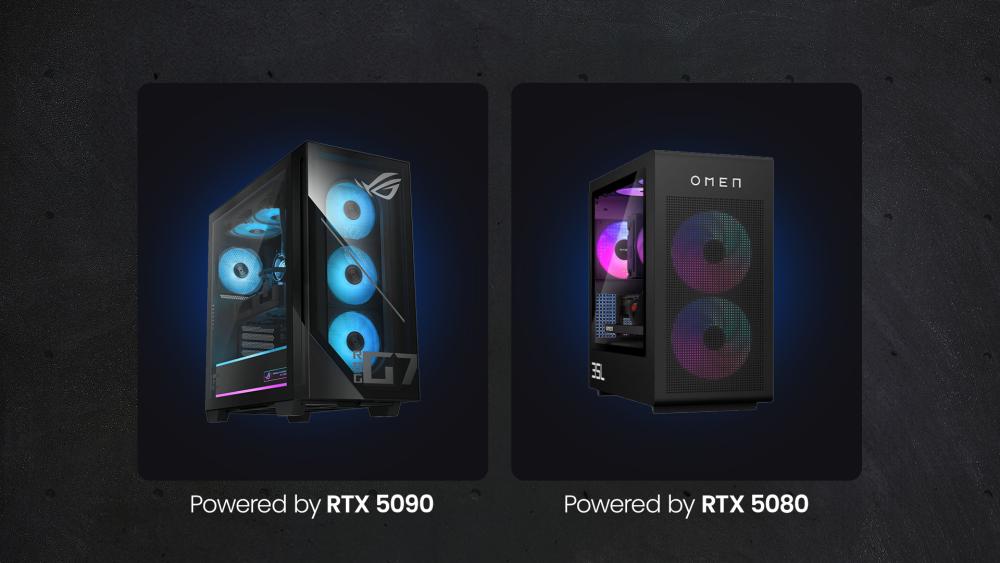
In the ongoing 5090 vs 5080 debate, cost plays a decisive role. Both GPUs sit at the top of NVIDIA's RTX 50 Series, but their market positioning is very different. The RTX 5090 leads as the flagship, built for enthusiasts and professionals who want the ultimate in performance and longevity. The RTX 5080, meanwhile, offers a more balanced approach, still part of the elite tier, but priced and powered for gamers who value efficiency and strong real-world results over sheer excess.
While retail prices vary depending on region and model, the 5090 generally occupies the ultra-premium segment, whereas the 5080 is positioned as a high-end yet attainable option for serious players and creators.
Price-to-Performance Ratio
Performance data shows that the RTX 5090 outpaces the RTX 5080 by around 40–45% in demanding 4K gaming benchmarks, thanks to its higher core count, broader memory bus, and superior bandwidth. However, that uplift comes at a noticeably higher cost, meaning the price-to-performance ratio leans in favour of the RTX 5080 for most gamers.
The RTX 5090 excels for those seeking ultra settings, full ray tracing, and absolute smoothness at 4K or beyond. But the RTX 5080 achieves close to flagship-level performance at a fraction of the investment, making it a more rational pick for users focused on performance-per-pound rather than peak numbers.
Resale Value and Longevity
As the flagship, the RTX 5090 is likely to maintain higher long-term value among enthusiasts and creators who consistently pursue top-tier hardware. Its exceptional VRAM capacity and performance ceiling ensure strong relevance for future generations of titles.
However, the RTX 5080 remains a more future-proof investment for the majority of gamers. It offers outstanding performance longevity while being easier to integrate into existing systems without overhauling components like power supplies or cooling setups.
For most users, the RTX 5080's balanced efficiency, manageable power draw, and long-term stability make it the better value proposition, while the RTX 5090 stands as the ultimate choice for those who demand the best, regardless of cost.
Wrapping Up:
Choosing between the RTX 5090 and RTX 5080 ultimately depends on how far you want to push your system. The RTX 5090 stands as NVIDIA's performance king designed for those chasing the absolute best in 4K gaming, ray tracing, and AI-powered creation. It delivers unparalleled speed, stunning visuals, and long-term relevance, but it demands a serious investment and robust supporting hardware.
The RTX 5080, on the other hand, captures the sweet spot between flagship performance and sensible value. It handles demanding games, creative workloads, and high-refresh gaming effortlessly while maintaining excellent efficiency. For most gamers and creators, the RTX 5080 is the smarter, more balanced choice, while the RTX 5090 remains the ultimate pick for those who want no limits, just pure performance.
FAQs:
Which GPU is better for gaming, the RTX 5090 or RTX 5080?
The RTX 5090 delivers the highest gaming performance available, especially at 4K and higher refresh rates. However, the RTX 5080 still offers near-flagship results for less, making it the better choice for most gamers targeting 1440p or 4K gaming with DLSS Frame Generation enabled.
What is the performance difference between the RTX 5090 and RTX 5080?
Benchmarks show the 5090 vs 5080 gap averaging around 40–45% at 4K Ultra. The RTX 5090's wider memory bus and higher CUDA core count give it an advantage in demanding titles and professional workloads.
Can the RTX 5080 handle 4K gaming smoothly?
Yes. The RTX 5080 comfortably manages 4K gaming with high or ultra settings in most titles, especially when using DLSS 4. It offers a fantastic experience for gamers upgrading from the RTX 40 series without entering flagship territory.
Is the RTX 5090 worth the premium for creators and professionals?
For heavy workloads like 3D rendering, AI modelling, or 8K video editing, the RTX 5090 justifies its premium thanks to superior VRAM capacity and bandwidth. For general creative tasks and 4K editing, the RTX 5080 remains a strong and cost-efficient performer.
Should I upgrade now or wait for future RTX 50-series models?
If you need a GPU that excels in next-gen gaming or creative production, upgrading now makes sense, especially as launch drivers and game optimisations mature. Waiting may yield lower-cost models like the RTX 5070, but these will naturally target different performance tiers.
You can pay with:
*PayPal Credit Representative Example: Assumed credit limit £1,200, Representative 23.9% APR (variable). Purchase rate 23.9% p.a (variable).Terms & Conditions apply.


PayPal Credit and PayPal Pay in 3 are trading names of PayPal UK Ltd, 5 Fleet Place, London, United Kingdom, EC4M 7RD. Terms and conditions apply. Credit subject to status, UK residents only, Five Tech LTD acts as a broker and offers finance from a restricted range of finance providers. PayPal Pay in 3 is not regulated by the Financial Conduct Authority. Pay in 3 eligibility is subject to status and approval. 18+. UK residents only. Pay in 3 is a form of credit. Check if affordable and how you will repay. May make other borrowing more difficult or expensive. See product terms for more details.
Copyright © 1996-2026 Fivetech LTD | Terms and Conditions
box.co.uk & Box are trading names of Five Tech Limited. Registered office: Box LTD, Unit 10 Woodford Trading Estate, Woodford Green IG8 8HF