


 Menu
MenuMenu


Get Sales Advice from Mon - Fri 9am - 5:00pm:
020 3337 8950POSTED: July 09, 2026
eSIM vs Physical SIM on Phones: What’s the Difference and Which Is Better?
Choosing between eSIM and physical SIM is really about how you want your phone to connect. Both options do the same core job: they identify your mobile plan and let your phone use calls, texts and mobile data.
An eSIM is built into the device, while a physical SIM is the small removable card that sits in the SIM tray. In simple terms, a SIM, or Subscriber Identity Module (Subscriber Identification Module), helps your phone connect to a mobile network.
The better choice depends on your device, travel habits and how often you switch phones. If you want faster digital setup and more mobile plan options, eSIM may feel more convenient. If you prefer a removable SIM, a physical SIM still works well for many everyday users.
Quick Answer: eSIM vs Physical SIM
The main difference in the eSIM vs physical SIM comparison is the format. An embedded SIM is built into the phone and activated digitally, while a physical SIM is a removable card that goes into the SIM tray. Here are the major differences between the two.
| Feature | eSIM | Physical SIM |
|---|---|---|
| Form | Built into the device | Removable plastic card |
| Setup | Uses digital activation through settings, an app or a QR code | Inserted into a SIM tray |
| Device swapping | May need setup or profile transfer | Can be moved between compatible phones |
| Travel use | Easy to add a travel plan digitally | Usually needs a local or replacement card |
| Security | Harder to physically remove if the phone is lost | Can be removed, lost or damaged |
| Compatibility | Needs device and network support | Works with older phones |
In simple terms, eSIM is usually better for fast setup, travel, dual SIM use and security. A regular SIM is still useful if you swap phones often, use an older device or prefer a familiar card-based setup.
Once active, both options can support calls, texts and mobile data. Signal quality is not automatically better with an eSIM. It depends more on the phone, coverage, plan and location. If you are buying a new handset, check phones with eSIM support before choosing.
How eSIM and Physical SIM Work
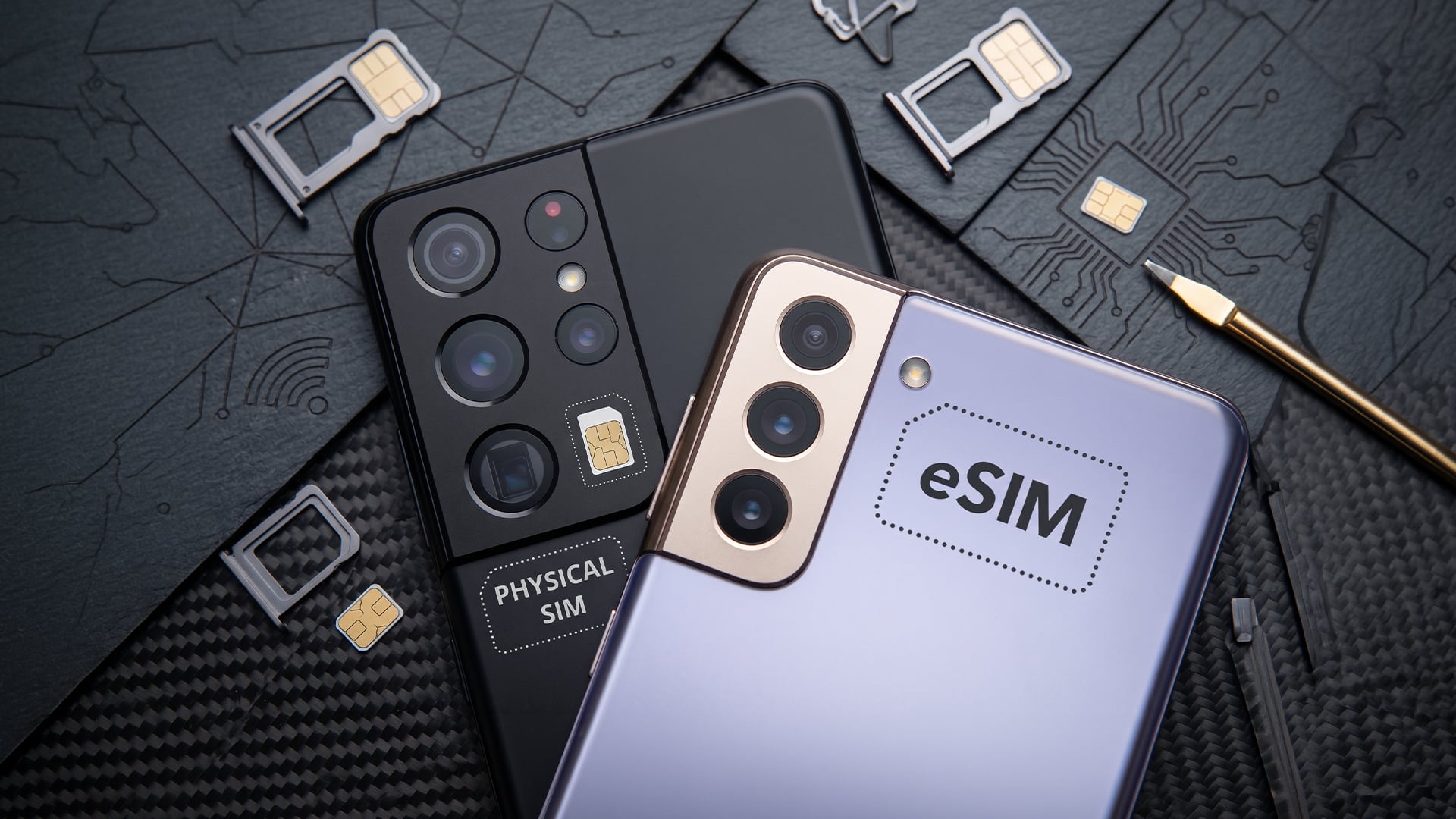
Both options connect your phone to mobile data, calls and texts, but the setup process is different. An eSIM is handled digitally, while a physical SIM needs a card that fits into the phone.
Digital Activation with eSIM
With an eSIM, the mobile profile is downloaded to the phone instead of being stored on a removable card. If you are wondering what eSIM is, it is a built-in SIM option that can be activated through settings, an app, a QR code or a transfer process.
This can be useful because:
- There is no plastic SIM card to insert
- Setup can be completed digitally
- You may be able to store more than one profile on supported phones
- Activation still depends on device compatibility and carrier support
Using a Traditional SIM Card
A physical SIM works by placing a small chip into the phone. The card contains the mobile profile needed for the device to connect.
This is still practical because:
- It is familiar to most users
- It can be moved between compatible phones
- It works with many older and budget devices
- It can be easier to test on another phone if there is a connection issue
How Networks Connect to Each Option
In everyday use, eSIM vs regular SIM is less about signal strength and more about setup. Once active, both options allow the phone to connect for calls, texts and data in much the same way.
Signal quality depends more on your phone, location, coverage and plan than on whether you use an eSIM or a physical SIM. The same idea also applies to other connected devices that use mobile connectivity, such as tablets, watches and some laptops.
Key Benefits of eSIM
In the eSIM vs physical SIM comparison, the eSIM has the advantage when it comes to flexibility. Because the SIM profile is handled digitally, an eSIM can make setup, travel and multi-line use more convenient on supported phones.
- Instant connectivity: An eSIM can be activated digitally without inserting a card. For users comparing eSIM options in the UK, this can make setup quicker when the device and plan both support it.
- Better protection if your phone is lost: An embedded SIM cannot be pulled out like a removable card. That does not replace strong passwords or device locks, but it can make the mobile profile harder to remove physically.
- Dual SIM convenience: Many modern phones can store more than one eSIM profile, with some allowing two lines to be active at once. This is useful for dual network use, work and personal numbers, or temporary travel data.
- Easier switching: eSIM can make switching networks or adding another mobile profile simpler, as there is no need to handle a small card. The exact process still depends on the device and plan support.
- Less plastic waste: eSIM removes the need for a plastic SIM card, packaging and postage. It is not the whole answer to sustainable tech, but it can reduce the waste linked to SIM distribution.
For users who want more mobile flexibility, eSIM can fit neatly into portable connectivity solutions, especially across phones, tablets, watches and travel-focused devices.
Why Physical SIM Still Works for Many Users
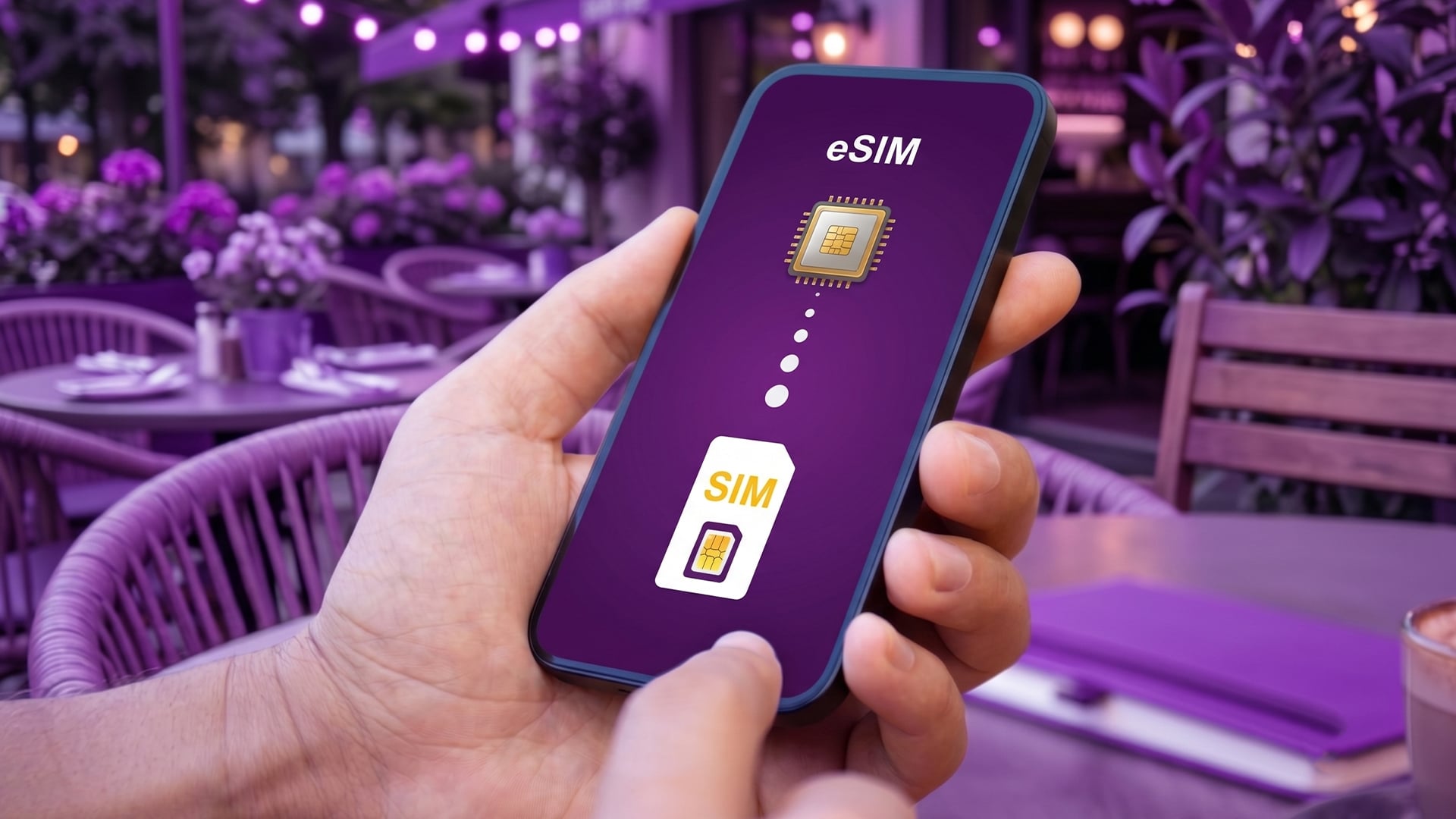
A physical SIM may not feel as modern as eSIM, but it is still practical for plenty of people. It is familiar, easy to move between compatible phones and useful if your device does not support digital SIM setup.
- Wide device compatibility: A regular SIM works with many older, budget and basic phones, which makes it a safe option if you are not using a newer eSIM-ready device.
- Easy swapping between phones: If your phone breaks, runs out of battery or needs replacing, a physical SIM can often be moved into another compatible handset. This can be simpler than setting up a new digital profile.
- Simple troubleshooting: A removable SIM can be tested in another phone to check whether the issue is with the card, the phone or the connection. That can make it easier for everyday users to narrow down basic problems.
- Familiar setup: Many people already understand how a physical SIM works in smartphones. Insert the card, restart the phone if needed, and the setup is usually straightforward.
- Useful for older devices: Some older phones do not support eSIM, so a physical SIM remains the only realistic option for keeping those devices connected.
Cost and Value: Are eSIMs Cheaper?
An eSIM plan is not automatically cheaper than a physical SIM. The price usually depends on the data allowance, contract type, validity period and device support, not just whether the SIM is digital or physical. The value should be judged by how much data you need, how long you need it for and whether your phone supports the setup.
Where eSIM can offer better value is in travel. A travel eSIM card can often be added digitally before a trip, which may make travel connectivity easier than finding and swapping a physical SIM after arrival. It still makes sense to compare plan length, data limits and roaming needs before buying, alongside other travel tech accessories you rely on when away from home.
Functionality: Do eSIMs Work the Same as Physical SIMs?
Once active, an eSIM and a physical SIM can work in the same way for calls, texts and mobile data. The main difference is setup, not everyday performance.
eSIM does not automatically give a stronger signal, and a physical SIM does not automatically perform worse. Signal quality depends more on coverage, phone hardware, location and plan support. The only practical difference is that eSIM may need internet access during the initial digital activation process.
Which Devices Support Each Option?
Device support is one of the biggest differences between eSIM and physical SIM. Most newer flagship phones now support eSIM, while older phones, basic phones and many budget models still rely on a removable SIM card.
- iPhone models: Many recent iPhones support eSIM, but SIM support can vary by country and model. In the UK and many other regions, iPhone 14, iPhone 15, iPhone 16 and iPhone 17 models support eSIM and nano-SIM. In some countries, including the US, for several recent models, certain iPhones are eSIM-only.
- iPads and tablets: Some Wi-Fi + Cellular iPad models support eSIM, including newer iPad Pro, iPad Air, iPad and iPad mini models. This is useful if you want mobile data on tablets without relying on a phone hotspot.
- Google Pixel phones: Pixel 3a and later phones usually come with one physical SIM card and one eSIM.
- Samsung Galaxy phones: Samsung describes Galaxy eSIM as a digital SIM that works without a physical Mini SIM, Micro SIM or Nano SIM. Setup can be done through simple setup, QR code scanning or manual entry on supported Galaxy devices.
- Older and budget phones: Many older smartphones, basic phones and budget models still use a physical SIM only. A removable SIM is also useful if you regularly swap between compatible handsets.
- Beyond phones: eSIM support is not limited to smartphones. Some tablets, watches and other connected devices support mobile connectivity. Some laptops with mobile connectivity can also use mobile data for travel or remote work.
Whether you are planning to use eSIM on an iPhone or looking for Android eSIM phones, always check the exact model, region and product specs before choosing a plan. Support can vary even when two devices look similar.
eSIM vs Physical SIM: Which Should You Choose?
The best choice depends on your phone, travel needs and how often you switch devices. The eSIM vs physical SIM debate is not about one option being better for everyone. It is about which one fits your routine. The sensible option is to check your device first, then compare your mobile SIM options based on setup, travel, security and device swapping.
| Choose eSIM if | Choose a physical SIM if |
|---|---|
| Your phone supports digital SIM setup | Your phone does not support eSIM |
| You want a faster setup without handling a card | You prefer a removable card |
| You travel often and want an easier data setup | You often swap phones manually |
| You want work and personal lines on one phone | You want simple troubleshooting with another device |
| You want more mobile flexibility | You use an older or budget phone |
| You prefer fewer physical parts | You want a familiar plug-in setup |
Frequently Asked Questions
Is eSIM better than a physical SIM?
eSIM is better if you want faster setup, dual SIM convenience, travel flexibility and fewer physical parts. A physical SIM is better if you use an older phone or often move your SIM between devices.
Which is safer, eSIM or physical SIM?
eSIM can be safer because it cannot be physically removed from the phone if the device is lost or stolen. You should still use a strong screen lock, account security and safe app habits.
Is eSIM safe for banking?
Yes, eSIM can be safe for banking if the phone itself is secure. Banking safety depends more on device security, app protection, passwords and account safeguards than the SIM type.
Can I switch back and forth between SIM and eSIM on my iPhone?
Many iPhones support eSIM setup, transfer and Dual SIM use, but the exact options depend on the model, region and support process. Check your iPhone settings before switching.
Do you turn off your primary SIM when using an eSIM?
Not always. Many phones let you choose which line handles calls, texts and mobile data. When travelling, turning off your primary line may help avoid unwanted roaming use.
Can we convert an eSIM back to a normal SIM?
Usually, yes, but it is not normally a one-tap change. You may need a replacement physical SIM and a fresh setup process.
Will removing my eSIM delete my contacts?
No. Removing an eSIM should not delete contacts stored on your phone or cloud account. It only removes the mobile profile from that device.
Do eSIMs get better signals than physical SIMs?
No, not by itself. Signal depends more on coverage, phone hardware, location and plan support.
Can you make calls with eSIM?
Yes. If your plan supports calls, an eSIM can handle calls, texts and mobile data just like a physical SIM.
What is iSIM?
iSIM is a newer approach where SIM functionality is built into the device’s main processor or secure hardware area. It is different from eSIM and is not yet the main option for everyday phone users.
What is SoftSIM?
SoftSIM refers to SIM functionality handled mainly through software rather than a removable card or dedicated embedded chip. It is more relevant to connected-device and enterprise use than to normal smartphone buying.
You can pay with:
*PayPal Credit Representative Example: Assumed credit limit £1,200, Representative 23.9% APR (variable). Purchase rate 23.9% p.a (variable).Terms & Conditions apply.


PayPal Credit and PayPal Pay in 3 are trading names of PayPal UK Ltd, 5 Fleet Place, London, United Kingdom, EC4M 7RD. Terms and conditions apply. Credit subject to status, UK residents only, Five Tech LTD acts as a broker and offers finance from a restricted range of finance providers. PayPal Pay in 3 is not regulated by the Financial Conduct Authority. Pay in 3 eligibility is subject to status and approval. 18+. UK residents only. Pay in 3 is a form of credit. Check if affordable and how you will repay. May make other borrowing more difficult or expensive. See product terms for more details.
Copyright © 1996-2026 Fivetech LTD | Terms and Conditions
box.co.uk & Box are trading names of Five Tech Limited. Registered office: Box LTD, Unit 10 Woodford Trading Estate, Woodford Green IG8 8HF