


 Menu
MenuMenu


Get Sales Advice from Mon - Fri 9am - 5:00pm:
020 3337 8950POSTED: April 09, 2026
Crimson Desert Review: Does the Hype Match the Reality?
Crimson Desert has been one of the most talked-about open-world RPGs in years, and for good reason. From the start, Pearl Abyss positioned it as a big, ambitious fantasy adventure packed with cinematic combat, large-scale battles, open-world exploration, and a serious amount of gameplay variety. It is the kind of game that wants to do everything at once, and that immediately makes it exciting. It also makes it risky.
That tension sits at the centre of our Crimson Desert review. The hype around the Crimson Desert game was built on the promise of a living world, brutal action, and next-gen spectacle. Now that players have finally spent real time with it, the picture is much clearer. Crimson Desert absolutely delivers scale, strong visual impact, and a world that feels full of things to see and do. At the same time, it also arrives with some noticeable issues, particularly around story, controls, pacing, and quality-of-life design.
So, does the final game live up to the noise around it? The answer is mostly yes, but not in a flawless, easy-win sort of way. Crimson Desert is at its best when it lets you explore, fight, and get lost in its huge fantasy world. That is where the game feels most impressive and most confident. But it is also the kind of release where the rough edges are hard to ignore. This Crimson Desert review comes down to that balance: a bold and visually impressive RPG that gets a lot right, but not always with the polish needed to make every part of it land.
Crimson Desert Gameplay: Where the Game Shines Most
Crimson Desert gameplay is at its strongest when the game stops trying to impress you with scale alone and simply lets you play. Exploration, side activities, traversal, and moment-to-moment discovery do most of the heavy lifting here. This is where the world feels most enjoyable, and where the game shows the clearest sense of confidence. Here's what the gameplay features:
Exploration is the Main Draw
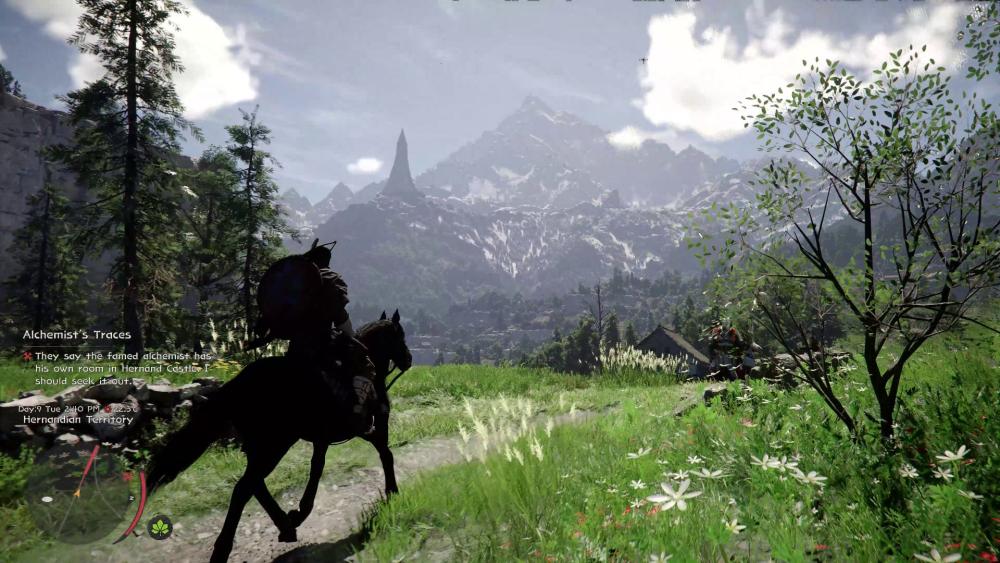
The best part of Crimson Desert gameplay is the simple act of moving through its world. Pywel feels broad, layered, and constantly ready to pull your attention in a new direction. Rather than pushing you down a narrow path, the game gives you room to wander, investigate, and get sidetracked. That approach suits the Crimson Desert open world well, because it makes exploration feel natural instead of forced.
The World Stays Active
A big reason the game remains engaging is that the world rarely feels empty. Towns, roads, and open regions are packed with activity, whether that means combat encounters, traversal challenges, puzzles, side objectives, or smaller interactions that break up the main journey. As a result, the Crimson Desert game often feels busiest in the right way. There is usually something nearby worth checking out, which helps the world feel more alive.
Side Content Helps the Pace
One of the strengths of Crimson Desert features is how often side content adds to the overall experience rather than feeling like filler. Small detours, odd encounters, and world interactions help the game maintain variety, especially during longer sessions. Instead of rushing from mission to mission, the game is more enjoyable when you let yourself drift a bit. That freedom gives the world a stronger sense of place and helps the adventure feel less mechanical.
It Rewards Curiosity
The game is at its strongest when it encourages experimentation. Going off the main route, testing different systems, and following whatever catches your eye often leads to the most memorable moments. This is where Crimson Desert impressions tend to be most positive. The structure gives players enough freedom to make exploration feel personal, which adds to the appeal of the world without making it completely directionless.
The Overall Gameplay Loop Feels Varied
That mix of movement, discovery, combat, and side activity gives the core loop a steady sense of momentum. Even when the game slows down in one area, another part of the experience usually takes over. That balance is a big reason Crimson Desert gameplay holds attention so well. It may not do every single thing perfectly, but it understands how to keep the player engaged by offering variety at a regular pace.
Crimson Desert Combat: Impressive, Aggressive, and Sometimes Exhausting
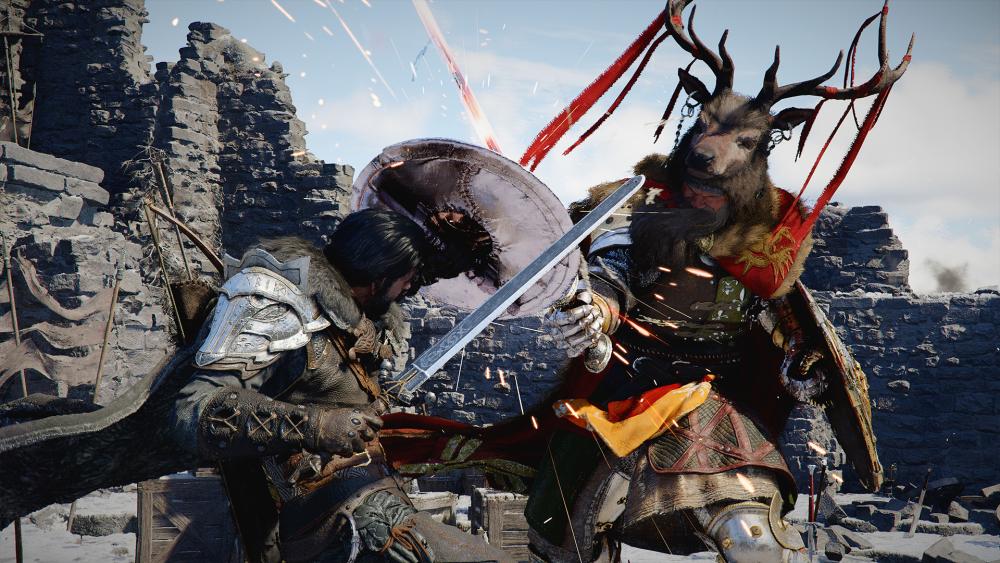
Crimson Desert combat is one of the game's biggest selling points, but it is also one of the areas where opinions split most. At its best, combat feels weighty, aggressive and stylish, giving fights a real sense of impact. At its worst, it can feel overextended, messy and more tiring than satisfying. That mix is what defines the combat experience overall.
A Strong Sense of Impact
The best thing about Crimson Desert combat is how physical it feels. Attacks land with real force, movement has purpose, and battles often carry the kind of cinematic energy that suits a large-scale fantasy action game. When you are cutting through enemies, using mobility well, and making the most of the game's systems, the action feels lively and rewarding. This is where the combat looks most confident and where the game's spectacle works in its favour.
Plenty of Variety in the System
There is also no shortage of tools to work with. The real-time combat system gives players a good amount of flexibility, whether that comes from weapon choices, movement options, defensive timing, or skill-based abilities. That variety helps keep fights from feeling too repetitive early on, and it gives the Crimson Desert game a stronger action-adventure identity. The combat clearly wants players to feel active rather than passive, and in that sense, it succeeds.
Fights Can Go on Too Long
Where the system starts to lose momentum is in encounter length. The issue is not a lack of depth, but the fact that the game often throws too much combat at you in one go. Longer enemy waves, repeated reinforcements, and drawn-out battles can start to wear down the excitement. Instead of building intensity, some encounters simply feel stretched. That makes the pacing less consistent than it should be, especially when you are pulled into another long fight just as exploration was starting to build momentum.
Boss Battles are More Uneven
Boss fights are where that unevenness becomes more obvious. Some are exciting and memorable, adding scale and tension in the right places. Others feel awkwardly tuned, either because they go on too long, demand too much endurance, or do not flow naturally from the rest of the combat loop. As a result, the boss design does not always feel aligned with the strengths of the wider combat system. The challenge itself is not the problem. It is more that the balance can feel inconsistent.
Spectacle Helps, But Consistency Matters More
Even with those issues, it would be wrong to frame combat as a weakness overall. A lot of what makes the game appealing is tied directly to its combat design, from the movement and weapon creativity to the sheer force of large-scale encounters. But it is also clear that the system is more impressive than refined. Some fights are thrilling from start to finish, while others feel like they are testing patience as much as skill. That inconsistency is what keeps Crimson Desert combat from being one of the genre's best, even though it still delivers plenty of strong moments.
Crimson Desert Story: More Functional Than Memorable
The Crimson Desert story has a workable fantasy setup, with Kliff and the Greymanes caught up in a wider conflict that grows beyond its opening tragedy. On paper, it has the right ingredients for a strong character-driven campaign.
In practice, though, the narrative is one of the weaker parts of the game. The story gives the adventure structure, but it rarely becomes the main reason to keep playing. Some moments land well, yet the overall writing feels less compelling than the world itself.
What helps is the setting. The world-building, side interactions, and general atmosphere often leave a stronger impression than the central plot. So, while the single-player campaign does its job, the real pull comes more from immersion and exploration than from the story alone.
Crimson Desert Graphics: Next-Gen Spectacle Absolutely Delivered
Crimson Desert graphics are one of the game's most convincing strengths. Pywel looks vast, richly detailed, and properly current-gen, with strong lighting, varied landscapes, and weather effects that give the world real visual presence. Even more mixed Crimson Desert reviews still tend to agree that the scale and presentation are impressive.
The World Looks the Part
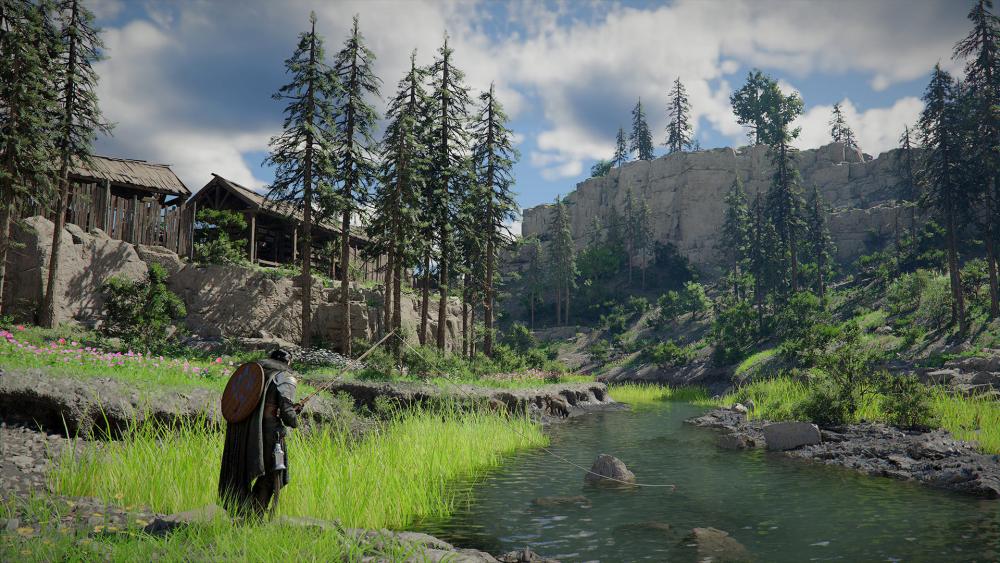
The strongest visual work is in the environment design. Wide views, busy battlefields, and broad regional variety give the Crimson Desert game a sense of size that comes through clearly while playing, not just in trailers or screenshots. That helps the Crimson Desert open world feel more immersive from one area to the next.
The Visual Tech is Strong
The game also backs that presentation up with modern visual support. Pearl Abyss confirms FSR 3/4 and DLSS 4/4.5 on PC, upgraded PSSR on PS5 Pro, and FSR 3 on PS5 and Xbox Series X|S, which helps explain why the game often looks so strong in motion as well as in still images.
Character Detail is Less Consistent
The one caveat is that character models do not always match the quality of the world around them. Landscapes, lighting, and large-scale action are often the visual highlight, while facial detail and close-up character presentation can look less refined. It is not a major flaw, but it does stop the overall package from feeling completely polished.
Crimson Desert Performance: Better Than Many Expected
Performance is one of the more pleasant surprises in this Crimson Desert review. For a game this large and visually demanding, the optimisation is in a better place than many players expected. Crimson Desert PC performance has generally been viewed positively, especially when you factor in the scale of the world, lighting quality, and the amount happening on screen at once. Pearl Abyss also supports modern upscaling and reconstruction features, including DLSS and FSR on PC, alongside platform-specific enhancements on console and Mac. (src: Pearl Abyss)
PC Performance is Solid Overall
The core optimisation looks strong. This is not one of those major releases that immediately feels broken on arrival from a performance standpoint. Frame rates have held up better than expected for many players, which gives the game a stronger technical footing than some recent open-world launches. That makes Crimson Desert performance one of the game's more dependable strengths.
Launch Issues Still Mattered
That said, the launch build was not spotless. Bugs, stability issues and quality-of-life frustrations were part of the early conversation. Pearl Abyss has already patched multiple areas, including controls, storage, healing balance and other gameplay-related issues, which shows the launch version needed follow-up work. Patch 1.00.03 added camp storage and increased item healing, while patch 1.02.00 expanded private storage and added an earlier movement control option.
Optimised, But Not Flawless
The fairest conclusion is that the optimisation base is good, but polish has improved through post-launch updates. So, if the question is whether the game is optimised for PC, the answer is broadly yes. If the question is whether it launched without technical issues, the answer is clearly no. Both points matter in a balanced Crimson Desert review.
Crimson Desert Console Gameplay and PC Differences
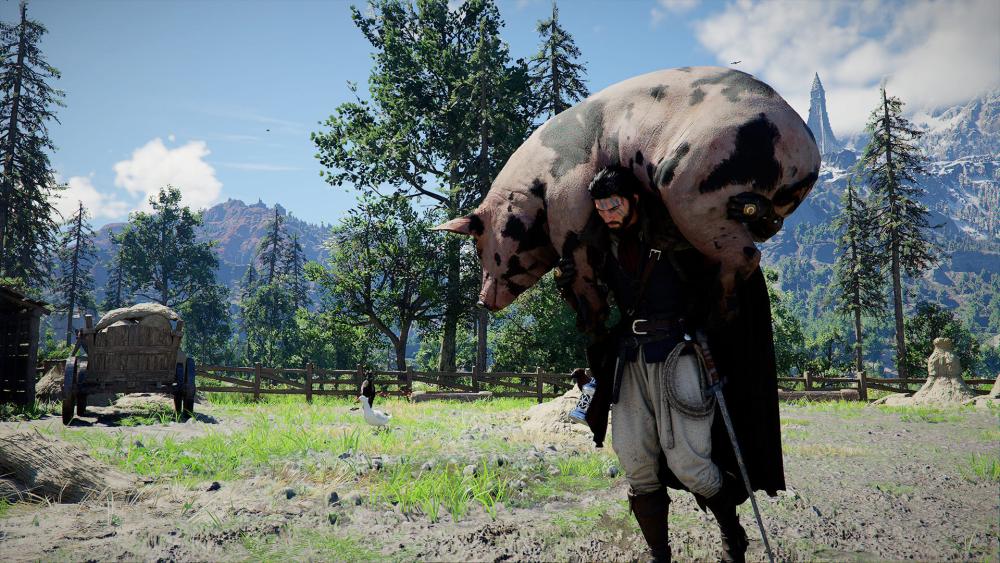
Platform choice has a noticeable effect on the overall experience, so it is an important part of this Crimson Desert review. The game is available across current PC and console platforms, including PS5, PS5 Pro, Xbox Series X|S, PC storefronts, Mac, and GeForce NOW. That wide rollout makes sense for a large modern release, but it also means performance and flexibility vary depending on where you play.
Console Play is Improving Steadily
On console, the focus is clearly on delivering the full scale of the Crimson Desert game without stripping back its visual identity too heavily. The experience has also continued to improve through post-launch updates, including parity fixes around Xbox 4K upscaling. That makes Crimson Desert console gameplay a solid option, even if it has taken a bit of extra patching to settle into place. Players looking to jump in from the sofa can comfortably do so on the latest gaming consoles.
PC Gives You More Control
PC remains the more flexible way to play. Graphics settings, upscaling options, and frame-rate tuning give players more room to balance image quality and performance based on their setup. That extra control gives Crimson Desert PC performance a slight edge, especially for anyone chasing smoother gameplay or sharper visuals. For those building around upcoming releases, a stronger setup from gaming PCs for new releases is the best fit.
Laptops Are Still a Practical Option
A desktop is not the only good route, though. The game's optimisation and modern scaling support mean capable portable hardware is still a realistic option for players who want flexibility without giving up too much visual quality. That makes gaming laptops for modern games a sensible middle ground for anyone who wants strong performance without being tied to one desk.
The Best Setup Depends on How You Want to Play
The simplest takeaway in this Crimson Desert review is that PC offers more tuning headroom, while console gives you a more straightforward plug-in-and-play route. If visual immersion is the priority, pairing the game with immersive gaming displays will do more for the experience than most smaller upgrades. If comfort and peripherals matter just as much, rounding things out with complete gaming gear makes the setup feel more complete without overcomplicating things.
Is the Hype Justified?
The short answer is yes, but with limits. In this Crimson Desert review, the hype feels justified around the game's scale, visuals, and overall ambition. Where it falls short is consistency. The review consensus has settled into that middle ground, with some critics describing a technically impressive game that still has clear rough edges.
The Ambition is Real
Crimson Desert does enough to show why so many players were interested in it before launch. The world design, technical scale, and feature density are not empty promises. Even when opinions split, most critics still agree that the game offers something genuinely big and distinctive rather than feeling like another safe open-world release.
The Flaws are Real Too
At the same time, the game is not polished enough to feel like an easy universal recommendation. Early criticism around controls, storytelling, UI friction, and launch issues was real, and that is a big reason the reception landed in the mid ratings rather than much higher. This is a game with clear strengths, but also enough frustration to stop it from feeling fully refined.
The Post-Launch Response Helps
What strengthens the game's case is how quickly Pearl Abyss has responded. Patch 1.02.00 expanded private storage up to 1000 slots and added further fixes and options, while player sentiment on Steam has improved significantly since launch. Reports over the last few days also point to user reviews climbing to 85 percent positive, which suggests the game is landing better once players get past the roughest early frustrations.
Final Take
So, is Crimson Desert worth the hype? In this Crimson Desert review, the fairest answer is yes for players who want a huge fantasy action-adventure with strong visual impact and plenty of ideas, and no for anyone expecting a flawlessly executed masterpiece. It is ambitious enough to impress, but uneven enough to stay just short of greatness.
Wrapping Up
Crimson Desert leaves a strong impression, even if it does not get every part of the experience right. The Crimson Desert gameplay is at its best when exploration, traversal, discovery, and combat all work together naturally. The world looks excellent, the scale feels substantial, and the overall performance is better than many expected, especially on PC. At the same time, the story is less compelling than the world around it, and some control and quality-of-life issues stop the game from feeling as polished as it could be.
Even so, there is plenty here that works. The game feels ambitious, visually striking and full of ideas, which is a big part of why it has stayed such a talking point. It may not be a completely refined open-world RPG, but it is still an easy game to stay curious about. For players who enjoy large fantasy adventures with strong spectacle and a lot to explore, Crimson Desert has enough substance to make the time investment feel worthwhile.
FAQs
Is Crimson Desert AAA?
Yes. Crimson Desert is a major big-budget release from Pearl Abyss with a multi-platform launch across console, PC, Mac, and cloud, plus a large-scale marketing push and broad critical coverage, which places it firmly in AAA territory.
Is Crimson Desert bigger than Red Dead Redemption 2?
There is no official direct comparison from Pearl Abyss confirming that. What can be said confidently is that Crimson Desert is designed as a vast seamless open world with a heavy focus on exploration, multiple regions, side systems, and dynamic activity density.
How many hours of gameplay is Crimson Desert?
There is no single official completion estimate from Pearl Abyss, but the game is widely described as a large-scale open-world adventure with substantial optional content, so players should expect a long single-player campaign with many extra hours available through exploration and side activity.
Is Crimson Desert completely open world?
Yes, Pearl Abyss describes it as a seamless open world set in Pywel. That said, like many large open-world action-adventure games, it still uses structured quests and major story progression within that broader world.
How big is the Crimson Desert map?
Pearl Abyss has not published a precise official map size. The official positioning focuses more on Pywel as a vast, seamless world rather than quoting a square-kilometre number.
Is Crimson Desert worth buying?
If the priority is exploration, spectacle, a huge world, and action-heavy systems, yes. If the priority is a tightly written story and immaculate polish, it is more of a cautious recommendation. The overall critical picture suggests a very good but uneven game rather than a flawless must-buy for everyone.
What platforms is Crimson Desert available on?
Crimson Desert is currently available on PlayStation 5, PlayStation 5 Pro, Xbox Series X|S, Xbox on PC, Steam for PC and Mac, Epic Games Store, Mac App Store, and GeForce NOW.
Is Crimson Desert optimised for PC?
Broadly, yes. Official support includes DLSS and FSR technologies, and early technical impressions have been more positive than expected for a game of this scale. However, launch bugs and follow-up patches show that optimisation and polish have continued evolving after release.
You can pay with:
*PayPal Credit Representative Example: Assumed credit limit £1,200, Representative 23.9% APR (variable). Purchase rate 23.9% p.a (variable).Terms & Conditions apply.


PayPal Credit and PayPal Pay in 3 are trading names of PayPal UK Ltd, 5 Fleet Place, London, United Kingdom, EC4M 7RD. Terms and conditions apply. Credit subject to status, UK residents only, Five Tech LTD acts as a broker and offers finance from a restricted range of finance providers. PayPal Pay in 3 is not regulated by the Financial Conduct Authority. Pay in 3 eligibility is subject to status and approval. 18+. UK residents only. Pay in 3 is a form of credit. Check if affordable and how you will repay. May make other borrowing more difficult or expensive. See product terms for more details.
Copyright © 1996-2026 Fivetech LTD | Terms and Conditions
box.co.uk & Box are trading names of Five Tech Limited. Registered office: Box LTD, Unit 10 Woodford Trading Estate, Woodford Green IG8 8HF