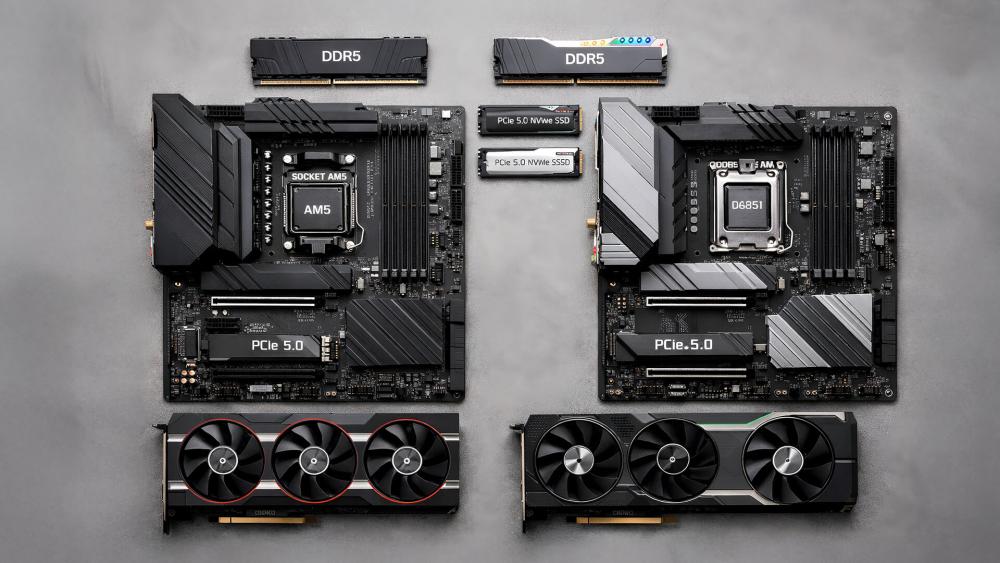
Choosing between AMD and Intel has never been as nuanced as it is in 2026. At the high end of the desktop market, the debate now centres on two very different approaches to performance: the cache-heavy Ryzen 7 9850X3D vs Core Ultra 9 285K. Both are premium processors aimed at enthusiasts, but they target slightly different priorities once you dig into the details.
AMD’s Ryzen 7 9850X3D continues the company’s X3D strategy, using large amounts of 3D V-Cache to maximise gaming performance and improve frame-time consistency, especially in CPU-limited scenarios.
Intel’s Core Ultra 9 285K, built on Arrow Lake, takes a broader approach with a high core count, a hybrid architecture, and added features such as an onboard NPU designed to support modern productivity and AI-accelerated workloads.
This comparison focuses on what actually matters when buying a processor in 2026: real-world gaming performance, productivity behaviour, power efficiency, thermals, platform costs, and upgrade paths. Whether you are chasing the best CPU for gaming 2026, building a mixed gaming and streaming system, or deciding which platform offers better long-term value, this guide breaks down the facts to help you choose with confidence.
The 30-second answer: which CPU should you buy?
If you just want the short version, this decision comes down to priorities rather than raw spec sheets. The Ryzen 7 9850X3D vs Core Ultra 9 285K matchup isn’t about one CPU being universally better. It’s about which one fits how you actually use your PC in 2026.
Buy the Ryzen 7 9850X3D if…
- Gaming is your main focus, especially competitive or CPU-limited titles
- You care more about smooth frame times and strong 1% lows than headline core counts
- You want consistent performance without needing expensive, high-speed DDR5
- Long-term AM5 platform support and historically longer socket support matter to you
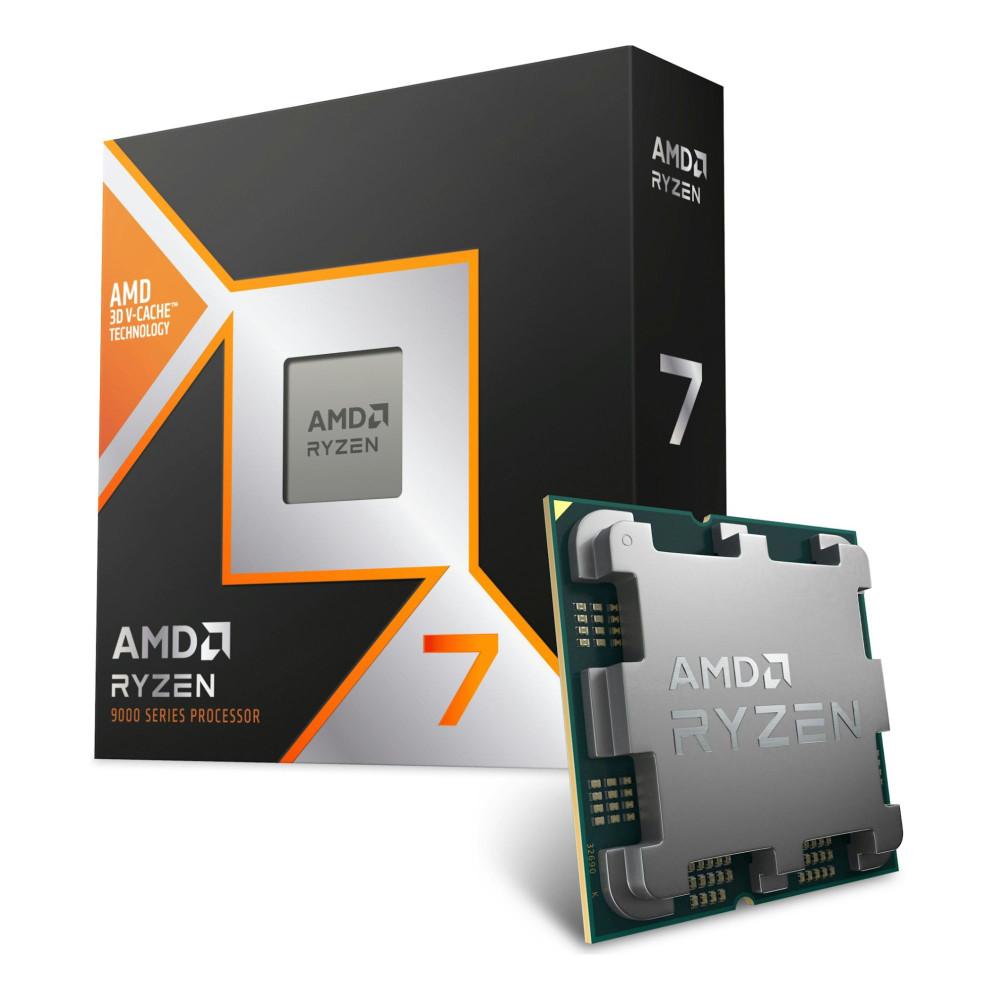
For players chasing the best CPU for gaming in 2026, the X3D design is built around doing one thing exceptionally well: feeding modern GPUs efficiently in real-world games. This option from the
AMD Ryzen 9000 series desktop processors is the best choice for competitive gaming.
Buy the Core Ultra 9 285K if…
Shop Now!
- You split your time between gaming and heavy productivity workloads
- Tasks like rendering, compiling, encoding or multitasking are part of your daily use
- You want access to Intel’s hybrid core design and built-in NPU features
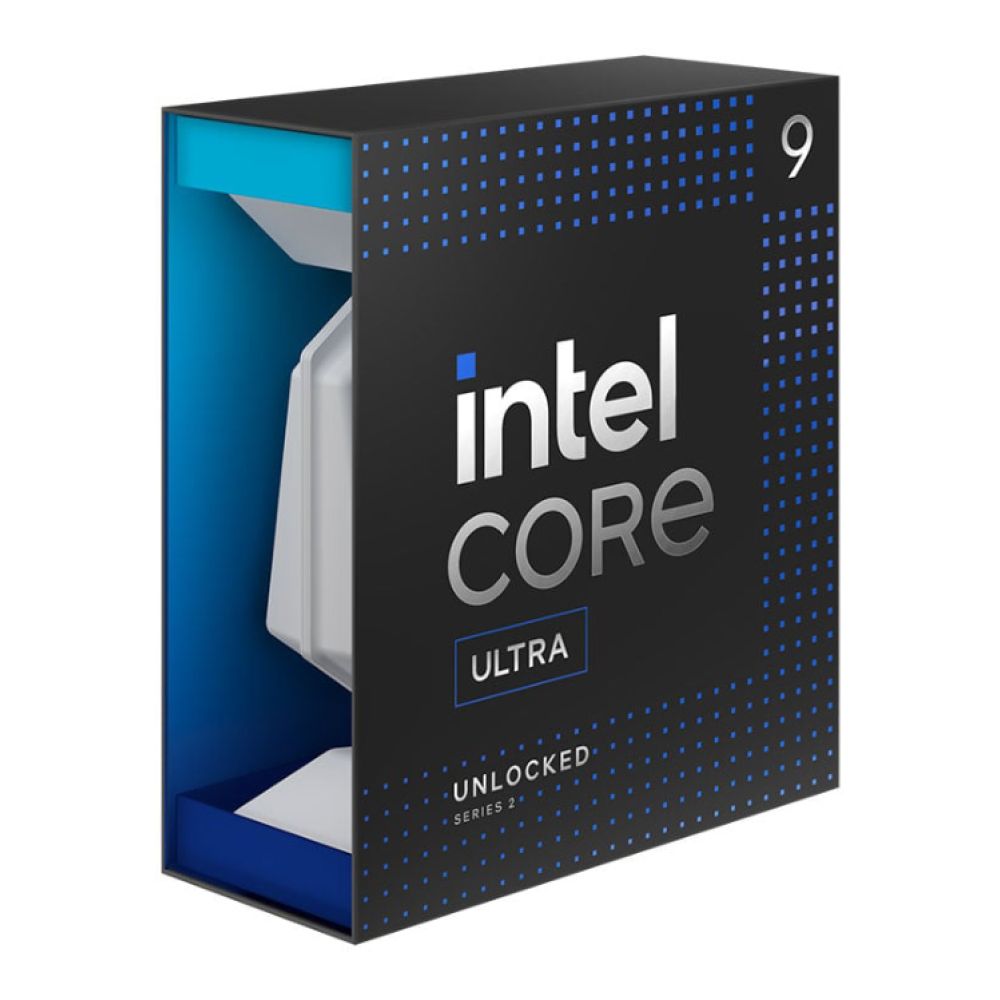
- You’re comfortable investing in a new LGA1851 platform and Z890-class motherboards
In an AMD vs Intel gaming CPUs 2026 discussion, the Core Ultra 9 285K makes sense for users who treat their PC as a workstation as much as a gaming rig.
Shop Now!
If you do both gaming and work…
This is where the decision gets more nuanced. The Ryzen 7 9850X3D vs Core Ultra 9 285K choice becomes a balance between gaming-first performance and broader versatility. If gaming performance comes first and productivity is secondary, AMD has the edge. If your workload regularly scales across many cores and threads, Intel’s approach can be easier to justify.
What matters most in 2026 (and what doesn’t)
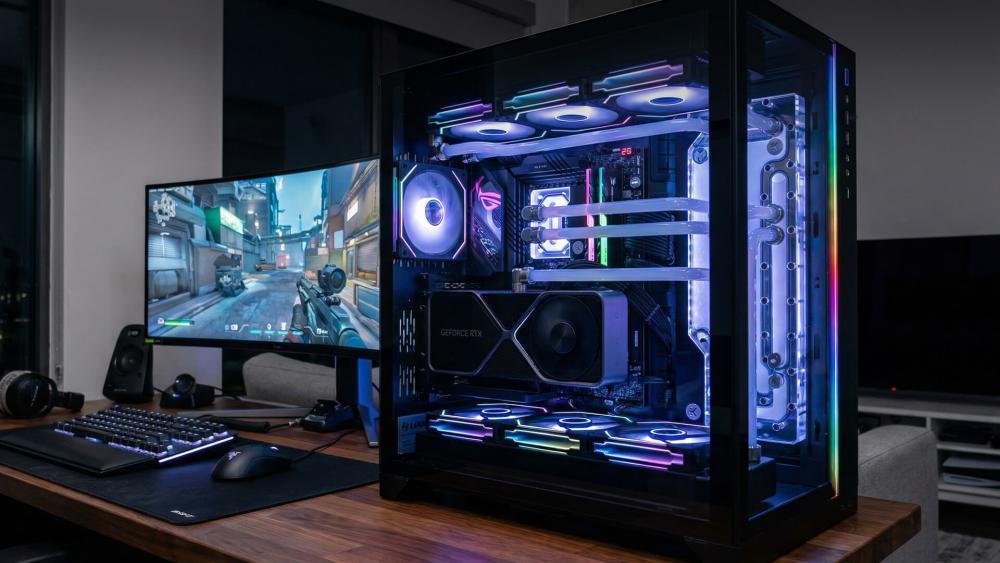
When comparing the Ryzen 7 9850X3D vs Core Ultra 9 285K, it helps to step back from raw specs and focus on how CPUs are actually used in modern gaming PCs. In 2026, performance is no longer decided by clock speed alone, and some factors matter far more than they did a few years ago. Here’s what actually matters:
Real-world performance buckets
Most desktop workloads now fall into a few clear categories: gaming, productivity, and mixed-use multitasking. The gap between CPUs often depends on which bucket you live in most of the time. For gaming-focused builds, especially those chasing the best CPU for gaming in 2026, performance is frequently limited by cache behaviour, latency, and scheduling rather than pure core count. This is where differences between AMD vs Intel gaming CPUs in 2026 become more noticeable.
Productivity workloads behave differently. Rendering, compiling, encoding, and heavy multitasking tend to scale with available cores and sustained performance. In these scenarios, the Ryzen X3D vs Intel Ultra CPU comparison looks less one-sided, as Intel’s higher core count and hybrid design come into play.
Platform costs that change the best value
CPU pricing rarely tells the full story. Platform costs in 2026 can shift the value equation just as much as performance. The Ryzen 7 9850X3D runs on the established AM5 socket, which allows for a wider range of motherboard options and easier reuse of existing components. That can reduce the total cost of a new build or upgrade.
The Core Ultra 9 285K requires the newer LGA1851 platform and Z890-class motherboards. While these boards offer modern features and increased bandwidth, they typically come at a higher entry price. When deciding between the Ryzen 7 9850X3D vs Core Ultra 9 285K, factoring in motherboard and memory costs is essential.
Efficiency, heat and noise
Power efficiency has become a bigger concern, especially with rising electricity costs and increasingly powerful GPUs. Both CPUs are designed for high-end systems, but their approaches differ. Efficient performance can mean quieter cooling, lower sustained temperatures, and more flexibility in case and cooler choices. This is particularly relevant when comparing power efficiency in AMD vs Intel CPUs in real-world builds rather than synthetic stress tests.
Gaming engines and CPU behaviour in 2026
Modern game engines are far more complex than they were a few years ago, but they still tend to reward low latency and fast access to data over sheer core count. Even in 2026, many popular titles still rely heavily on a limited number of high-performance threads, which is why the Ryzen 7 9850X3D vs Core Ultra 9 285K comparison often looks different in games than it does in productivity benchmarks.
Large on-die cache, efficient scheduling, and predictable boost behaviour can have a bigger impact on gaming performance than adding more cores that rarely see full utilisation. This is especially true in CPU-bound scenarios such as esports titles or open-world games with heavy simulation and AI workloads. Understanding how engines behave helps explain why AMD vs Intel gaming CPUs 2026 debates rarely have a one-size-fits-all answer.
Future-proofing signals
Future-proofing in 2026 is less about guessing the next generation of games and more about platform longevity and connectivity. PCIe 5.0 support, DDR5 memory ceilings, and socket lifespan all play a role. While neither platform guarantees a specific upgrade path, understanding how each ecosystem is positioned helps frame the Ryzen 7 9850X3D vs Core Ultra 9 285K decision as more than a short-term purchase.
Ryzen 7 9850X3D vs Core Ultra 9 285K: key specifications
Before moving into detailed specifications comparison, here is a quick comparison table to help you compare the two CPUs:
| Specification |
Ryzen 7 9850X3D |
Core Ultra 9 285K |
| Architecture |
Zen 5 |
Arrow Lake |
| Manufacturing process |
TSMC 4nm (CPU) / 6nm (I/O) |
TSMC 3nm (N3B) |
| Cores |
8 |
24 (8 P-cores + 16 E-cores) |
| Threads |
16 |
24 |
| Base clock |
4.7 GHz |
3.7 GHz (P-cores) |
| Max boost clock |
Up to 5.6 GHz |
Up to 5.7 GHz |
| L3 cache |
96 MB (3D V-Cache) |
36 MB |
| Total cache (L2 + L3) |
104 MB |
76 MB |
| Default TDP / Base power |
120 W |
125 W |
| Maximum turbo power |
Not specified |
Up to 250 W |
| Socket |
AM5 |
LGA 1851 |
| Memory support |
DDR5, dual-channel |
DDR5, dual-channel |
| Official memory speed |
Up to DDR5-5600 |
Up to DDR5-6400 |
| Max memory capacity |
192 GB |
Up to 256 GB |
| PCI Express support |
PCIe 5.0 |
PCIe 5.0 |
| Integrated graphics |
Radeon Graphics (2 CUs) |
Intel Graphics (Xe-LPG) |
| Integrated NPU |
No |
Yes (Intel AI Boost, up to 13 TOPS) |
| Cooler included |
No |
No |
Ryzen 7 9850X3D vs Core Ultra 9 285K specs
A spec comparison sets the foundation for understanding how the Ryzen 7 9850X3D vs Core Ultra 9 285K behaves in real workloads. While both are enthusiast-grade
latest desktop processors, they take very different architectural approaches that influence gaming, productivity, and efficiency.
Core architecture and scheduling basics
The Ryzen 7 9850X3D is built on AMD’s Zen 5 architecture, using a traditional core layout with simultaneous multithreading enabled. It features eight high-performance cores and sixteen threads, all designed to behave consistently under load. This uniform approach simplifies scheduling, particularly in games and lightly threaded applications.
The Core Ultra 9 285K uses Intel’s Arrow Lake architecture with a hybrid design. It combines eight performance cores with sixteen efficient cores, for a total of twenty-four cores and twenty-four threads. Intel’s Thread Director helps the operating system decide where workloads should run, which can be beneficial in heavily multitasked environments but introduces more complexity in how different applications scale.
Cache and why X3D matters for gaming
One of the defining differences in the Ryzen X3D vs Intel Ultra CPU comparison is cache design. The Ryzen 7 9850X3D uses AMD’s 3D V-Cache technology to significantly increase its total L3 cache, reducing the need to access system memory during gaming workloads. This can improve frame consistency and reduce latency in CPU-bound scenarios.
The Core Ultra 9 285K relies on a more traditional cache structure with a smaller shared L3 cache. While this is sufficient for many workloads, it behaves differently in games that benefit from large, low-latency cache pools.
Clocks, power limits and sustained boost
On paper, both CPUs offer high boost clocks, but real-world behaviour depends on power limits and cooling. The Ryzen 7 9850X3D is rated at a 120W TDP and is designed to balance boost performance with efficiency, particularly in gaming-focused loads.
The Core Ultra 9 285K carries a higher power envelope under turbo conditions, allowing it to sustain higher performance across many cores when thermal and power limits permit. In long, heavily threaded workloads, this difference can influence overall throughput more than peak clock speeds alone.
Memory support and what to buy
Both processors support DDR5 memory and dual-channel configurations, but their sensitivity to memory speed differs. The Ryzen 7 9850X3D benefits less from very high memory frequencies due to its large on-die cache, making it more forgiving when paired with mainstream DDR5 kits.
The Core Ultra 9 285K can scale more noticeably with faster memory, particularly in productivity tasks and certain synthetic workloads. When choosing between the Ryzen 7 9850X3D vs Core Ultra 9 285K, memory cost and availability can play a role in the total platform budget.
Gaming performance: FPS averages vs 1% lows
Gaming is where the Ryzen 7 9850X3D vs Core Ultra 9 285K comparison becomes most interesting. While both processors are more than capable of high frame rates, the way they deliver performance can feel different in real-world play, especially once you look beyond average FPS.
Esports and competitive shooters
In esports titles and competitive shooters, CPU behaviour is often the limiting factor rather than the GPU. Games that prioritise low latency, fast frame delivery, and consistent scheduling tend to benefit from designs that minimise memory access and reduce frame-time spikes. In these scenarios, the Ryzen X3D vs Intel Ultra CPU comparison often favours cache-heavy designs, particularly when paired with high-refresh-rate monitors.
This is where smooth 1% lows matter more than headline averages. Players focused on competitive gaming tend to notice fewer stutters and more stable performance when the CPU can keep critical data close to the cores, rather than relying heavily on system memory.
AAA single-player titles
AAA games place a more varied load on the CPU, mixing physics, AI, streaming assets, and background tasks. While GPU power dominates at higher resolutions, CPU efficiency still plays a role in how consistent gameplay feels. In the Ryzen 7 9850X3D vs Core Ultra 9 285K matchup, differences in cache size and scheduling can influence frame-time stability even when average FPS appears similar.
Large open-world titles and simulation-heavy games are more likely to show these differences, particularly during scene transitions or complex in-game events.
1080p vs 1440p vs 4K
Resolution has a significant impact on how visible CPU differences are. At 1080p, where the CPU is more likely to be the bottleneck, architectural differences between AMD vs Intel gaming CPUs in 2026 are easier to spot. At 1440p, the gap often narrows as the GPU takes on more of the workload.
At 4K, the GPU is typically the limiting factor in most modern games, and CPU choice has less impact on average frame rates. However, even at higher resolutions, frame-time consistency can still separate a good experience from a great one.
Best pairing with modern GPUs
Both CPUs are well suited to high-end graphics cards, but pairing matters. High-refresh competitive setups tend to highlight CPU characteristics more clearly, while cinematic single-player builds lean heavily on GPU power. When choosing between the Ryzen 7 9850X3D vs Core Ultra 9 285K, the GPU you plan to use should influence how much weight you give to gaming-specific CPU advantages.
Productivity performance: creators, office power users and dev work
While gaming often drives buying decisions, productivity performance is where the Ryzen 7 9850X3D vs Core Ultra 9 285K comparison shifts direction. Workloads that scale across many threads or run for long periods highlight architectural differences that are less visible in games.
Video editing and rendering
Video editing, encoding, and rendering workloads tend to favour higher core counts and sustained performance. In these tasks, the Core Ultra 9 285K’s combination of performance and efficient cores allows it to handle parallel workloads more comfortably, particularly during long export or render sessions.
The Ryzen 7 9850X3D remains capable in creative applications, but its strengths are more focused on latency-sensitive tasks rather than raw throughput. For users whose systems spend hours rendering or encoding, this difference can become noticeable.
3D modelling and simulation
3D modelling, simulation, and engineering-style workloads benefit from consistent multi-core performance and thermal stability. The Core Ultra 9 285K’s ability to spread work across a larger number of cores can improve throughput in complex scenes or simulations.
That said, cache behaviour still matters in certain modelling tools, and performance differences can vary widely depending on the software used. In a Ryzen X3D vs Intel Ultra CPU comparison, no single result applies across all creative applications.
Software development and compiling
Compilation and development workloads often scale well with available cores, especially in large projects. Tasks such as code compiling, asset processing, and containerised workloads can benefit from the Core Ultra 9 285K’s higher core count and scheduling flexibility.
For lighter development work or mixed-use systems, the Ryzen 7 9850X3D remains responsive and efficient, particularly when tasks switch frequently between foreground and background loads.
Streaming while gaming
Streaming adds a background workload that can influence gaming performance. Encoding, overlays, and background tasks all compete for CPU resources. In this scenario, the Core Ultra 9 285K’s extra cores can help isolate streaming tasks from the game itself.
However, for users who prioritise in-game performance first and stream second, the Ryzen 7 9850X3D still delivers a strong balance, especially when paired with GPU-based encoding.
Efficiency, thermals and cooling requirements
Efficiency and cooling have become just as important as raw performance in 2026, especially for high-end gaming PCs. When comparing the Ryzen 7 9850X3D vs Core Ultra 9 285K, differences in power behaviour and thermal demands can influence everything from noise levels to case choice.
Power draw and electricity cost mindset
Both CPUs are designed for enthusiast systems, but they approach power differently. The Ryzen 7 9850X3D operates within a lower default power envelope and is optimised to deliver strong gaming performance without aggressively scaling power draw. This can make it easier to manage in daily use, particularly for gaming-heavy systems.
The Core Ultra 9 285K has a higher ceiling under turbo conditions, allowing it to draw significantly more power during sustained multi-core workloads. While this enables higher throughput in productivity tasks, it also means power consumption can rise quickly when all cores are active. In a power efficiency AMD vs Intel CPUs discussion, usage patterns matter as much as peak specifications.
Cooling recommendations by build type
Cooling requirements differ based on how each processor behaves under load. The Ryzen 7 9850X3D benefits from strong cooling but does not demand extreme solutions to perform well in gaming-focused builds. High-quality air coolers or mid-range liquid coolers are typically sufficient for sustained performance.
The Core Ultra 9 285K can generate more heat under prolonged multi-core workloads, making cooling choice more critical. High-end air coolers can work, but liquid cooling becomes more attractive for users who regularly push the CPU with rendering, compiling, or heavy multitasking.
Noise and small-form-factor considerations
Thermal behaviour directly affects system noise. CPUs that sustain higher power draw require more aggressive fan curves, which can increase noise levels, especially in compact cases. For small-form-factor or quiet PC builds, predictable thermals and efficiency can be a deciding factor in the Ryzen 7 9850X3D vs Core Ultra 9 285K decision.
Users planning compact gaming systems or noise-sensitive setups should factor cooling headroom into their choice, rather than focusing solely on peak performance figures.
Platform and upgrade path: motherboard and RAM considerations
Beyond CPU performance, platform choice plays a major role in long-term value. The Ryzen 7 9850X3D vs Core Ultra 9 285K decision also means choosing between two different ecosystems, each with its own cost, maturity, and upgrade implications.
Total build cost comparison
The upfront price of the processor is only part of the total system cost. The Ryzen 7 9850X3D uses the AM5 socket, which is already supported by a wide range of chipsets and motherboards. This gives buyers more flexibility across different price tiers and can lower the overall cost of a new build or upgrade.
The Core Ultra 9 285K requires the newer LGA1851 platform and Z890-class motherboards. These boards offer modern connectivity and increased bandwidth but generally come at a higher entry price. When comparing the Ryzen 7 9850X3D vs Core Ultra 9 285K, platform cost can be a deciding factor, particularly for gaming-focused builds.
BIOS maturity and stability
Platform maturity affects user experience, especially for enthusiasts who tweak settings or update components frequently. AM5 has benefited from multiple generations of BIOS updates and broad vendor support, resulting in a more mature and predictable platform.
LGA1851 and Z890 are newer, which means ongoing BIOS updates and optimisation are part of the early adopter experience. While stability improves over time, buyers should expect more frequent firmware updates during the platform’s early life.
Upgrade path and component reuse
Upgrade flexibility is another key consideration. AM5 is positioned as a long-term platform, making it easier to reuse components such as memory and cooling solutions when upgrading the CPU later on.
With LGA1851, future upgrade paths depend on how Intel evolves the socket across generations. For users who upgrade frequently, this uncertainty can factor into the AMD vs Intel processor debate.
Best-value motherboard tiers
Value is not just about entry-level pricing. Mid-range motherboards often offer the best balance of features, thermals, and connectivity. For gaming systems, paying extra for extreme overclocking features rarely delivers meaningful benefits.
Which one should you buy? Use-case recommendations
After breaking down gaming, productivity, efficiency, and platform costs, the Ryzen 7 9850X3D vs Core Ultra 9 285K decision becomes much clearer when viewed through specific use cases. So let's talk about practical recommendations, not theoretical bests.
Best for competitive gaming
If competitive gaming is your priority, the Ryzen 7 9850X3D is the stronger choice. Its large 3D V-Cache helps reduce memory latency and improves frame-time consistency, which matters more than peak averages in fast-paced titles. For players chasing high refresh rates and smooth 1% lows, this CPU aligns better with how modern games behave.
Best for creators
For content creators who spend significant time rendering, encoding, or working in heavily multi-threaded applications, the Core Ultra 9 285K makes more sense. Its higher core count and hybrid architecture allow it to push through demanding workloads more efficiently, especially during long sessions where sustained performance matters.
Best all-rounder for mixed use
If your PC splits time between gaming, streaming, and productivity, the Core Ultra 9 285K offers broader versatility. Extra cores help handle background tasks while gaming, and its platform features support a wide range of modern workloads. In a gaming and streaming CPU comparison, this flexibility can outweigh pure gaming-first advantages.
Best value choice
Value depends on total system cost, not just CPU pricing. The Ryzen 7 9850X3D often delivers better gaming performance per pound once motherboard and memory costs are factored in. For gaming-focused builds, this can make it the more sensible purchase, even at a similar CPU price point.
When it makes sense to upgrade
Upgrading makes the most sense if you are moving from an older platform or building new. Users already on recent high-end systems may see limited gains unless their workload has changed. In the AMD vs Intel processor which is better discussion, upgrading should be driven by clear performance needs rather than generation-to-generation curiosity.
Recommended builds and pairing suggestions
Choosing between the Ryzen 7 9850X3D vs Core Ultra 9 285K is easier when you think in terms of complete builds rather than individual components. Below are sensible pairing approaches based on real-world use, not overkill for its own sake.
Gaming-first build pairing
For a gaming-focused system, the Ryzen 7 9850X3D fits best alongside a high-end GPU and sensible DDR5 memory. Thanks to its large 3D V-Cache, it delivers strong gaming performance without requiring premium, ultra-fast RAM kits. This helps keep overall build costs under control while still targeting high refresh rates and smooth frame delivery.
A gaming-first build should prioritise GPU performance, reliable cooling, and stable memory rather than extreme motherboard features. This pairing plays to the strengths of AMD vs Intel gaming CPUs 2026 discussions, where gaming efficiency often matters more than core count.
Creator-first build pairing
A creator-focused system benefits more from the Core Ultra 9 285K’s higher core count and broader workload flexibility. Pairing it with faster DDR5 memory and robust cooling allows the CPU to maintain higher performance during long rendering or compiling sessions.
Storage configuration also matters here. Fast NVMe drives and adequate cooling support sustained productivity workloads better than chasing marginal gaming gains. In this context, the Ryzen X3D vs Intel Ultra CPU comparison leans clearly towards Intel for heavy creation tasks.
Balanced build
For users who want a system that handles gaming, streaming, and productivity without leaning too heavily in one direction, either CPU can work depending on priorities. The Ryzen 7 9850X3D suits balanced builds where gaming still comes first, while the Core Ultra 9 285K fits users who regularly multitask or run background workloads alongside games.
In both cases, avoiding unnecessary spending on extreme components helps maintain balance. A well-matched CPU, GPU, and cooling setup will deliver a better experience than an unbalanced, spec-heavy build.
Conclusion
The Ryzen 7 9850X3D vs Core Ultra 9 285K comparison shows just how different AMD and Intel’s priorities are in 2026. Rather than chasing the same goal, each CPU excels in a specific role, and understanding that distinction is key to making the right choice.
For gamers, especially those focused on competitive titles or smooth frame delivery, the Ryzen 7 9850X3D stands out as the more gaming-optimised option. Its large 3D V-Cache reduces memory dependency, improves frame-time consistency, and delivers excellent real-world results without pushing power draw or platform costs unnecessarily high.
The Core Ultra 9 285K takes a broader approach. Its higher core count, hybrid architecture, and additional features make it a strong choice for users who treat their PC as both a gaming machine and a productivity tool. In mixed workloads, streaming setups, and content creation, its versatility can outweigh pure gaming-first advantages.
Ultimately, there is no single winner in the AMD vs Intel processor debate. The right choice depends on how you use your system, what you value most, and how much you want to invest in the surrounding platform. In 2026, matching the CPU to your workload matters more than ever.
FAQs
Is Ryzen 7 9800X3D better than ultra 9 285K for gaming?
In most gaming-focused scenarios, the Ryzen 7 9800X3D and newer X3D processors tend to deliver stronger frame-time consistency than the Core Ultra 9 285K. Large on-die cache plays a bigger role in gaming performance than raw core count, especially in CPU-limited titles.
Is the Intel Core Ultra 9 285K any good?
Yes. The Core Ultra 9 285K is a capable high-end desktop CPU, particularly for productivity and mixed workloads. Its strength lies in multi-core performance, efficiency improvements over previous Intel generations, and support for modern platform features.
Which processor is better than the AMD Ryzen 7 9800X3D?
For gaming specifically, few CPUs outperform AMD’s X3D lineup in real-world results. Higher-core CPUs can be faster in productivity tasks, but for gaming performance alone, X3D processors remain among the strongest options available.
Is Intel i9 Ultra 285K better than Ryzen 9?
That depends on the workload. In multi-threaded productivity tasks, the Core Ultra 9 285K can compete closely with Ryzen 9 processors. For gaming, Ryzen X3D models typically hold an advantage due to their cache-focused design.
Is Intel Core Ultra 9 285K better than AMD 9900?
In productivity and heavily multi-threaded workloads, the Core Ultra 9 285K can perform very well against AMD’s Ryzen 9 9900-class CPUs. For gaming-focused systems, AMD’s X3D-based processors generally offer more consistent results.


 Menu
Menu