


 Menu
MenuMenu


Get Sales Advice from Mon - Fri 9am - 5:00pm:
020 3337 8950LAST UPDATED: June 10, 2026
AMD Radeon RX 6400: Specs, Performance, and Is It Worth It for Budget Gaming in 2026?
The AMD Radeon RX 6400 is one of the smallest and lowest-power dedicated graphics cards from AMD’s Radeon RX 6000 series. It was never designed to be a high-performance gaming GPU. Instead, it was built for entry-level gaming, compact PC upgrades, and systems that do not have the power supply or space for a larger graphics card.
That makes this RX 6400 review slightly different from a normal GPU review. If you judge the Radeon RX 6400 purely by raw gaming performance, it is not especially impressive in 2026. Newer games are more demanding, 4GB VRAM is becoming increasingly restrictive, and stronger budget graphics cards are now available. However, if you need a low-power graphics card that does not require an external power connector, the RX 6400 still has a clear niche.
The main appeal is convenience. The AMD RX 6400 can run entirely from PCIe slot power, which makes it useful for upgrading older office desktops, slim PCs and small form factor systems. It is also commonly available in low-profile designs, which makes it easier to fit into compact cases.
So, is the AMD Radeon RX 6400 still worth buying for budget gaming in 2026? The answer is: only for the right type of user. It can still handle esports, lightweight games and older AAA titles at 1080p, but it is not the best choice for modern AAA gaming unless your expectations are realistic.
AMD Radeon RX 6400 Overview
Key Specifications
The RX 6400 is an entry-level RDNA 2 graphics card with 4GB of GDDR6 memory. AMD Radeon RX 6400 has 12 compute units, 768 stream processors, 12 ray accelerators, 16MB Infinity Cache, 4GB GDDR6 memory, a 64-bit memory interface and up to 128GB/s memory bandwidth. It also has a typical board power of 53W and is powered through the PCIe slot rather than an extra power connector.
| Specification | AMD Radeon RX 6400 |
| Architecture | AMD RDNA 2 |
| Compute Units | 12 |
| Stream Processors | 768 |
| Ray Accelerators | 12 |
| Memory | 4GB GDDR6 |
| Memory Interface | 64-bit |
| Memory Bandwidth | Up to 128GB/s |
| Infinity Cache | 16MB |
| Game Frequency | 2039MHz |
| Boost Frequency | Up to 2321MHz |
| Typical Board Power | 53W |
| Power Connector | None, PCIe powered |
| PCIe Interface | PCIe 4.0 x4 |
| Display Support | HDMI 2.1, DisplayPort 1.4a on supported cards |
The 6400 4GB memory setup is one of the biggest things to understand. It is enough for esports games and older titles, but it can become a limitation in newer games with larger textures and more demanding worlds.
Architecture and Positioning
The Radeon 6400 is based on AMD’s RDNA 2 architecture, the same broad generation used across the Radeon RX 6000 family. However, it is positioned at the very bottom of that range.
This means the AMD RX6400 includes some modern features, such as ray accelerators and GDDR6 memory, but it does not have the raw power to make full use of them in demanding games. For example, ray tracing support exists, but the performance is too limited for ray tracing to be practical in most modern titles.
The card also uses a PCIe 4.0 x4 interface. This is important because it only uses four PCIe lanes, not the full x16 connection used by many stronger graphics cards. On a PCIe 4.0 system, this is less of a problem. On an older PCIe 3.0 system, performance can drop in some games because there is less bandwidth available. RX 6400 testing shows that PCIe 3.0 could reduce performance compared with PCIe 4.0, with a 9% drop in Assassin’s Creed Valhalla and a much larger gap in some average comparisons.
Who This GPU Is For
The AMD 6400 is best for a specific type of buyer. It is not aimed at users building a high-end gaming PC. It is for people who need a simple, affordable, and low-power graphics upgrade.
It makes the most sense for:
- Compact PC users
- Low-profile case builds
- Older office PC upgrades
- Esports players
- Casual 1080p gamers
- Systems with weak power supplies
- PCs without 6-pin or 8-pin GPU power connectors
- Users moving up from integrated graphics
If you have a full-size gaming case and a decent power supply, you may be better off choosing a stronger card from budget graphics cards for gaming.
RX 6400 Gaming Performance
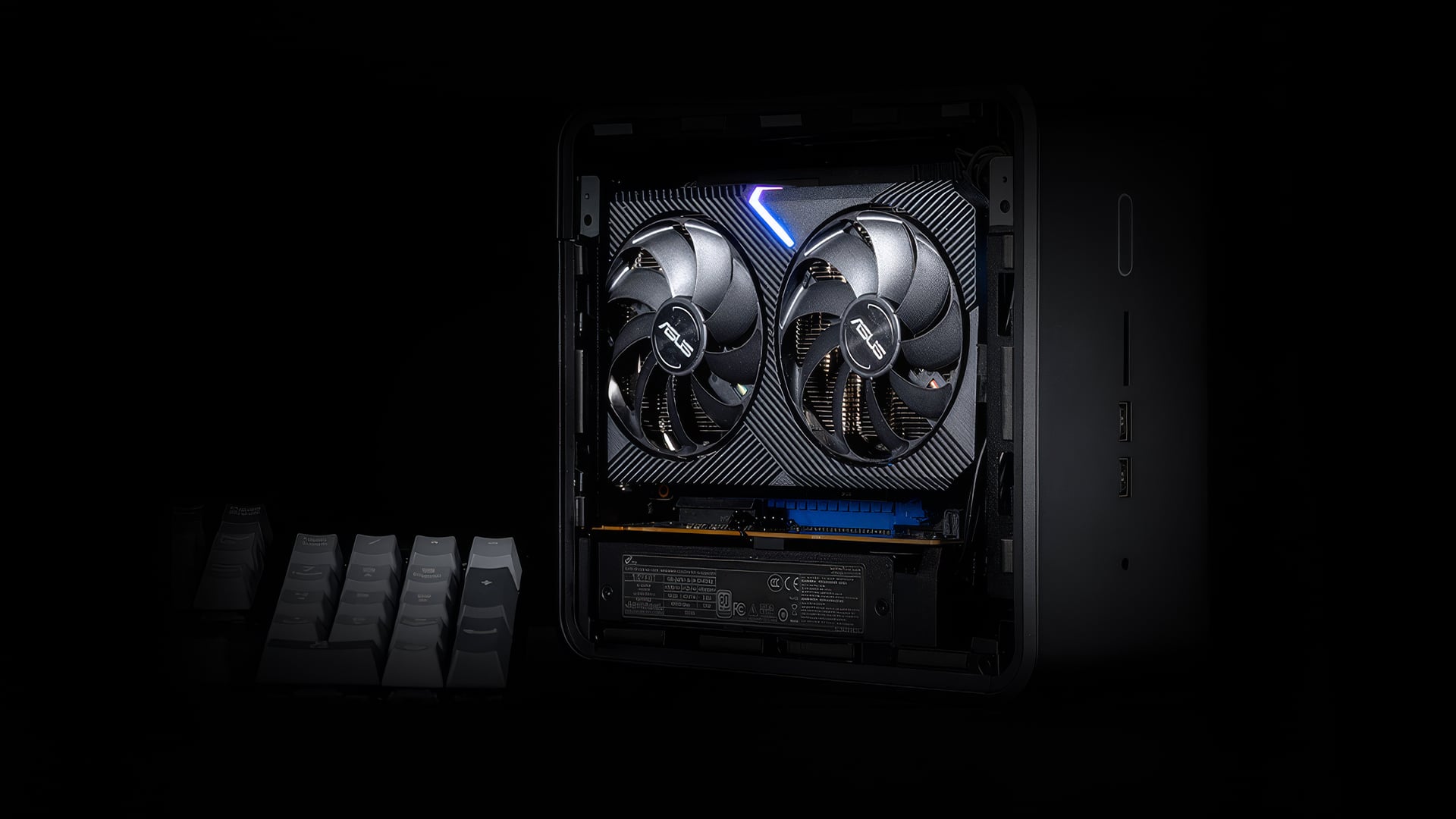
Esports Performance: High FPS Titles
The RX 6400 performs best in esports and lightweight games. These titles are usually designed to run well across a wide range of PCs, which makes them a good match for an entry-level gaming GPU.
You can expect good results in games such as:
| Game Type | Examples | Expected Experience |
| Competitive shooters | Valorant, CS2, Rainbow Six Siege | Playable at 1080p with adjusted settings |
| MOBAs | League of Legends, Dota 2 | Smooth at 1080p |
| Sports and racing | Rocket League, older FIFA titles | Smooth at 1080p |
| Sandbox and casual games | Minecraft, Roblox, The Sims 4 | Good performance, varies with mods |
| Indie games | Hades, Hollow Knight, Stardew Valley | Very smooth |
For esports, the RX 6400 can still be a sensible choice because you do not always need ultra graphics. Competitive players often lower settings to improve visibility and frame rates. That works in the RX 6400’s favour.
AAA Gaming Performance
AAA gaming is where the RX 6400 starts to show its limits. It can run some older and well-optimised AAA games, but you will usually need to use low or medium settings at 1080p.
RX 6400 review found examples of playable but limited performance at 1080p medium settings, including 54fps in Assassin’s Creed Valhalla on PCIe 4.0, around 60fps in Resident Evil Village using the balanced preset, and 37fps in Cyberpunk 2077 at medium settings on PCIe 4.0.
That gives a realistic picture of where the card sits. It can play some demanding games, but it is not a comfortable modern AAA GPU.
| Game Category | RX 6400 Expectation |
| Older AAA games | Playable at 1080p medium |
| Well-optimised games | Playable with adjusted settings |
| Modern AAA games | Low settings often required |
| Heavy ray tracing games | Not suitable |
| 1440p gaming | Not recommended |
| 4K gaming | Not suitable |
If your main goal is modern AAA gaming, the RX 6400 should not be your first choice.
Real Gameplay Experience
The real-world gaming experience depends heavily on the rest of your PC. The RX 6400 performs best when paired with a modern PCIe 4.0 motherboard, a capable CPU and enough system memory.
For the best experience, use:
- 1080p resolution
- Low to medium settings in demanding games
- High settings only in lightweight games
- FSR or upscaling where available
- 16GB system RAM if possible
- PCIe 4.0 support for best bandwidth
- Ray tracing turned off
For casual gaming, this can still feel fine. For demanding players, the limitations will be obvious.
RX 6400 in 2026: What Has Changed?
Game Demands Increasing
Games in 2026 are more demanding than they were when the AMD Radeon RX 6400 launched. Newer titles often use larger texture packs, more complex lighting, bigger maps, and more VRAM.
That creates problems for a 6400 4GB card. While 4GB VRAM can still work for esports and older games, it is becoming tight for modern AAA titles. If a game needs more VRAM than the card has available, you may see stutters, texture loading issues, or lower frame rates.
This does not make the RX 6400 useless. It simply means the card is now best understood as an entry level gaming GPU rather than a general 1080p AAA card.
Performance Expectations Today
In 2026, the RX 6400 is best for simple, efficient gaming. It can still be a good upgrade over integrated graphics, especially in an older office PC, but it is not a strong long-term gaming investment.
A realistic expectation is:
| Usage | RX 6400 in 2026 |
| Esports | Good |
| Indie games | Very good |
| Older AAA titles | Playable |
| Modern AAA titles | Limited |
| Ray tracing | Not practical |
| 1440p gaming | Poor |
| Video encoding | Limited feature set |
Longevity Concerns
The biggest longevity concern is VRAM. A 4GB card is increasingly restrictive as games demand more memory. Another concern is PCIe bandwidth, especially if the card is installed in an older PCIe 3.0 system.
This means the RX 6400 is not ideal if you want a GPU to last several years for modern games. It is better as a practical upgrade for a specific system, especially if that system cannot support a larger, more power-hungry card.
If you are building a new gaming PC from scratch, it is worth comparing newer AMD Radeon GPUs before deciding.
Power Efficiency and Build Considerations
Low Power Consumption
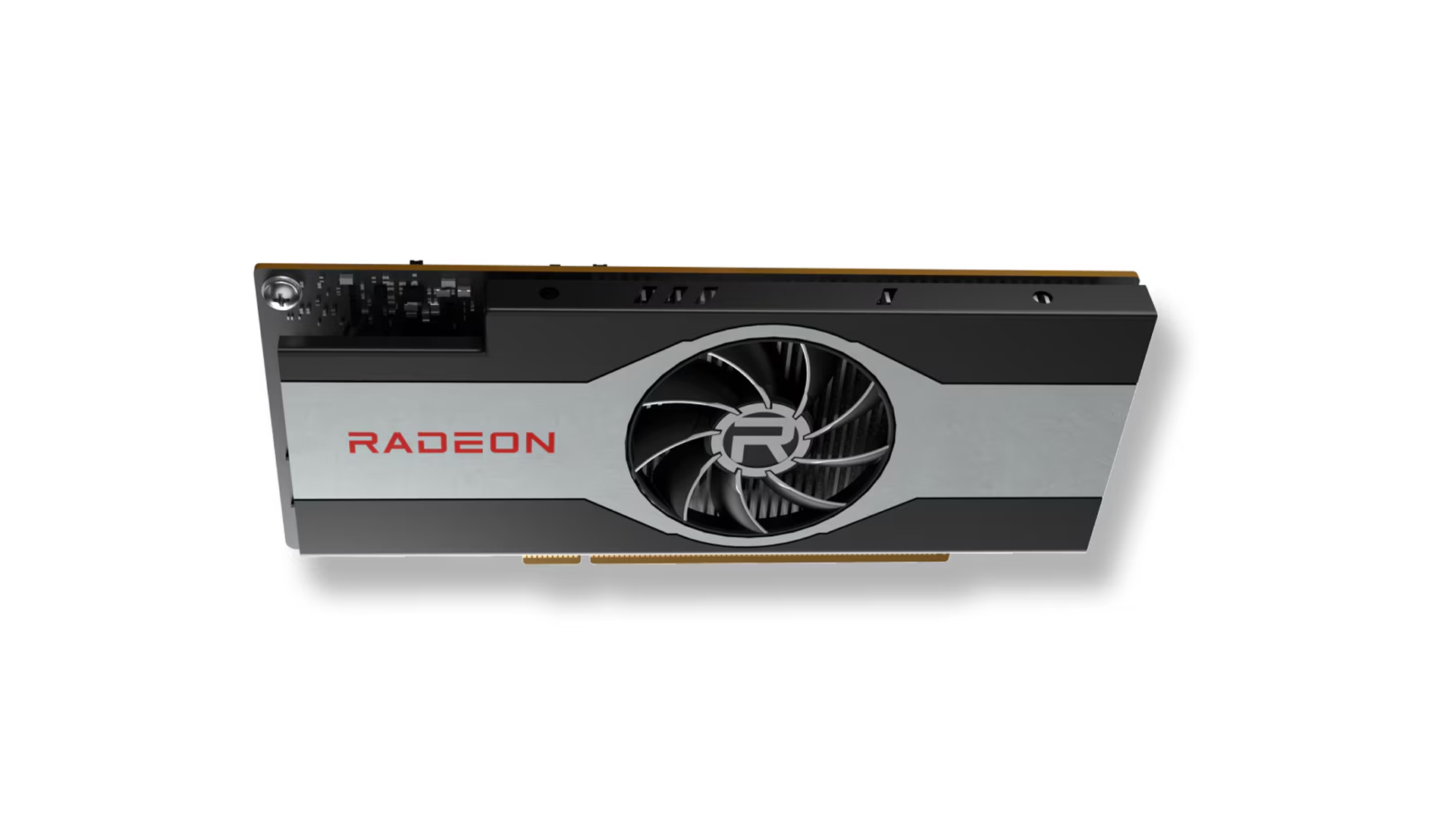
Power efficiency is one of the RX 6400’s strongest advantages. With a typical board power of just 53W, it uses far less power than many older budget GPUs. AMD lists a 350W minimum PSU recommendation and PCIe-powered operation, making it easier to fit into lower-power systems.
For buyers, this means:
- Less heat
- Lower power draw
- Quieter operation in many builds
- Easier installation
- Better compatibility with office desktops
- No need for a GPU power cable
This is the main reason the RX 6400 still has a place in the market.
Small Form Factor Builds
The RX 6400 is especially useful for compact GPU builds. Many versions are low-profile or short-length cards, making them suitable for slim desktops and small cases.
This is important because many office PCs cannot fit a full-size graphics card. They may also have weak power supplies and no spare 6-pin connector. The RX 6400 solves that problem by fitting into smaller spaces and drawing power from the motherboard slot.
If you want to upgrade a small desktop into a casual gaming machine, the RX 6400 can make sense.
No External Power Requirements
The lack of an external power connector is the RX 6400’s biggest practical advantage. You do not need to check whether your power supply has a 6-pin or 8-pin GPU cable.
This makes installation much simpler. You install the card into a PCIe slot, connect the display cable and install the drivers.
For users who are not experienced PC builders, this simplicity is a real benefit.
Who Should Buy RX 6400?
Budget Gamers
Budget gamers should consider the RX 6400 only if they have a specific reason to need it. If you have a compact PC or a weak power supply, it can be a useful upgrade. If you have a standard case and power supply, you may get better value from a stronger GPU.
The RX 6400 is best for users who want affordable gaming hardware but understand its limits.
Esports Players
Esports players are one of the better audiences for this GPU. Games like Valorant, League of Legends, Rocket League and Dota 2 are much easier to run than modern AAA titles.
If you mainly play esports at 1080p, the RX 6400 can still deliver a good experience. You may need to adjust settings in heavier competitive games, but the card is capable enough for casual and entry-level competitive play.
Entry-Level PC Builders
The RX 6400 can also suit entry-level builders who want a simple card with low power demands. It is particularly useful if you are upgrading an older PC rather than building a new one from scratch.
It works well as part of budget PC hardware upgrades where the goal is to improve graphics performance without replacing the power supply or case.
Alternatives to RX 6400
Slightly Higher Budget GPUs
If your budget can stretch, you should compare the RX 6400 against slightly stronger cards. The RX 6500 XT, RX 6600, RX 7600, RTX 3050 and newer entry-level GPUs can offer better gaming performance depending on price and availability.
The RX 6600 is especially worth considering where available because it is significantly faster for gaming than the RX 6400, although it needs more power and a standard desktop setup.
A simple guide:
| Alternative | Why Consider It |
| RX 6500 XT | Faster than RX 6400, but still limited |
| RX 6600 | Much better 1080p gaming performance |
| RX 7600 | Stronger modern 1080p option |
| RTX 3050 | Better feature set in many cases |
| Used GTX 1650 / RX 580 | Can offer better value, but higher power or older hardware |
If you are building a new PC, the RX 6400 is often not the best value unless you specifically need low-profile, slot-powered graphics.
Used GPU Market Options
Used GPUs can sometimes offer better raw performance for the money. Cards such as RX 570, RX 580, GTX 1650 Super and GTX 1660 may outperform the RX 6400 in many games.
However, used cards come with risks:
- No or limited warranty
- Unknown mining or gaming history
- Higher power consumption
- Older driver support concerns
- Larger physical size
- More heat and noise
The RX 6400’s advantage is that it is newer, low-power and easier to fit into compact systems. The used market may give better performance, but not always better convenience.
Best Pairings for RX 6400
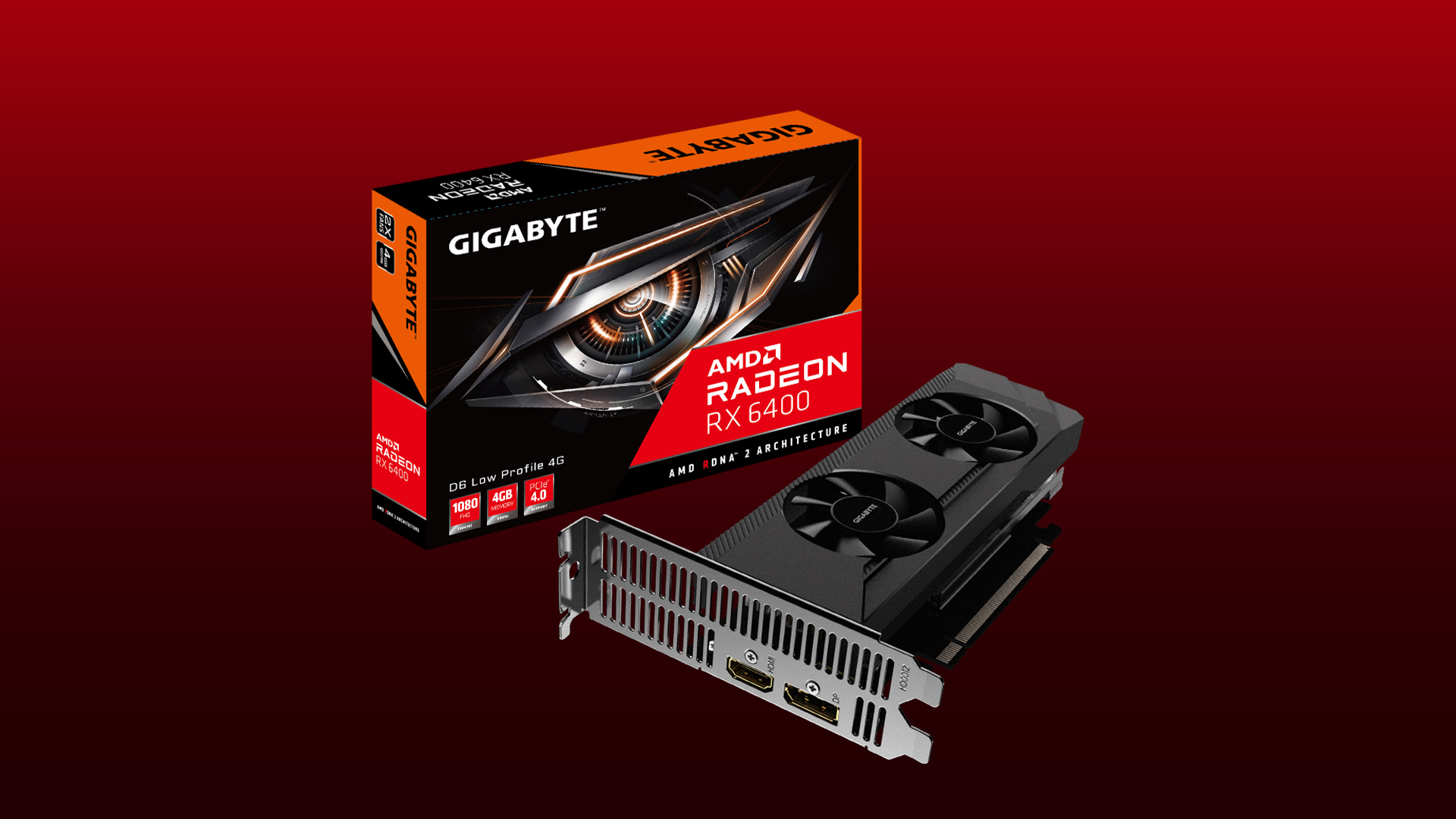
The RX 6400 should be paired with realistic hardware. It does not need a high-end CPU, but it benefits from a modern platform with PCIe 4.0.
Good pairings include:
| Component | Recommendation |
| CPU | Budget Ryzen 5 or Intel Core i3/i5 |
| RAM | 16GB preferred |
| Storage | SSD strongly recommended |
| Monitor | 1080p display |
| PSU | 350W or higher, depending on system |
| Motherboard | PCIe 4.0 preferred |
If you are planning a fresh AMD build, it makes sense to pair with latest AMD CPUs where possible. If you want the best visual experience for this level of GPU, stick with affordable display monitors at 1080p rather than choosing a demanding 1440p or 4K screen.
Final Verdict: Is RX 6400 Worth It in 2026?
The RX 6400 is worth it in 2026 only for a very specific type of buyer. If you need a low-profile, low-power graphics card that does not require an external power connector, it remains useful. It is especially good for upgrading compact office PCs, small form factor systems and older desktops that cannot support a larger GPU.
For esports, indie games and older AAA titles at 1080p, the AMD Radeon RX 6400 can still deliver a playable experience. Its 53W power draw, PCIe-powered design and compact card options are genuine benefits.
However, if you are building a normal gaming PC with a standard case and decent power supply, the RX 6400 is harder to recommend. Its 4GB VRAM, PCIe 4.0 x4 limitation, weak ray tracing performance and modest AAA gaming results make it less attractive than stronger budget alternatives.
In simple terms, buy the RX 6400 if you need a compact, efficient and easy-to-install GPU for light gaming. Avoid it if you want strong modern AAA performance, high settings or long-term gaming headroom.
To upgrade your setup, browse budget graphics cards for gaming at box.co.uk, compare AMD Radeon GPUs, explore budget PC hardware upgrades, or pair your build with the latest AMD CPUs and an affordable 1080p monitor.
FAQs
Is the Radeon RX 6400 good for gaming?
The Radeon RX 6400 is good for light gaming, esports and older AAA games at 1080p. It is not ideal for demanding modern games at high settings.
Does RX 6400 support ray tracing?
Yes, the RX 6400 has ray accelerators and supports ray tracing, but its performance is too limited for practical ray tracing in most modern games.
How fast is the RX 6400?
The RX 6400 has a game frequency of 2039MHz and a boost frequency of up to 2321MHz. In real gaming, it is best viewed as an entry-level 1080p GPU.
How much VRAM does AMD RX 6400 have?
The AMD RX 6400 has 4GB of GDDR6 memory on a 64-bit memory interface.
Can RX 6400 run modern games?
Yes, it can run some modern games, but usually at 1080p low or medium settings. Very demanding titles may need upscaling, reduced textures or lower settings to stay playable.
You can pay with:
*PayPal Credit Representative Example: Assumed credit limit £1,200, Representative 23.9% APR (variable). Purchase rate 23.9% p.a (variable).Terms & Conditions apply.


PayPal Credit and PayPal Pay in 3 are trading names of PayPal UK Ltd, 5 Fleet Place, London, United Kingdom, EC4M 7RD. Terms and conditions apply. Credit subject to status, UK residents only, Five Tech LTD acts as a broker and offers finance from a restricted range of finance providers. PayPal Pay in 3 is not regulated by the Financial Conduct Authority. Pay in 3 eligibility is subject to status and approval. 18+. UK residents only. Pay in 3 is a form of credit. Check if affordable and how you will repay. May make other borrowing more difficult or expensive. See product terms for more details.
Copyright © 1996-2026 Fivetech LTD | Terms and Conditions
box.co.uk & Box are trading names of Five Tech Limited. Registered office: Box LTD, Unit 10 Woodford Trading Estate, Woodford Green IG8 8HF