


 Menu
MenuMenu


Get Sales Advice from Mon - Fri 9am - 5:00pm:
020 3337 8950LAST UPDATED: December 12, 2025
AI Scams in 2025: How Norton Helps You Spot and Stop Them
Artificial intelligence has transformed the digital world and not always for the better. In 2025, AI scams have become one of the fastest-growing online threats, targeting everyday internet users, professionals, and families with shockingly realistic and deeply manipulative tactics. What once required is a skilled hacker can now be done in seconds with publicly available AI tools.
Today’s scams are more personalised, believable, and dangerous than anything seen before. Criminals can clone the voice of a loved one, generate hyper-realistic deepfake videos, or create phishing emails that look exactly like messages from your employer, your bank, or a trusted company. The result? A new wave of fraud that feels authentic enough to trick even the most tech-savvy users.
This technology is being weaponised across finance, customer support, corporate environments, and even personal relationships, making impersonation easier than ever.
This guide breaks down how AI-powered scams work, why they’re so effective, and how Norton Security and Norton 360 use advanced protection technologies to keep you and your personal data safe from the newest forms of digital deception.
So, let’s dive in.
|
AI’s Dual Impact on Cybercrime AI dramatically increases both the speed and sophistication of online scams. Scammers can scrape personal data, generate phishing messages, and crack passwords in seconds, enabling large-scale attacks with minimal effort. Since generative AI went mainstream, fraud has surged by over 80%, making today’s scams faster, smarter, and harder to detect. |
Common Types of AI Scams (What to Watch Out For)

AI has supercharged online scams, making them faster, more believable, and harder to detect. In 2025, scammers use AI across voice, video, text, and website creation to impersonate real people and organisations with near-perfect accuracy. Below is a simple breakdown of today’s most common and most dangerous; AI-driven scam tactics you should be aware of.
1- Impersonation Through Voice Cloning
One of the fastest-growing threats is AI voice cloning, where scammers imitate the voice of someone you know; a family member, coworker, or company executive to create urgency and panic. They often pretend there’s an emergency, a payment request, or a sensitive task that "needs your immediate help". These calls typically include realistic background noise or stress cues to feel authentic.
| Did You Know? AI tools can clone a person’s voice with just 3 seconds of audio, making even brief social media clips a risk. |
2- Hyper-Realistic Deepfake Videos
Deepfake scams use AI to produce lifelike video forgeries, often featuring CEOs, influencers, or financial experts promoting fraudulent investments or giveaways. These videos are polished, convincing, and often shared widely on social platforms making them extremely effective at tricking viewers into believing they’re real.
3- AI-Generated Romance & Relationship Traps
Scammers now use AI-powered chatbots to build emotional connections with victims. These bots text like humans, mirror your interests and tone, and stay consistent over long periods all while creating a relationship that feels meaningful. Once trust is established, scammers steer the conversation toward money, crypto, or "emergency help".
|
Did You Know? Modern AI chatbots can pass the Turing test, meaning many people cannot tell the difference between a bot and a real human. |
4 - Fake Job Offers, AI-Phishing Emails & Fraudulent Websites
AI now powers highly believable job scams, phishing messages, and fake websites that replicate legitimate organisations. From realistic onboarding portals to AI-crafted emails that match corporate tone, these scams are harder to spot than ever. The goal is often to steal login credentials, personal data, or payment information.
|
Did You Know? Phishing scams rose 465% in early 2025, with AI tools generating most fraudulent emails. |
5- Fake Conference Calls & Cloned Identity Interviews
One of the most alarming trends is the use of deepfakes in live video calls. Scammers can appear on Zoom or Teams using AI-generated visuals and cloned voices, posing as HR managers, company leaders, or government officials. Victims believe they’re speaking to legitimate people and mistakenly share highly sensitive information.
Examples Making Global Headlines

AI-powered scams are no longer small-scale digital tricks; they’re making global headlines, costing victims millions, and shaking public trust in what we see and hear online. From deepfaked CEOs to cloned political figures and fake celebrity endorsements, the past year has revealed just how dangerous AI-driven deception has become.
The Deepfaked Corporate Conference Call
One of the most shocking incidents involved the UK engineering firm Arup, where an employee unknowingly joined a video call with what appeared to be several senior managers. Each participant looked and sounded exactly like company leadership, but none of them were real. Every face on the screen was a live deepfake, engineered by scammers who used the illusion of authority to convince the employee to transfer $25 million USD into fraudulent accounts.
This wasn’t an isolated case. A 2024 Deloitte survey found that 15% of executives worldwide had encountered at least one deepfake attack in their organisation, highlighting how AI fraud is targeting even high-level corporate environments.
The Joe Biden AI Voice Clone Robocall
AI scams have also crossed into politics. During the 2024 U.S. primaries, voters in New Hampshire received a robocall featuring what sounded exactly like President Joe Biden, telling them not to vote in the upcoming election. The recording mimicked his tone, pacing, and signature phrases including a casual "What a bunch of malarkey".
Although quickly exposed as an AI-generated fake, the incident revealed a troubling reality: voice cloning now has the power to influence elections and manipulate public behaviour on a massive scale. The World Economic Forum has since ranked AI-driven misinformation as one of the biggest global risks facing governments today.
Taylor Swift Deepfake Scams Target Fans
Celebrities haven’t escaped the AI scam wave either. Taylor Swift, one of the most deepfaked public figures online, recently appeared in ultra-realistic social media ads promoting a free Le Creuset cookware giveaway. Thousands of fans eagerly handed over their personal details and small "shipping payments", believing the offer was real.
Of course, Swift never endorsed the giveaway; the videos were sophisticated deepfakes designed to harvest financial and personal data. The scam spread rapidly across platforms like Instagram and TikTok, proving just how easily AI-generated content can exploit fan trust and go viral before platforms can stop it.
| Browse top software picks, from Norton antivirus to productivity. Choose reliable, well-supported software to boost both your device’s security and your everyday efficiency. |
Smarter Protection from Norton
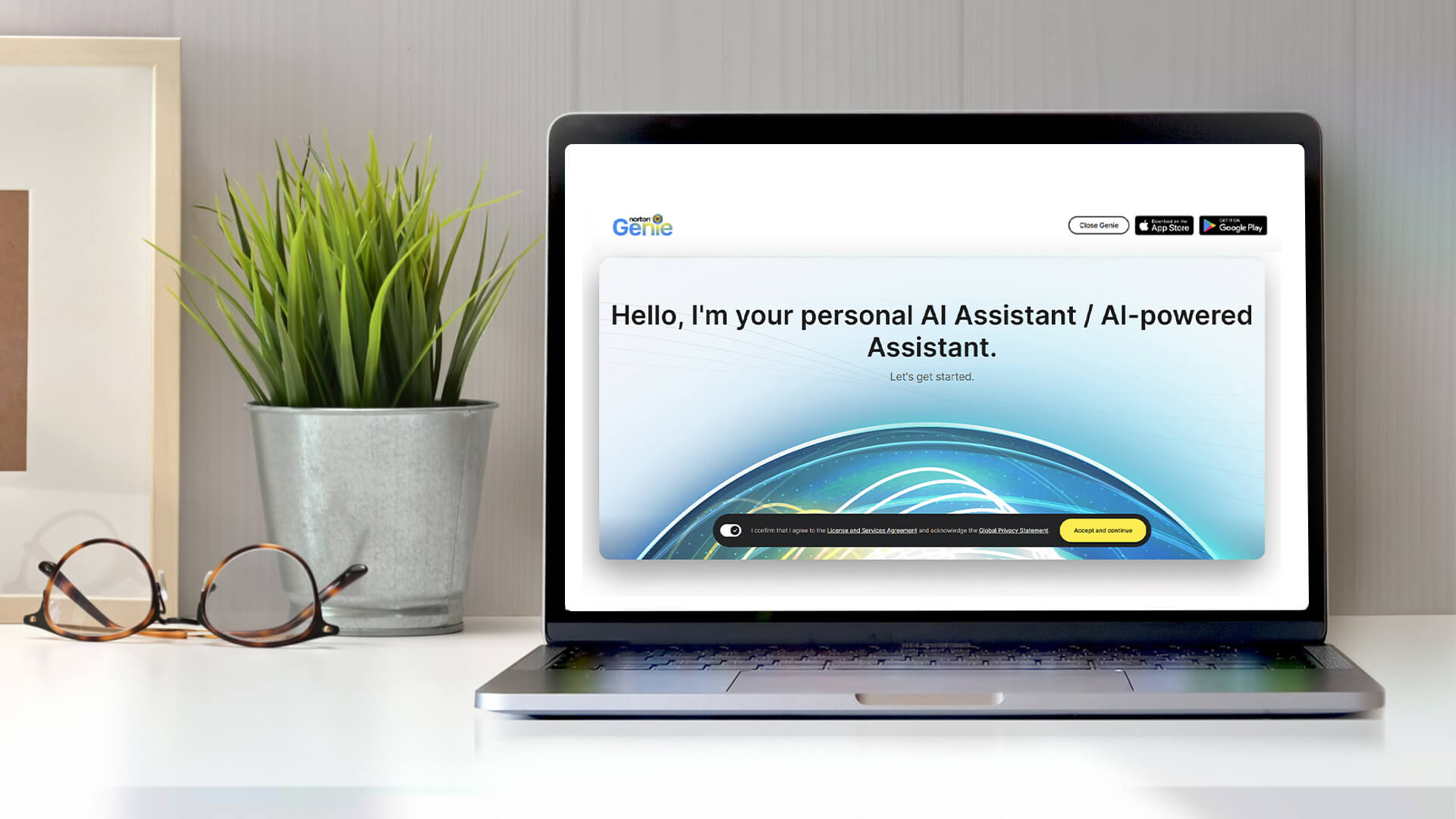
Cybercriminals may be using AI to power their scams, but Norton is using AI to stop them. Norton’s security tools are built to recognise suspicious behaviour in real time, block dangerous links, and warn users before they interact with anything risky. In an online world where threats evolve daily, Norton’s technology evolves even faster.
Real-Time AI Detection Tools and Scam Alert Systems
Norton’s threat detection engine analyses emails, messages, websites, and downloads the moment they appear. It looks for patterns associated with deepfakes, phishing attempts, and voice-cloning scams even those that look perfect to the human eye. If something feels "off", Norton alerts you instantly, stopping the scam before it gets anywhere near your data.
How Norton Genie and Copilot+ Devices Enhance Threat Blocking
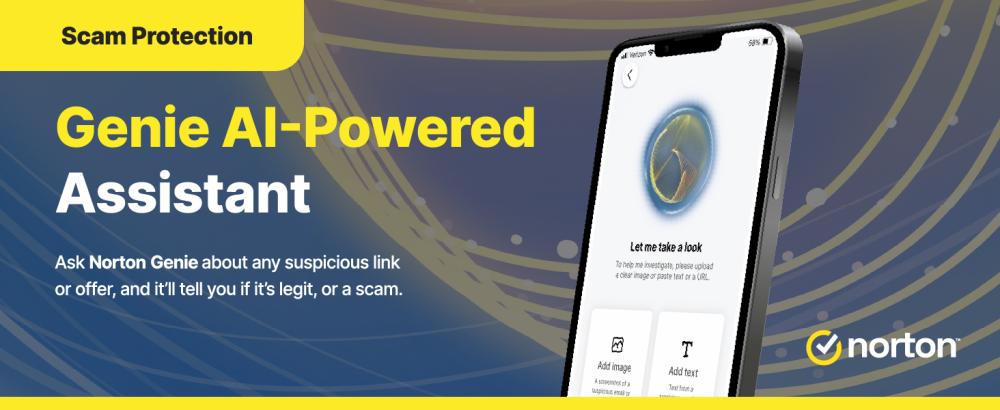
Norton Genie is one of the newest AI-powered protection tools, designed to help you identify scams by simply pasting a text message, link, or email into the app. It reviews the content in seconds and tells you whether it’s safe.
On devices powered by Microsoft Copilot+, Norton’s detection becomes even more effective thanks to built-in AI acceleration, allowing your device to scan more data faster and catch threats earlier.
Privacy Tools, Text Filters, and Scam Warning Features
Norton isn’t just about blocking viruses; it protects your privacy too. Anti-tracking tools hide your online activity from prying eyes, scam filters block fraudulent messages before they reach your inbox, and safe-browsing alerts warn you if a website looks suspicious or fake. Together, these tools provide layered protection against modern AI-driven threats.
The Benefit of Norton 360’s AI Integration
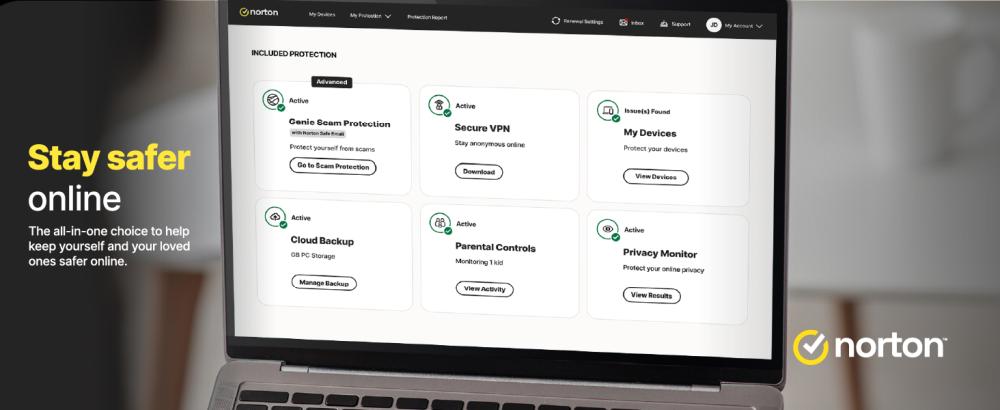
Norton 360 brings all of Norton’s cybersecurity features together into a single, AI-enhanced defence system. It includes identity theft protection, a secure VPN, cloud backup for ransomware recovery, real-time malware defence, and advanced AI scanning; all working simultaneously to keep you safe from AI-powered cybercrime.
| Shop complete Norton antivirus solutions for modern threats. It is a great starting point if you want strong real-time protection and AI-driven threat detection. |
If You’re Targeted or Tricked: What Next?
Even the most cautious users can fall victim to an AI scam. These attacks are designed to feel urgent and trustworthy; that’s the danger. If you realise you’ve clicked a suspicious link, shared information, or responded to a fake message, quick action is essential.
What to Do Immediately After a Scam Incident
The first step is to stop all communication with the scammer. Don’t reply, don’t click anything further, and don’t follow any instructions. Next, change the passwords on your email, banking apps, and key accounts. Enable two-factor authentication wherever possible. If a device may be compromised, disconnect it from Wi-Fi until it can be scanned by Norton.
Reporting Cloned Content, Identity Misuse, or Fake Support
Report scam attempts right away to prevent further harm. In the UK, you can file a report with Action Fraud. If money is involved, notify your bank’s fraud team immediately. For deepfakes or impersonation attacks that appear online, use the platform’s reporting tools and submit screenshots or recordings as evidence.
Monitoring Personal Data and Digital Footprint Post-Attack
After an incident, keep an eye on your digital identity. Norton 360’s Dark Web Monitoring alerts you if your information is leaked or posted for sale, while its identity protection tools help detect new accounts or transactions made in your name. These features give you time to react before the scammer causes long-term damage.
| Buy trusted Norton Antivirus tools to guard against cyber threats. Stick to reputable brands for privacy tools, password managers, and secure backups to keep your data protected. |
Staying Ahead of the Curve
AI scams are evolving quickly, which means staying informed is just as important as using the right cybersecurity tools. The more you understand how AI fraud works, the easier it becomes to recognise red flags before they trap you.
Avoid Clicking Suspicious or Unexpected Links
Scammers use links to send victims to fake websites or install malware. Never click on unexpected links in emails, texts, or DMs especially those that sound urgent or alarming.
Be Careful with Social Media Posts and Messages
AI‑generated misinformation spreads quickly across platforms. Even posts shared by friends may contain harmful links, so treat all viral content with caution.
Stay Skeptical of Unsolicited Messages
AI makes it easy for scammers to send polished, believable messages in bulk. If you receive a message out of the blue even if it sounds legitimate approach it cautiously.
Limit the Personal Information You Share Online
Scammers scrape social media for details they can later use to impersonate you or break into your accounts. Keep your personal information private and locked down.
Use AI‑Driven Protection Tools
Tools like Norton Genie analyse messages, links, and attachments with impressive accuracy, warning you when something looks suspicious. These tools give you an extra layer of real‑time protection.
Watch for Urgency or Emotional Manipulation
If someone pressures you to act immediately, especially involving money or sensitive information, pause. Scammers rely on panic to lower your defences.
Always Verify the Identity of Senders or Callers
If you receive a request that seems unusual, confirm it through another communication channel. A quick phone call or message can prevent a costly mistake.
Final Thoughts!
AI scams are evolving at a pace that outstrips traditional security measures, making proactive protection more important than ever. The truth is simple: AI-powered fraud moves too fast for manual checks alone. That’s why automated, always-on systems like Norton Security play such a crucial role, scanning continuously in the background and catching threats long before human judgment can.
But technology is only one part of the equation. Your awareness matters too. A healthy dose of scepticism, paired with smart habits and tools like Norton 360, creates the strongest possible defence against modern cybercrime. By staying informed, thinking twice, and relying on trusted cybersecurity protection, you can navigate today’s digital world with confidence even as AI continues to reshape the threat landscape.
Shop laptops at Box.co.uk and claim your free 12-month Norton 360 Deluxe subscription! Eligible customers will be sent a unique activation code after purchase, which can be redeemed to claim their Norton 360 Deluxe subscription.
Frequently Asked Questions
What’s the most common AI scam today?
Voice-cloning impersonation scams are currently the most common, often involving fake emergency calls from family members or executives.
Can Norton stop deepfake videos?
Norton can’t prevent deepfake creation, but it can detect malicious links, fake websites, and scam-related files commonly used to distribute deepfake content.
How does Norton detect voice cloning?
Norton uses AI-based fraud detection that recognises unnatural speech patterns, suspicious audio signatures, and context clues linked to impersonation attempts.
How is AI used in scams?
Scammers use AI to clone voices, generate fake videos, write polished phishing messages, build fraudulent websites, and automate social-engineering attacks.
What are 5 of the most current scams?
The top AI scams today include voice cloning, deepfake videos, romance scams, fake job offers, and AI-generated phishing websites.
You can pay with:
*PayPal Credit Representative Example: Assumed credit limit £1,200, Representative 23.9% APR (variable). Purchase rate 23.9% p.a (variable).Terms & Conditions apply.


PayPal Credit and PayPal Pay in 3 are trading names of PayPal UK Ltd, 5 Fleet Place, London, United Kingdom, EC4M 7RD. Terms and conditions apply. Credit subject to status, UK residents only, Five Tech LTD acts as a broker and offers finance from a restricted range of finance providers. PayPal Pay in 3 is not regulated by the Financial Conduct Authority. Pay in 3 eligibility is subject to status and approval. 18+. UK residents only. Pay in 3 is a form of credit. Check if affordable and how you will repay. May make other borrowing more difficult or expensive. See product terms for more details.
Copyright © 1996-2026 Fivetech LTD | Terms and Conditions
box.co.uk & Box are trading names of Five Tech Limited. Registered office: Box LTD, Unit 10 Woodford Trading Estate, Woodford Green IG8 8HF